Meta's Muse Ember isn't cheaper per token. It's cheaper per task
SummaryMeta's smallest Muse model launched Nov. 9 at the same list price per token as Claude Haiku 5.5 and GPT-6 Luna. The savings Meta and Artificial Analysis report come from cheaper cached input and fewer output tokens. It still trails Haiku on mergeable code. Not tested by MODEL.
· MODEL Editors · 2 min read
Some links may be affiliate links. Disclosure


What shipped. On Nov. 9, Meta Superintelligence Labs released Muse Ember, its smallest and most efficient Muse model. Meta says it is built for "the work agents repeat all day: tool calls, coding subtasks, routing, extraction, and long document parsing." It is available now in Muse Code and on the Meta Model API as muse-ember-1.0, with a 1M-token context window, up to 512K output tokens, and text, image, audio and video input. Meta pitches it as the worker under its bigger model: "Muse Wonder plans, Muse Ember handles the volume."
The price, checked. Some launch coverage called Ember significantly cheaper than its rivals. Per token, it isn't:
- Muse Ember: $0.10 per million input tokens, $0.004 cached input, $0.50 output (Meta).
- Claude Haiku 5.5: $0.10 input, $0.01 cache hits, $0.50 output for prompts up to 100,000 tokens (Anthropic).
- GPT-6 Luna: $0.10 input, $0.01 cached input, $0.50 output at standard short-context rates (OpenAI).
The difference is in how the bill adds up. Artificial Analysis, the independent benchmark firm Meta cites, says Ember's cached input, "most of the cost in our agentic evaluations," is 60% cheaper, and that Ember uses roughly a third as many output tokens as Haiku 5.5.
Cost per task. On the Artificial Analysis Intelligence Index, Ember (max reasoning) scores 36, the same rounded score as Claude Haiku 5.5 (max), at about $0.14 per task versus $0.41 for Haiku. GPT-6 Luna's best setting scores 28. Meta's own Muse Spark 1.3 scores 37 but costs $2.39 per task.
Where it falls short.
- Mergeable code. On FrontierCode 2.0, which judges whether a maintainer would merge an agent's change, Ember scores 27.2% against 34.9% for Haiku 5.5.
- Knowledge. Artificial Analysis says knowledge is Ember's main weakness: 21.1% accuracy on its AA-Omniscience test versus 34.7% for Haiku 5.5. Ember declines to answer 64% of those questions, which keeps its hallucination rate at 17.4%, about half of Haiku's.
- Benchmarks differ by harness. Meta reports Terminal-Bench 4.0 at 40.9% for Ember versus 39.2% for Haiku, using each model's best published harness. In Artificial Analysis's own run, Haiku scored 32.8%. Several other numbers on Meta's chart (Agents' Last Exam, OSWorld 2.1, PerceptionBench, and Meta's Personal Superintelligence Index) are Meta's internal evaluations.
- Closed weights. Meta offers Ember through its Model API and Muse Code (OpenRouter and Vercel's AI Gateway also listed it on launch day). Per The New Stack, Meta is keeping the weights private.
Our take. Ember looks built for one job: a subagent that runs many small, repeated steps against the same cached context. That is where the cheaper cache and shorter answers pay off. It is not the model to trust with final code review or with facts it has to know. If your agent bill is mostly cached input, run Ember on your own workload and compare cost per finished task, not price per token.
Disclosure: Not tested by MODEL. Not sponsored. No affiliate links.
MODEL Editors
Get three tested tools every Friday
Free, weekly. Unsubscribe anytime.
Sources
- Introducing Our Smallest, Most Efficient Model: Muse Ember (Nov. 9, 2026)
Meta
- Muse Ember Evaluation Report
Meta
- Artificial Analysis on Muse Ember (Nov. 9, 2026)
Artificial Analysis (X)
- Claude Haiku 5.5 pricing
Anthropic
- GPT-6 Luna model page and pricing
OpenAI
- Meta launches Muse Ember to take on Claude Haiku and GPT-6 Luna
The New Stack
Keep reading
AI News
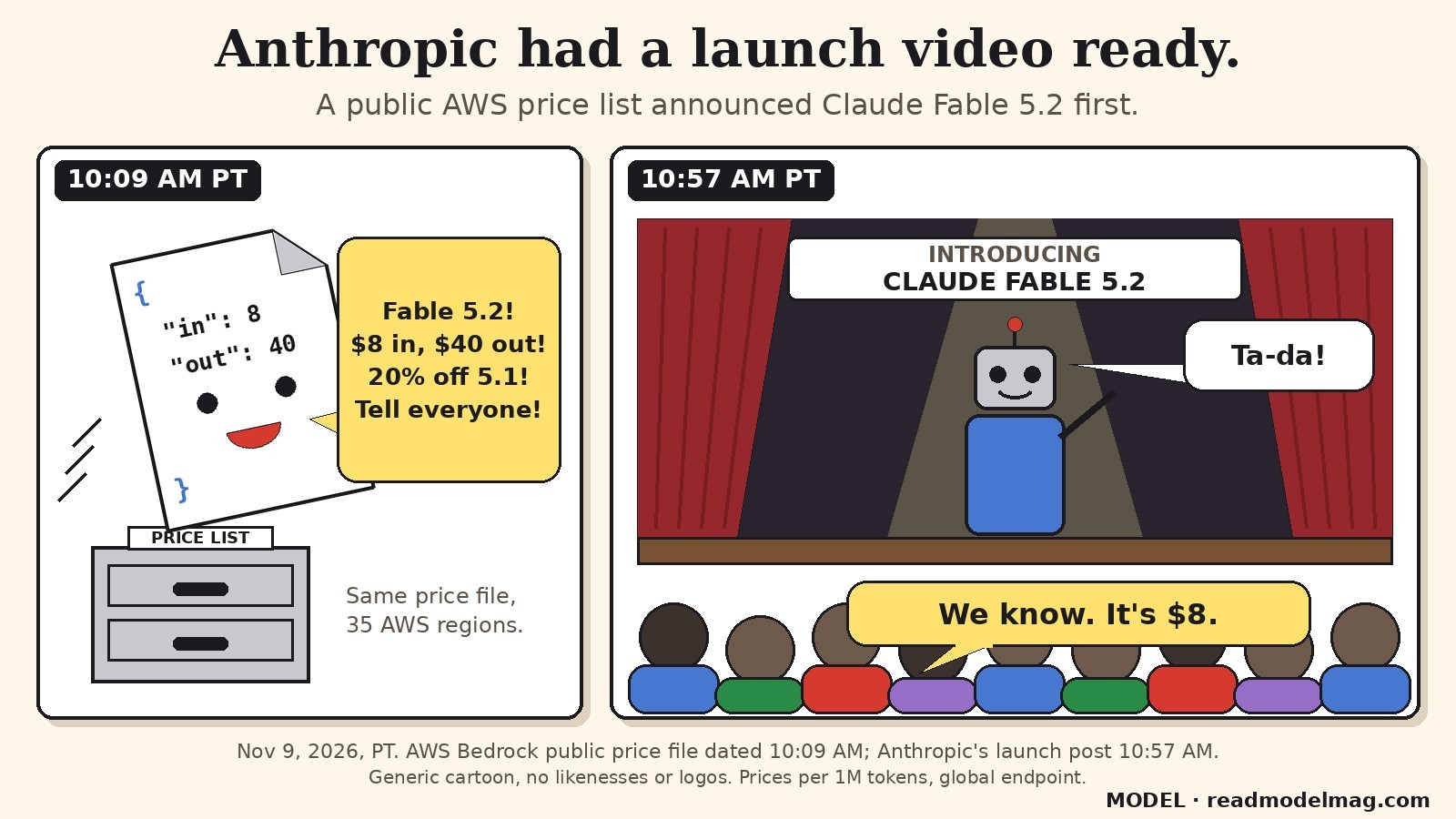
Claude Fable 5.2's first announcement came from an AWS price list
Amazon's public Bedrock price file listed Claude Fable 5.2 and Mythos 5.2, at 20% below the 5.1 models, about 48 minutes before Anthropic announced them on Nov. 9.
· MODEL Editors
Hot take
Hot take: Ryan Dahl says coding went "100% AI written." Checking it works is now the job
Node.js creator Ryan Dahl posted on Nov. 8 that software engineering has moved to AI-written code, and that the problem of making sure it works "didn't magically disappear." The post passed 650,000 views overnight. Here's why the second half matters more than the first.
· MODEL Editors
AI News
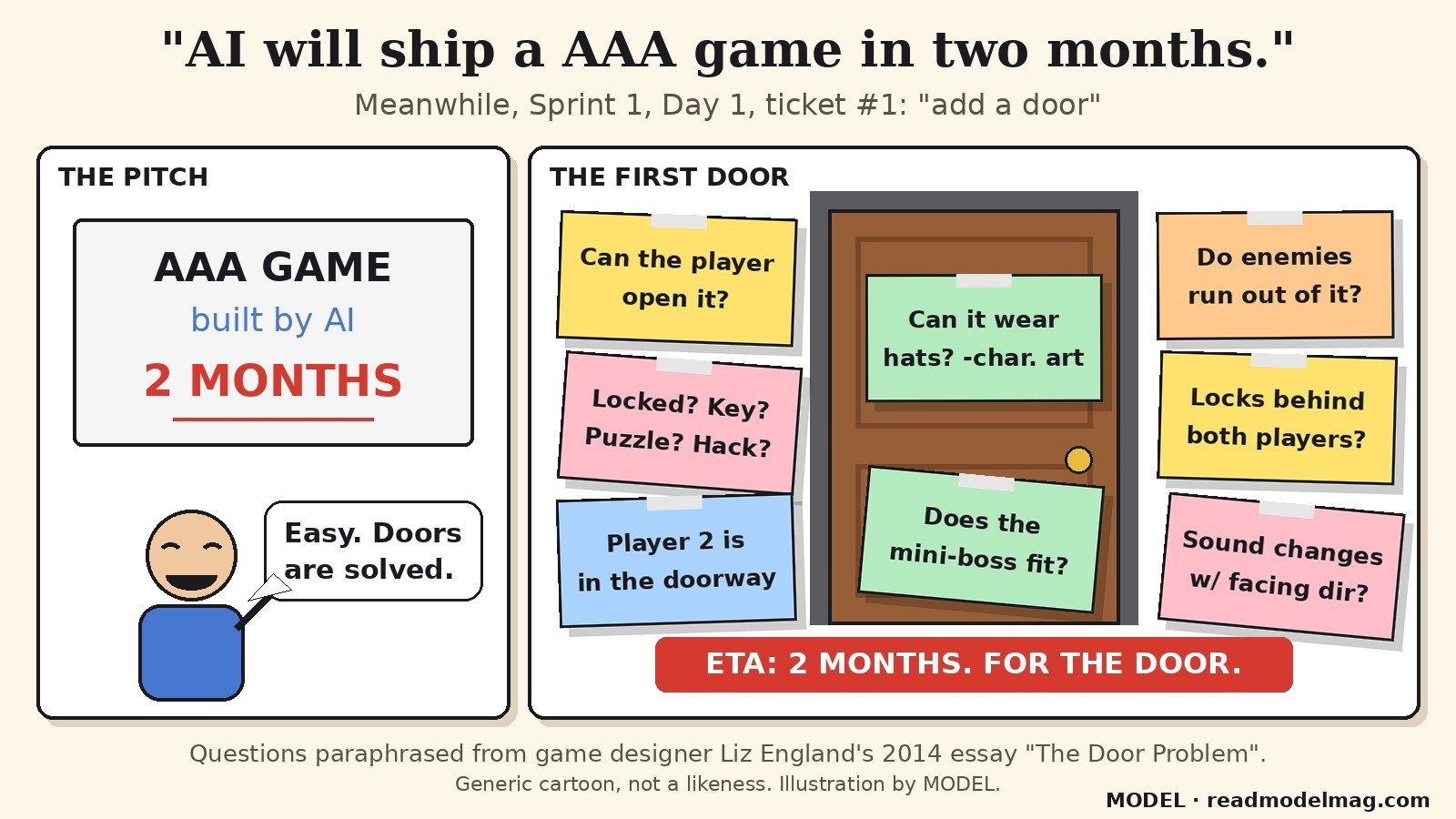
"AI will build a AAA game in two months" meets The Door Problem
A viral Nov. 8 post from AI game-studio founder Di Huang pushed back on friends who think AI can ship a AAA game in a couple of months. His evidence: game designer Liz England's 2014 essay about how many decisions hide inside a single door.
· MODEL Editors

AI News
Nvidia's board opens an independent investigation after reports its CEO was targeted by a foreign intelligence effort
Jensen Huang told staff he was unfaithful to his wife and said he will cooperate fully. The board says it has no reason to believe national security or Nvidia secrets were compromised, and that it has confidence in him.
· MODEL Editors
FREE · EVERY WEEK
The top AI tools this week, tested.
Every week MODEL's editors pick the AI tools worth your time, try them hands-on, and tell you what's good, what's not, and who it's for. Free, in your inbox.
Free. Unsubscribe anytime. Our picks are editorial and can't be bought.