Retail bought the chip dip with 3x leverage. The dip had a basement.
SummaryThe 3x leveraged chip ETF SOXL pulled in $6.1 billion in the week to October 16, more than any other ETF, while falling 33%. On October 22 chip stocks had their worst day since June and SOXL dropped another 20.5%.
· MODEL Editors · 2 min read
Some links may be affiliate links. Disclosure

Last week a lot of money decided chip stocks had fallen far enough. It went into the version with triple leverage. Then chips fell again.
The dip. In the week to Friday, October 16, the Direxion Daily Semiconductor Bull 3X ETF ($SOXL) took in $6.1 billion, more than any other ETF that week, according to ETF.com (opens in a new tab). Investing.com, using a different tally, put it above $7 billion and called it the fund's biggest weekly inflow on record. Over the same week SOXL's closing price fell from $139.76 (Oct 9) to $93.67 (Oct 16), down about 33%.
The dip's dip. On Thursday, October 22, chip stocks had their worst day since June. The PHLX Semiconductor Index fell 6.7%, its biggest one-day drop since June 23, Reuters reported (opens in a new tab), as earnings reignited worries about AI spending, and the Nasdaq fell 2.6%. SOXL closed at $82.11, down 20.5% from $103.24 the day before (price data: WSJ, Robinhood). Anyone who bought at Friday's close was down about 12% by Thursday's close, after a bounce in between.
The fine print on the floaties. SOXL aims for 300% of the daily return of the NYSE Semiconductor Index. Direxion says plainly that its leveraged funds "should not be expected to provide three times... the return of the benchmark's cumulative return for periods greater than a day," and that "a total loss may occur in a single day." Leverage resets every day, so over a choppy week the results can differ a lot from three times the index.
The catch on "retail piled in." Inflows don't only mean new dip buyers. ETF.com notes that short covering, traders who had bet against SOXL buying shares back to close out, can also show up as inflows. So not all of the $6.1 billion is people diving in.
Our take
The AI trade has made chip ETFs the default way to bet on the buildout, and the leveraged versions the default way to bet on it fast. That works great on the way up. On the way down, "it's already fallen 33%" isn't a floor, it's just the first pool. This is a joke about a pattern, not a call on where chips go next.
What we did and didn't do: price data is from WSJ market data and Robinhood quotes (official Oct 22 close $82.11), flows are from ETF.com's weekly report and Investing.com, and the index move is from Reuters, read October 22, 2026. We didn't track who bought, at what price, or who still holds. Not investment advice. Not sponsored; no affiliate links.
MODEL Editors
Sources
- Investors Buy the Dip in Chips as ETF Inflows Near $58B (Oct 19, 2026)
ETF.com
- Leveraged chip fund sees record $7 billion inflow amid selloff
Investing.com
- S&P 500, Nasdaq end sharply lower as revived AI doubts ignite tech selloff (Oct 22, 2026)
Reuters via Investing.com
- SOXL historical prices
The Wall Street Journal
- Direxion Daily Semiconductor Bull and Bear 3X ETFs
Direxion
Not investment advice.
FREE · EVERY WEEK
The top AI tools this week, tested.
Every week MODEL's editors pick the AI tools worth your time, try them hands-on, and tell you what's good, what's not, and who it's for. Free, in your inbox.
Free. Unsubscribe anytime. Our picks are editorial and can't be bought.
The weekly three is editorial. A subscription does not buy a place in it.
Continue
Markets
Tesla's cash-flow beat came from spending less on AI than planned
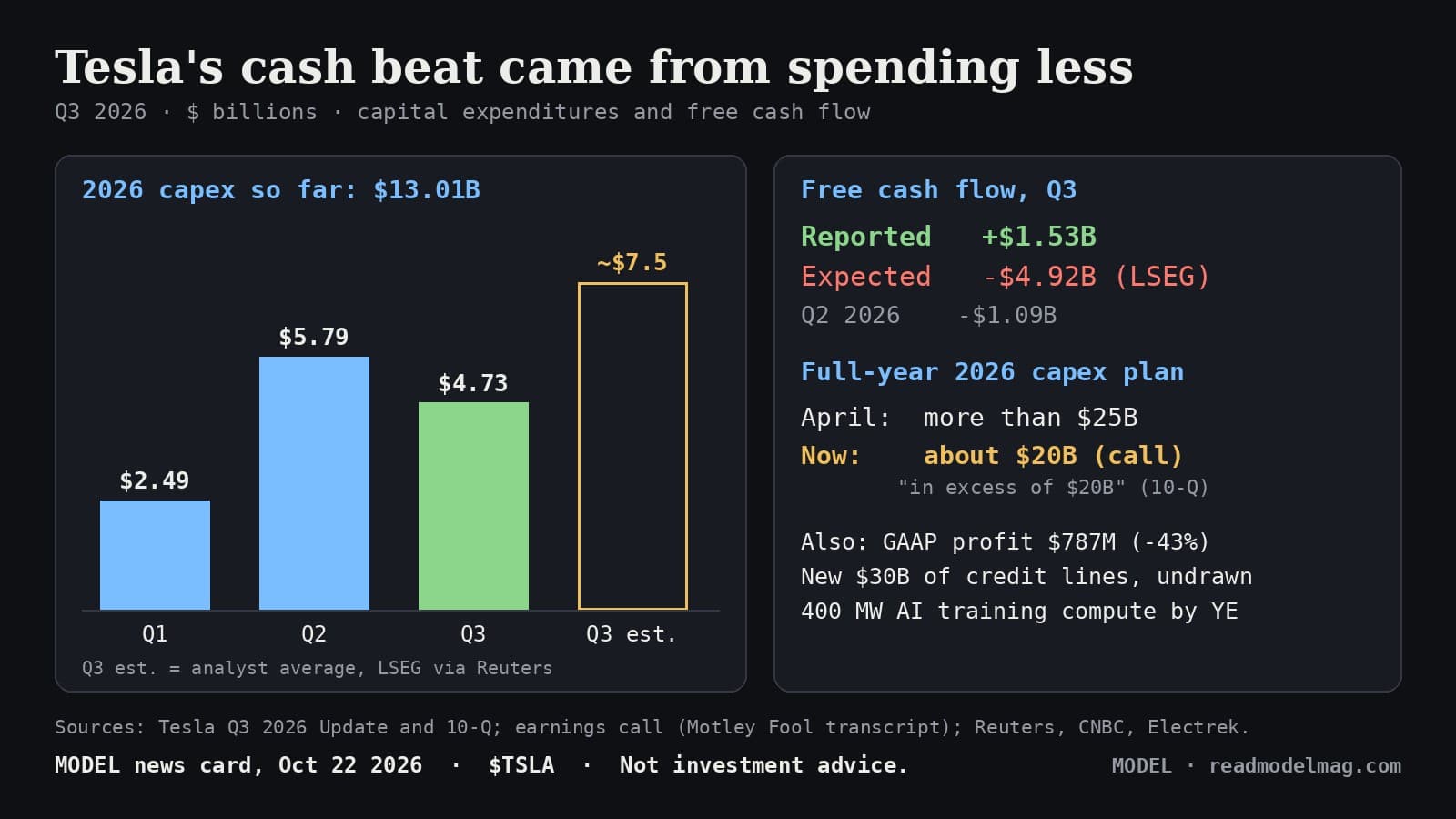
Tesla reported $1.53 billion of free cash flow when analysts expected a $4.92 billion burn. The reason: it spent $4.73 billion on capital projects, not the roughly $7.5 billion expected, and cut its 2026 spending plan from more than $25 billion to about $20 billion.
· MODEL Editors

Markets
Meta's AI build-out cost more than its business brought in this quarter
Meta beat revenue estimates with $64.6 billion, but capital spending of $34.91 billion outran the $32.79 billion its operations generated, leaving free cash flow at negative $2.12 billion. It is also creating a new class of non-voting shares to help pay for the AI race.
· MODEL Editors
Markets
Amazon can deliver almost anything in a day. Its new AI racks are waiting on electricity
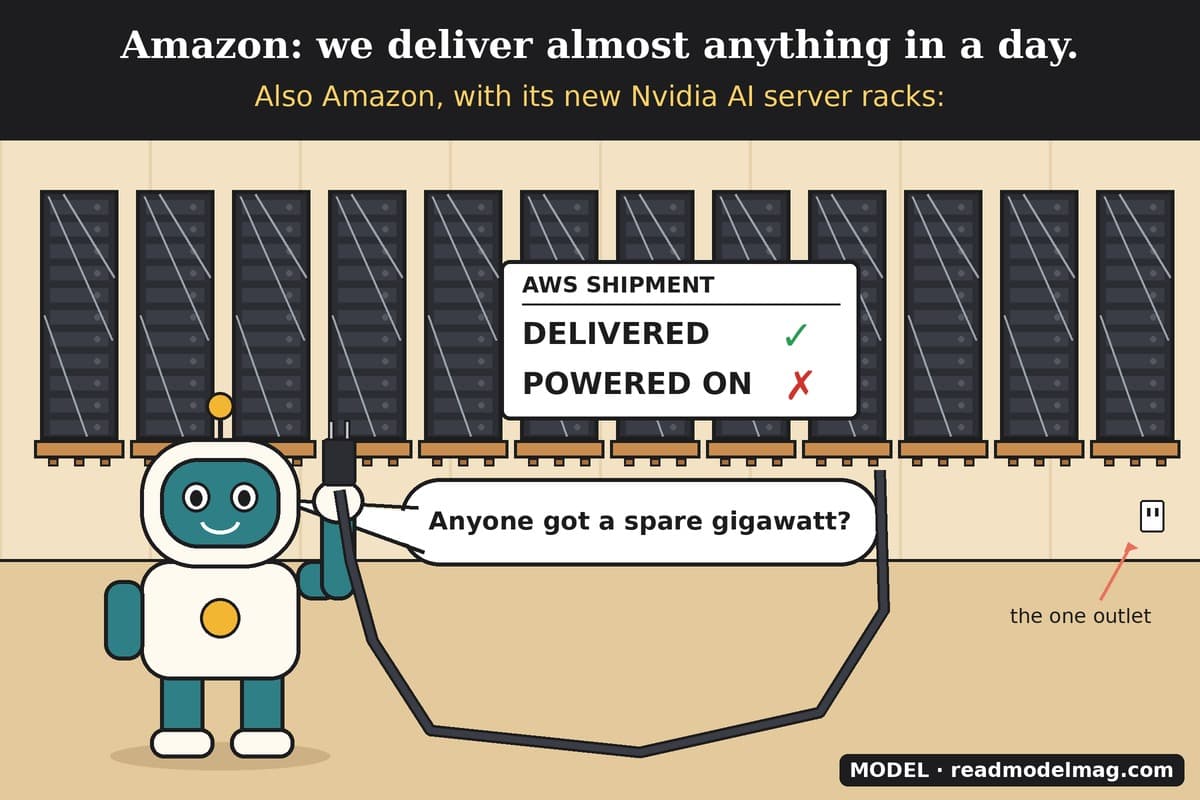
Business Insider reports that AWS is taking delivery of billions of dollars of Nvidia GB300 server racks earlier than before, and that some sit in warehouses because the data centers don't have enough power to turn them on yet.
· MODEL Editors