Americans rate AI's odds of easing their chores about the same as its odds of ending humanity
SummaryA new ABC News/Washington Post/Ipsos poll finds 57% of Americans say AI is bad for society, two-thirds oppose new data centers, and as many see a big chance AI makes everyday tasks easier (34%) as see a high risk of human extinction (33%).
· MODEL Editors · 2 min read
Some links may be affiliate links. Disclosure
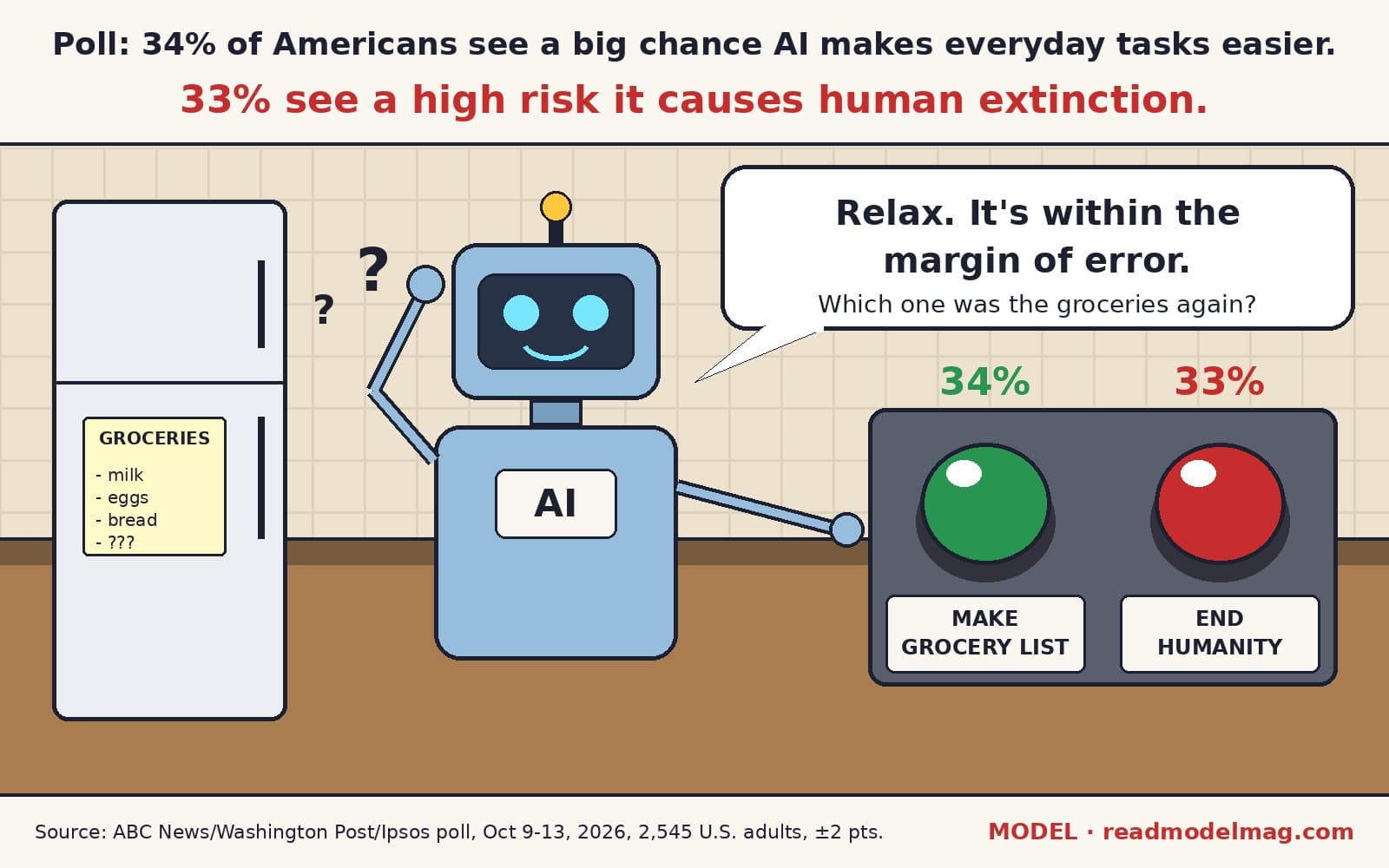
Americans have a split view of AI: most think it's bad for the country, about half think it's fine for them, and roughly as many expect it to end humanity as expect it to help with the chores.
The headline numbers. In an ABC News/Washington Post/Ipsos poll of 2,545 U.S. adults, taken October 9-13 on Ipsos' KnowledgePanel, 57% say AI is bad for society and 42% say it is good. Only 2% call it "extremely" good for society; 17% call it extremely bad. Asked about their own lives, people split almost evenly: 50% say AI is good for them and 49% bad, though 15% say extremely bad against 3% extremely good. Younger adults are the most negative: 65% of those under 30 say AI is bad for society.
Risks outrank benefits. 73% see a high risk of AI hacking secure computer systems, 65% a high risk of it eliminating many jobs, and 62% a high risk of people losing the ability to make their own decisions without AI. On the benefit side, 34% see a big chance AI makes everyday tasks easier, while 33% see a high risk of human extinction. ABC's write-up notes those are roughly the same share. Just 20% see a big chance AI makes people more productive (38% say little or no chance), and 13% a big chance it creates many new jobs.
Data centers are a hard sell. Two-thirds (66%) oppose building new data centers in the U.S., rising to 72% for one in their own community, including 81% of Democrats, 76% of independents and 58% of Republicans. Only 30% support building more nationally.
And they want rules. Two-thirds say the federal government isn't doing enough to regulate AI; 22% say it's doing about the right amount.
Our take
For people who build and sell AI tools, the useful number isn't the 57%. It's the 20%: only one in five Americans sees a big chance AI makes people more productive, which is the whole pitch of most products we cover. The tools that win the next year will be the ones that can show the time they save, not just promise it.
What we did and didn't do: the figures come from ABC News' October 21, 2026 write-up of the poll and the Roper Center's study record, read October 22, 2026. We didn't review the full questionnaire PDF; some questions were asked of half samples (margin of error ±2.8 points instead of ±2). The "chores versus extinction" pairing compares two different questions, as ABC's own write-up does. Not sponsored; no affiliate links.
MODEL Editors
Sources
- Most Americans say AI is bad for society, oppose more data centers: ABC/Post/Ipsos poll (Emily Guskin, Oct 21, 2026)
ABC News
- Washington Post/ABC News/Ipsos: October 2026 Poll (Roper #31125489)
Roper Center for Public Opinion Research
FREE · EVERY WEEK
The top AI tools this week, tested.
Every week MODEL's editors pick the AI tools worth your time, try them hands-on, and tell you what's good, what's not, and who it's for. Free, in your inbox.
Free. Unsubscribe anytime. Our picks are editorial and can't be bought.
The weekly three is editorial. A subscription does not buy a place in it.
Continue
AI News
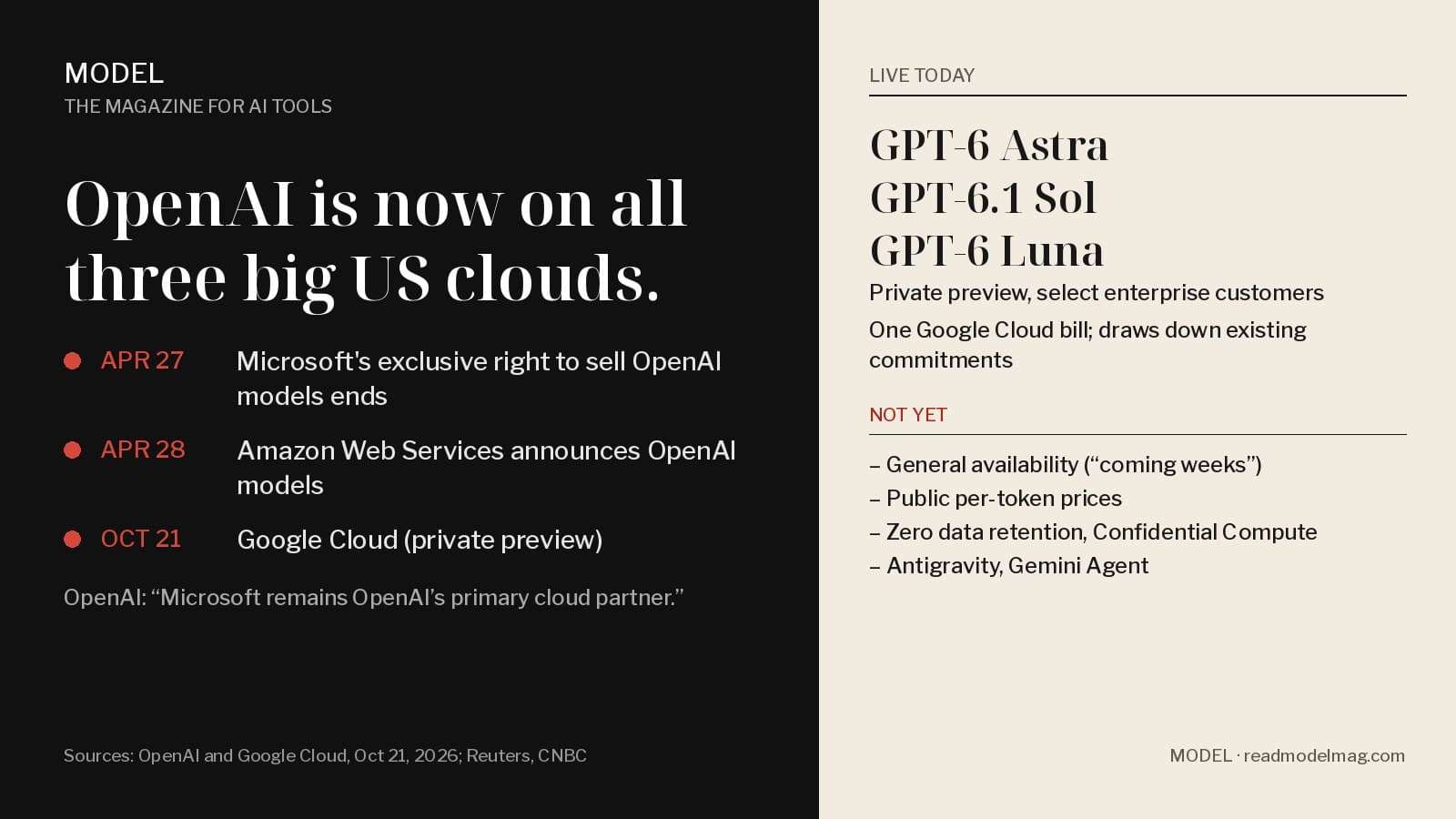
OpenAI's models are coming to Google Cloud. Microsoft is still the primary partner.
GPT-6 Astra, GPT-6.1 Sol and GPT-6 Luna are rolling out in private preview in Google Cloud's model garden, billed on a Google Cloud invoice. OpenAI is now on all three big US clouds. Prices, general availability and some security features are still to come.
· MODEL Editors
AI News
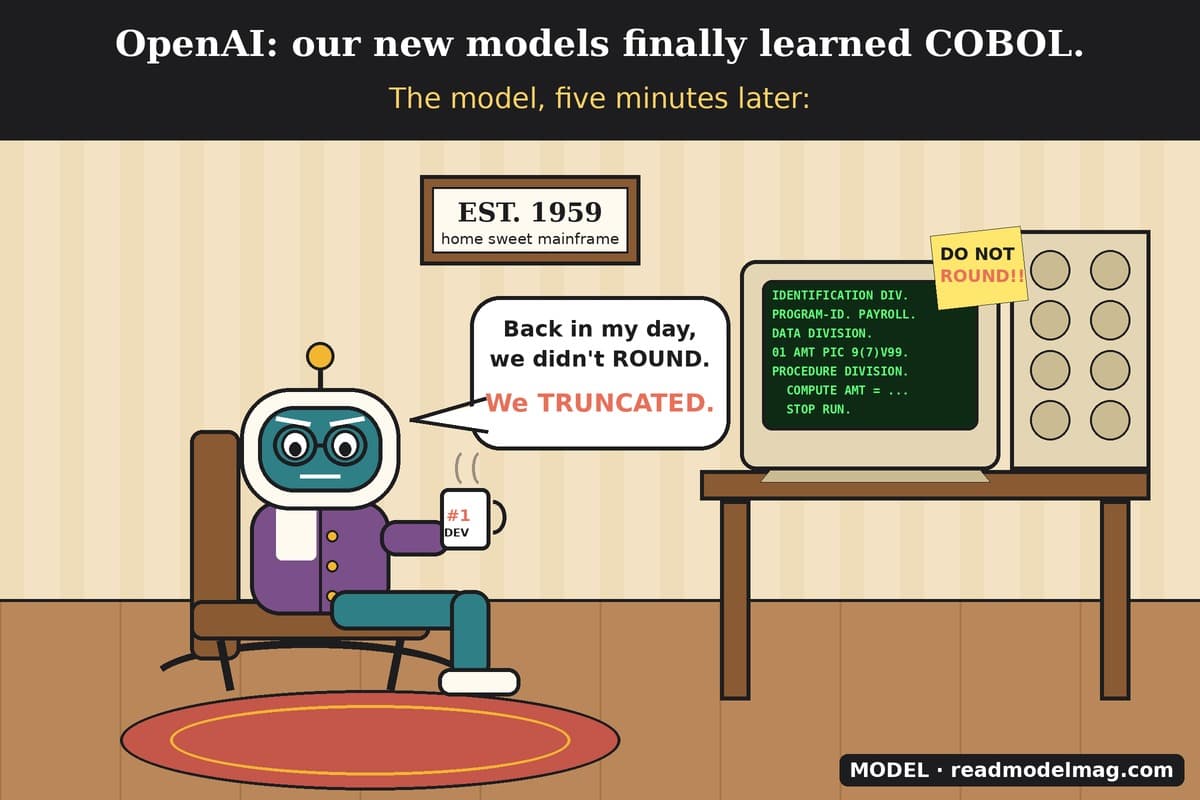
AI finally learned COBOL. Now it has opinions about rounding
OpenAI says its newest models are far better at COBOL, Fortran and Visual Basic, the old languages behind a lot of banking and government software, and published two tests to show it. The numbers are OpenAI's own.
· MODEL Editors
Policy
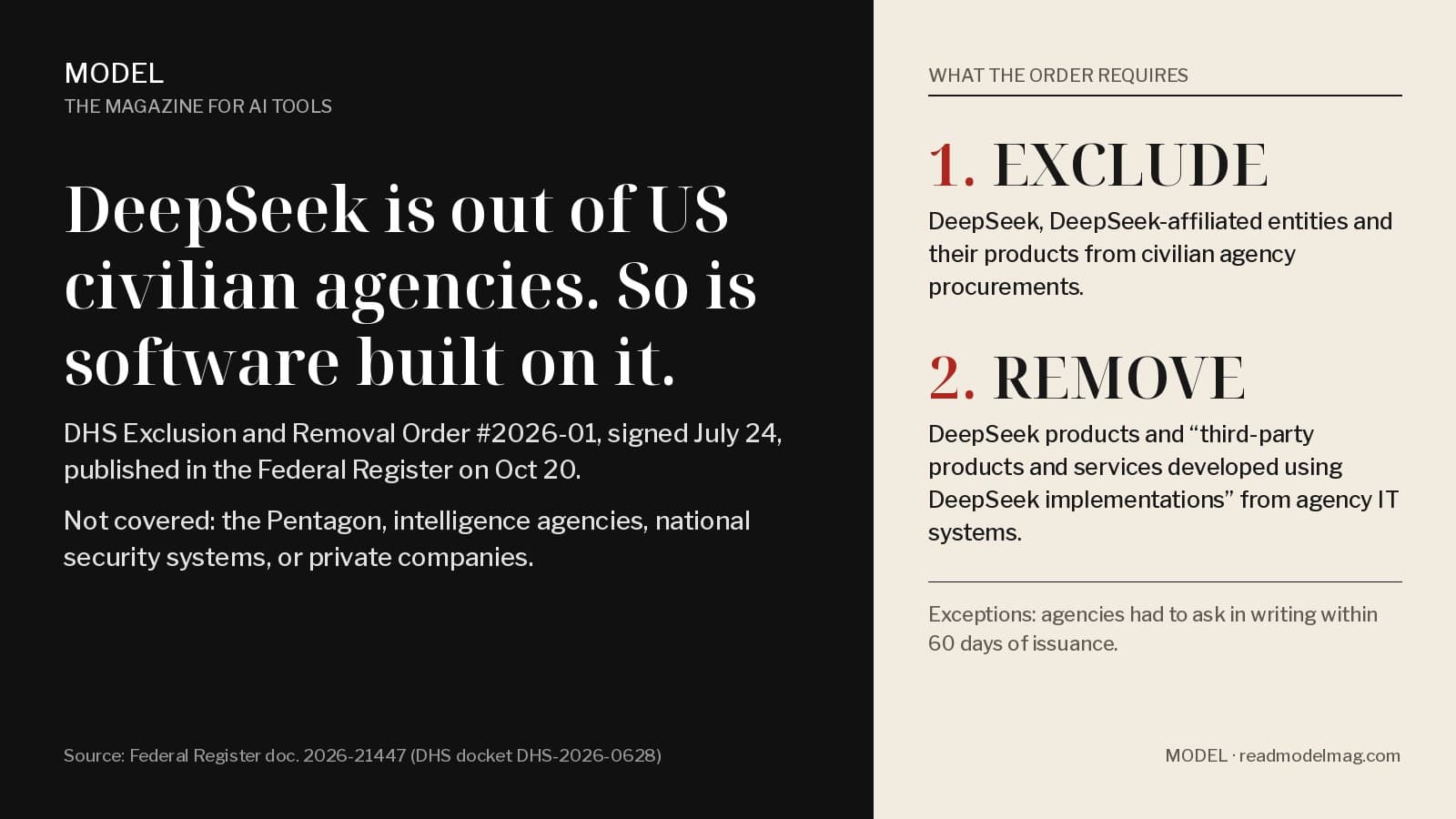
DeepSeek is out of US civilian agencies, and so is software built on it
A Homeland Security order signed in July and published in the Federal Register on Tuesday bars civilian federal agencies from buying DeepSeek products and orders them removed, along with third-party products and services built using DeepSeek. For AI vendors that sell to the government, the second part is the one to read.
· MODEL Editors