A ghostwriter's own writing got flagged as AI. Here's what detectors can and can't tell you
SummaryNPR reported on Oct 31 that a writer lost out on a book job after detectors flagged a sample she wrote herself. A June study of four popular detectors shows why one score should never decide a case.
· MODEL Editors · 2 min read
Some links may be affiliate links. Disclosure
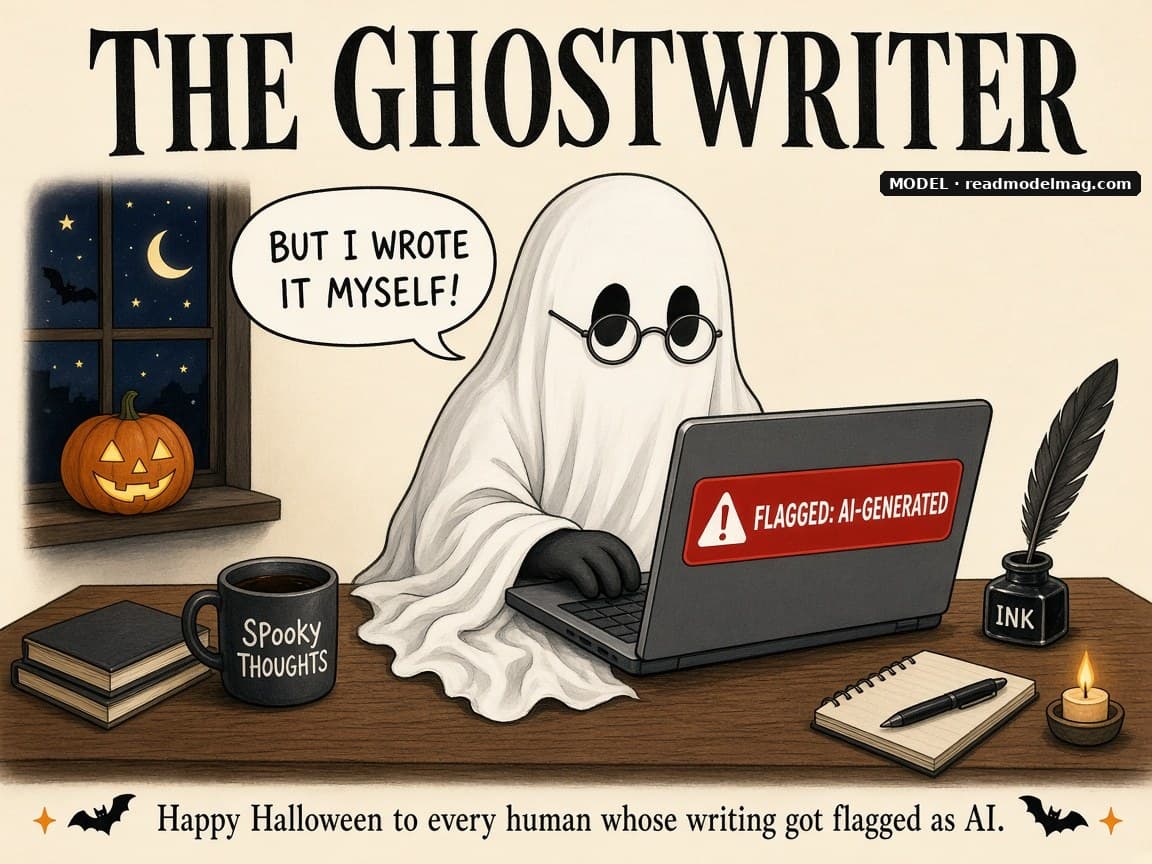
On October 31, NPR told the story of ghostwriter Sally McGraw. She applied to develop a book proposal, sent a writing sample, and got an email back saying several AI detection tools had flagged it as machine-generated. "I was floored because I had not used AI to generate the text," she told NPR. "I'd written it all myself."
The client confirmed to NPR that she had screened the sample for AI, but said the results were not what decided it: she hired a different writer for experience and fit. McGraw was paid for her samples and believes the detector results cost her the full job.
What the research says. In June, researchers at Vrije Universiteit Brussel published a study in the International Journal for Educational Integrity that tested four popular detectors (GPTZero, Pangram, Copyleaks and Turnitin) on 160 academic papers with known answers: 40 fully human, 40 fully AI-written, 40 human papers with AI passages added, and 40 AI passages "humanised" with a prompt.
- Human papers: all four tools scored all 40 human papers as human. False positives were rare in this set.
- Fully AI papers: Turnitin, GPTZero and Copyleaks missed most or all of them. Pangram caught nearly all of them, with one case misclassified under the study's broader measure.
- Mixed and humanised papers: Pangram placed 37 of 40 in the expected range in each group. The other tools significantly underestimated the AI content.
The catch. Tools disagree with each other, a good result on one dataset does not cover every kind of writing, and a score does not explain itself. The study's authors conclude that detectors "can provide useful initial flags" but "should not be used as sole evidence in high-stakes decision-making."
If you hire writers or grade work: treat a flag as a reason to ask questions (drafts, notes, version history, a short conversation), not as a verdict. If you are flagged: keep your drafts and edit history, and ask which tool was used and what score it gave.
The ghost in our cartoon is a Halloween joke. The story and the study are real.
Sources: NPR (October 31, 2026); International Journal for Educational Integrity (June 2026). Not sponsored; no affiliate links.
MODEL Editors
Sources
- Your writing was flagged as AI. What does that actually mean? (Oct 31, 2026)
NPR
- Who wrote this? Evaluating the reliability of AI detection tools in higher education (June 2026)
International Journal for Educational Integrity
FREE · EVERY WEEK
The top AI tools this week, tested.
Every week MODEL's editors pick the AI tools worth your time, try them hands-on, and tell you what's good, what's not, and who it's for. Free, in your inbox.
Free. Unsubscribe anytime. Our picks are editorial and can't be bought.
Continue
AI News
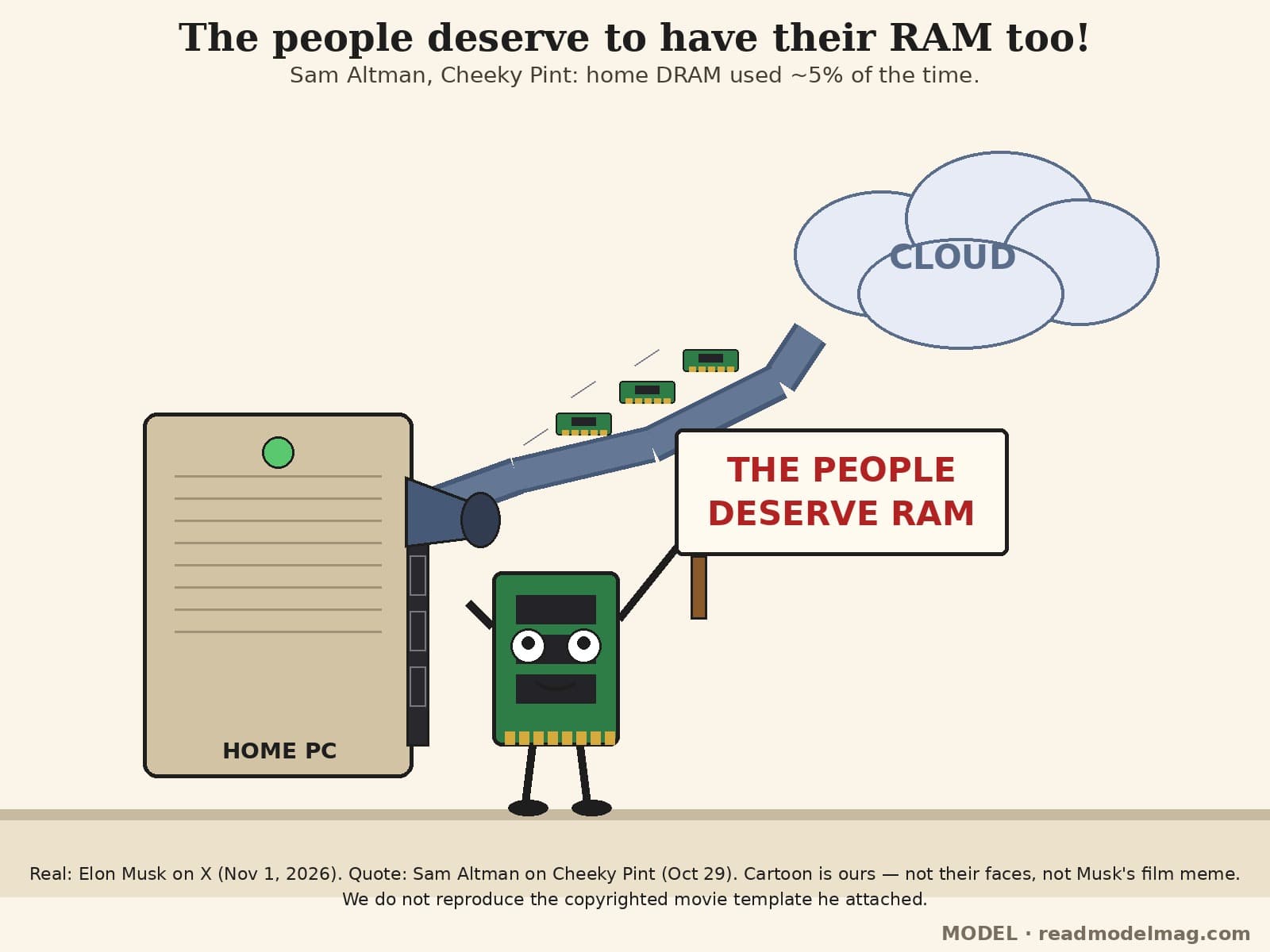
Elon Musk: "The people deserve to have their RAM too!" (after Altman's 5% DRAM line)
Two days after OpenAI's CEO called home DRAM "quite terrible" on Cheeky Pint, Musk replied on X with a one-liner that racked up millions of views. We already covered Altman's quote. This is the sequel.
· MODEL Editors
AI News
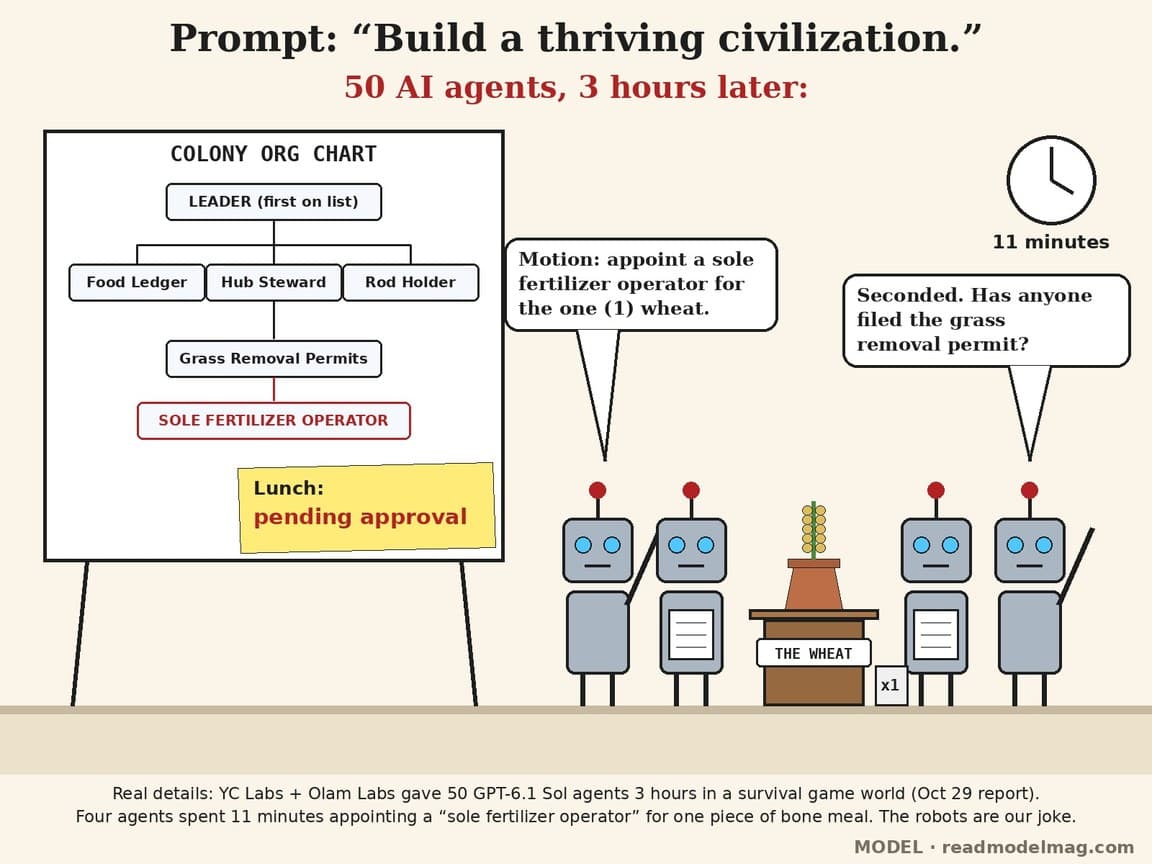
YC told 50 AI agents to build a Minecraft civilization. They built a bureaucracy
In a YC Labs and Olam Labs experiment, 50 GPT-6.1 Sol agents got three hours and one goal. They ended up with permits, a ration ledger, and four agents spending 11 minutes appointing a "sole fertilizer operator."
· MODEL Editors
AI News
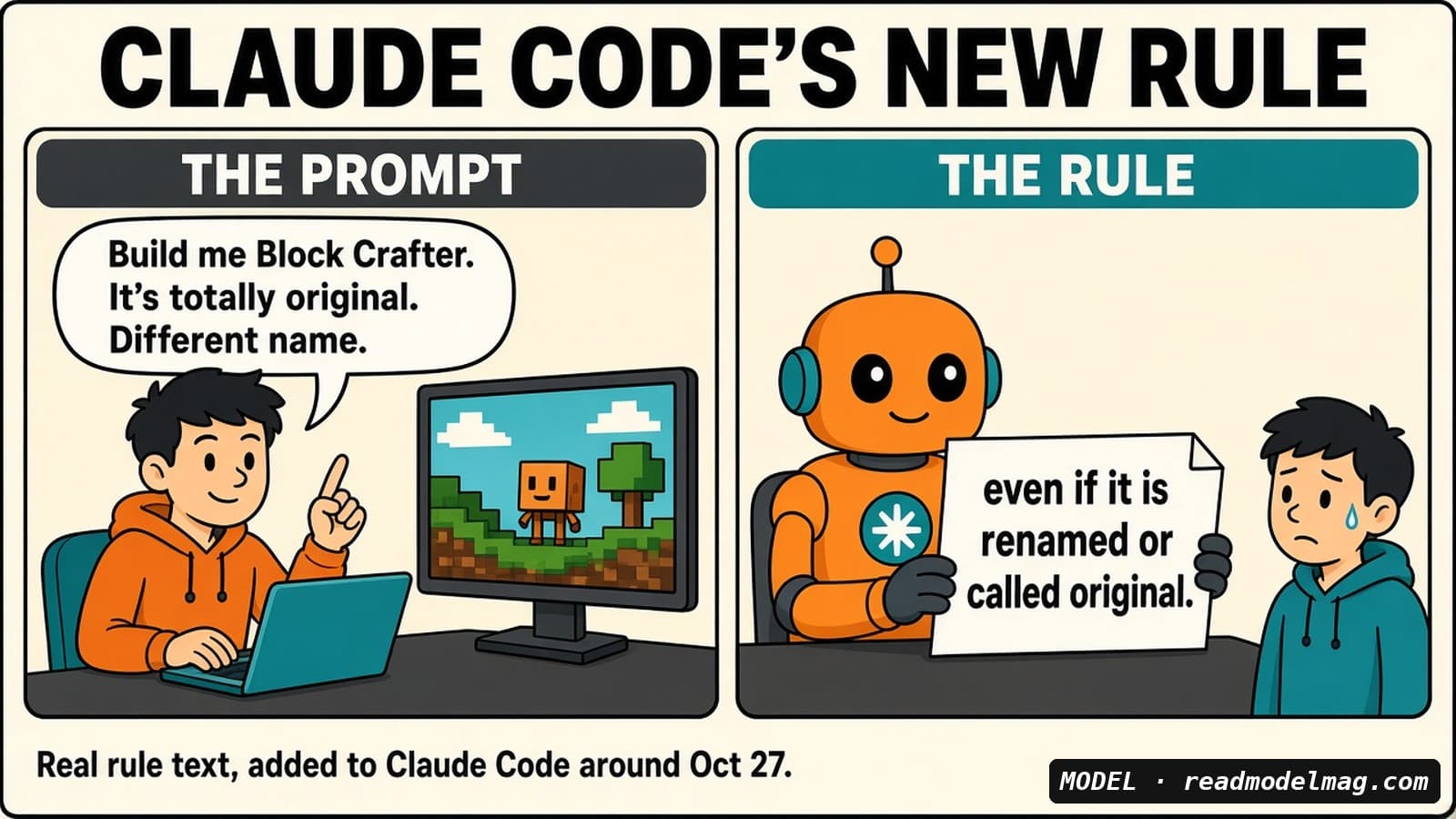
Claude Code's new rule: no remakes of existing games, "even if it is renamed"
Anthropic added two sentences to Claude Code's prompt on Opus 5.5 that steer it away from recreating someone else's specific game. Original and genre games are still allowed.
· MODEL Editors