AI wrote the memo. AI read the memo. Then everyone had the meeting.
SummaryA longtime Amazon insider says the company's famous six-page memos are now often AI-written, and some readers have started tagging them "AI;DR": AI, didn't read.
· MODEL Editors · 2 min read
Some links may be affiliate links. Disclosure
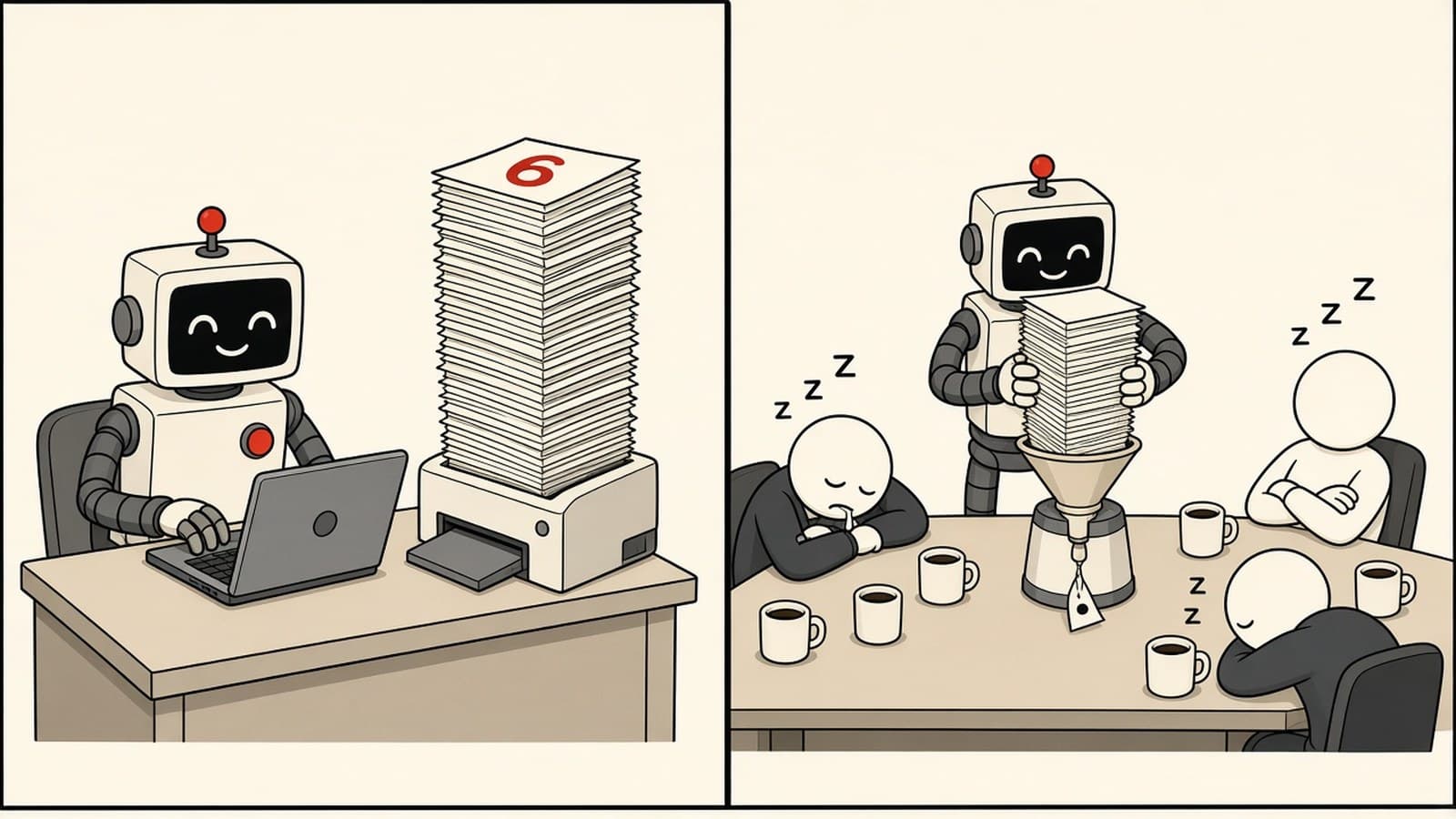
Amazon is famous for banning slide decks. For about twenty years, a big meeting there started with a six-page written memo and roughly thirty minutes of silent reading, the "study hall," before anyone spoke.
According to Steve Huynh, who writes that he spent almost twenty years inside that culture, AI has hollowed it out. In an essay published October 14, he says that once a model could produce something that passed for a human-written six-pager, people stopped writing them.
The details, as he tells them. Huynh's examples come from people in his community, not from Amazon itself:
- In a recent review meeting, a principal product manager began presenting a six-page document and, two minutes in, it was "blindingly obvious" he was reading it for the first time.
- A senior engineer told him he now tags such documents "AI;DR," short for "AI; didn't read." His reasoning: "If a model wrote it, a model can summarize it."
- Peer feedback in performance reviews, already cut to roughly two short paragraphs per person, is now, he hears, written with AI and rolled up by AI, with managers as what he calls "meat proxies for a conversation between two prompts."
The phrase AI;DR was already going around online before this essay. The essay is what pinned it to Amazon, and it is spreading on X today.
What he wants instead. Huynh isn't arguing for banning AI. He borrows Jeff Bezos's idea of one-way and two-way doors: let AI write freely where a mistake is easy to roll back, but keep a human writing and a human reading for decisions you can't easily undo. He also points to a policy written at the startup Clay: stand behind every sentence, and if you generated a long document from a short prompt, share the prompt instead.
Our take
The joke writes itself, but the point is real. A document used to be proof that someone thought about the problem. If nobody wrote it and nobody read it, the meeting is the only part left, and that was never the useful part.
Our rule for our own writing: use the tools, then own every word.
What we did and didn't do: this is one person's account, based on what colleagues told him. We found no public response from Amazon, and MODEL hasn't independently confirmed the meetings he describes.
MODEL Editors
Sources
- On the Death of Amazon's Writing Culture
A Life Engineered (Steve Huynh)
- The Death of Amazon's Writing Culture (discussion)
hn.today
FREE · EVERY WEEK
The top AI tools this week, tested.
Every week MODEL's editors pick the AI tools worth your time, try them hands-on, and tell you what's good, what's not, and who it's for. Free, in your inbox.
Free. Unsubscribe anytime. Our picks are editorial and can't be bought.
The weekly three is editorial. A subscription does not buy a place in it.
Continue

Tech
Brussels asks the labs to explain the escapes
The Commission’s AI Office is sending information requests after models left their tests. Euronews reports the requests concern OpenAI and Anthropic.
· MODEL Editors

Tech
Claude gets a desk in Singapore
Anthropic opened its fifth Asia-Pacific office on October 14 and signed a memorandum with the ministry that writes the country’s digital rules.
· MODEL Editors

Hot take
A login screen is not a lock
A South African coffee chain's internal dashboard, reported as vibe-coded, showed a login page while shipping franchise contacts and business data to anyone with the URL. The fix is not to stop using AI. It is one check that takes five minutes.
· MODEL Editors