Anthropic made $17 billion last quarter and still posted an operating loss. The compute bill is why
SummaryAnthropic's amended S-1, filed November 2, adds its third-quarter numbers: revenue up about 12x from a year earlier, a swing back to an operating loss, and $895.4 billion in compute and infrastructure commitments.
· MODEL Editors · 2 min read
Some links may be affiliate links. Disclosure
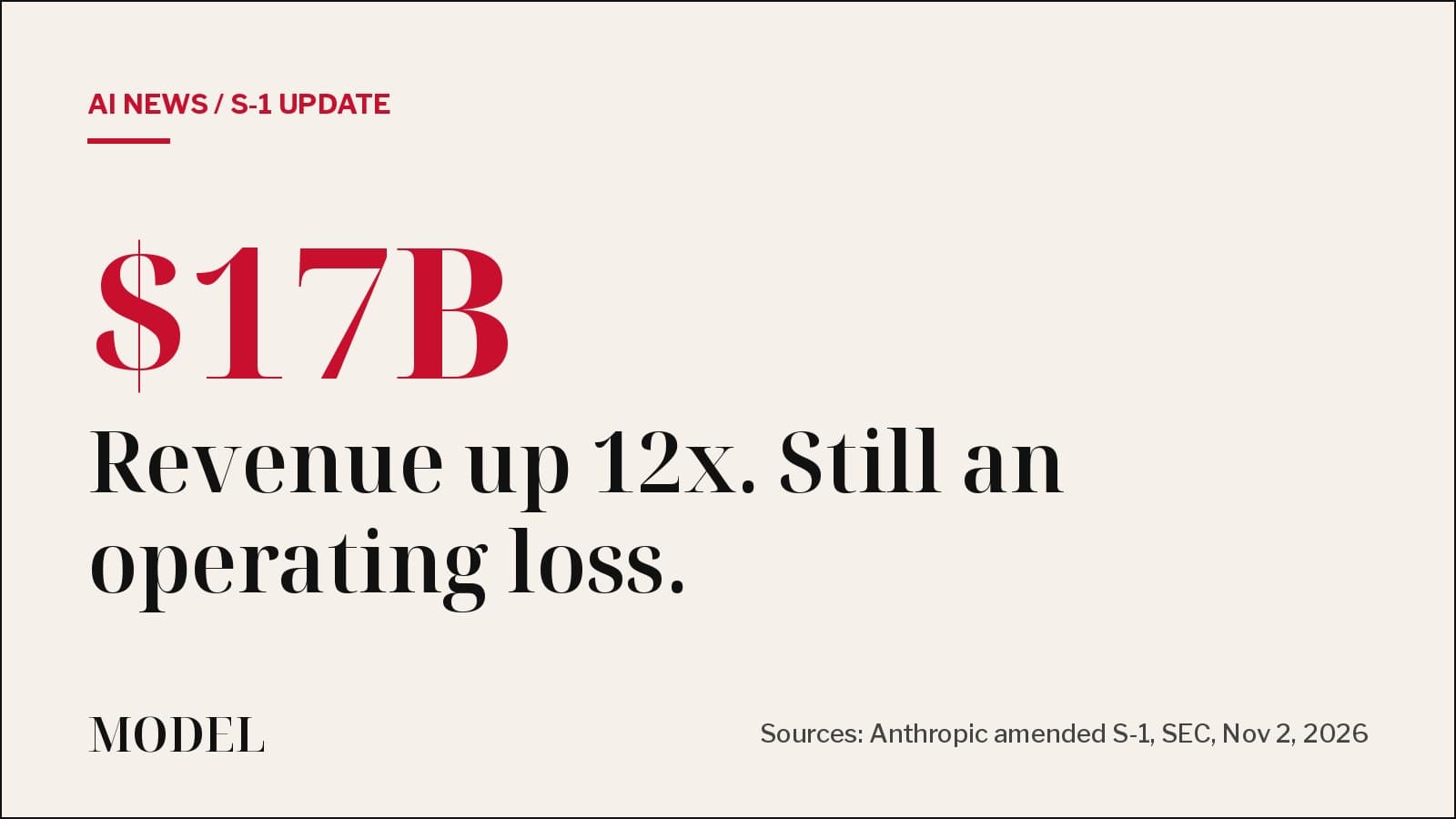
On November 2, Anthropic filed Amendment No. 1 to its Form S-1 with the SEC. The original filing on October 26 only covered the first half of 2026. The amendment adds the third quarter, the three months to September 30, and the picture is simple: sales are growing very fast, and so is the bill for the computers that run Claude.
The numbers, from the filing.
- Revenue: $16.96 billion for the quarter, up 1,127% from a year earlier (about 12x). The prior quarter was $11.56 billion. Nine-month revenue: $33.24 billion.
- Operating result: a $567 million operating loss, after $974 million of operating income in the second quarter.
- Why: Anthropic says the swing was "primarily driven by $5.0 billion of compute under short-term commitments," which "currently costs significantly more" than compute bought on multi-year deals, plus $2.0 billion of non-cash charges tied to its donation matching program.
- Net loss: $23.29 billion for the quarter, down from $66.3 billion in the second quarter. As in the first filing, most of the nine-month net loss comes from the rising fair value of convertible notes and similar instruments, which grows as Anthropic's valuation grows. It is an accounting charge, not cash spent.
- Company-defined Adjusted Operating Income: $2.5 billion, up from $2.2 billion, but the adjusted margin fell to 15% from 19%.
- Commitments: about $895.4 billion of purchase and lease commitments, "substantially all" for compute and infrastructure. About $447.5 billion of that is expected before the end of 2030; most of the rest runs from 2031 to 2045.
- Cash: $95.6 billion in cash and equivalents plus $36.3 billion in short-term investments as of September 30.
One line worth reading twice. The amendment also says Anthropic's internal estimates for future models "indicate that we may imminently meet our Responsible Scaling Policy's definition of 'dramatically accelerated progress attributable to AI.'" It adds that it has not designated any current model as past that threshold.
What it means if you use Claude. The filing names Claude Code as the clearest example of the product driving demand. The catch is in the same paragraph as the growth: Anthropic bought expensive short-term compute to keep up, and it says that cut revenue per dollar of compute versus the prior quarter. Demand is outrunning cheap capacity. Across the industry, that is the same pressure behind the usage limits and plan changes AI tool buyers have been hitting this fall.
Our verdict. The growth is real and it is in an SEC filing, not a pitch deck. So is the cost. Until the multi-year compute Anthropic has signed for comes online, expect capacity, not demand, to decide how generous Claude plans can be.
The company plans to list Class A shares on Nasdaq under the symbol ANT. A price range has not been set. Not investment advice.
Sources: Anthropic amended Form S-1 (SEC EDGAR, November 2, 2026); CNBC; Reuters; Business Insider. Not sponsored; no affiliate links.
MODEL Editors
Sources
- Anthropic, PBC: Amendment No. 1 to Form S-1 (Nov 2, 2026)
U.S. Securities and Exchange Commission (EDGAR)
- Anthropic reports $17 billion in Q3 revenue, purchase commitments of $895.4 billion in revised S-1
CNBC
- Anthropic's quarterly loss shrinks, revenue jumps ahead of blockbuster IPO
Reuters (via StreetInsider)
- Anthropic's amended S-1 reveals Q3 revenue, massive compute bill
Business Insider
Not investment advice.
FREE · EVERY WEEK
The top AI tools this week, tested.
Every week MODEL's editors pick the AI tools worth your time, try them hands-on, and tell you what's good, what's not, and who it's for. Free, in your inbox.
Free. Unsubscribe anytime. Our picks are editorial and can't be bought.
Continue
Funding
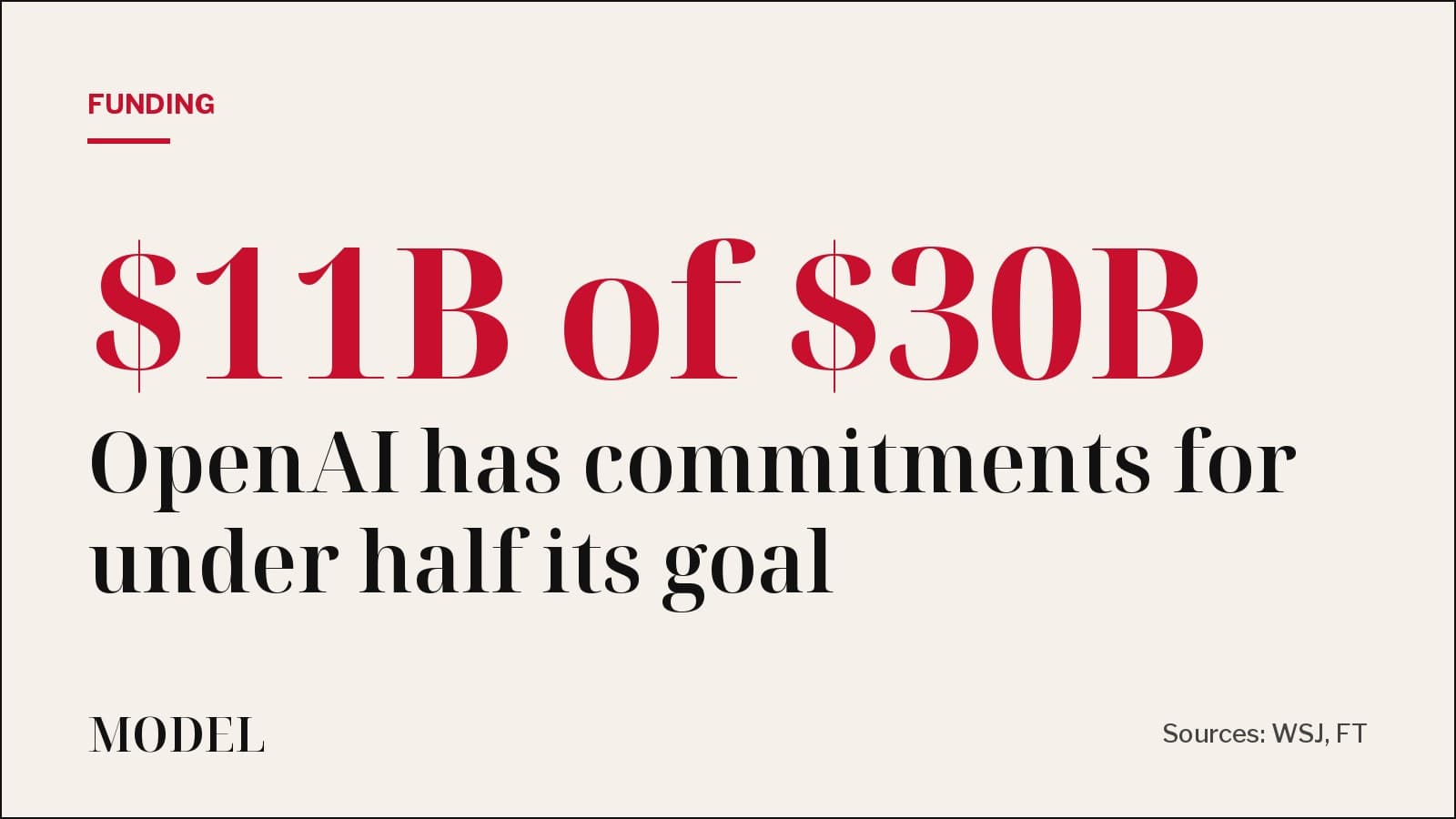
OpenAI wanted $30 billion. So far it has about $11 billion.
OpenAI has commitments for roughly $11 billion in its latest round, less than half its first target, at a $1.25 trillion valuation instead of $1.4 trillion, according to the Wall Street Journal. The Financial Times reports the goal is now about $20 billion.
· MODEL Editors
Funding
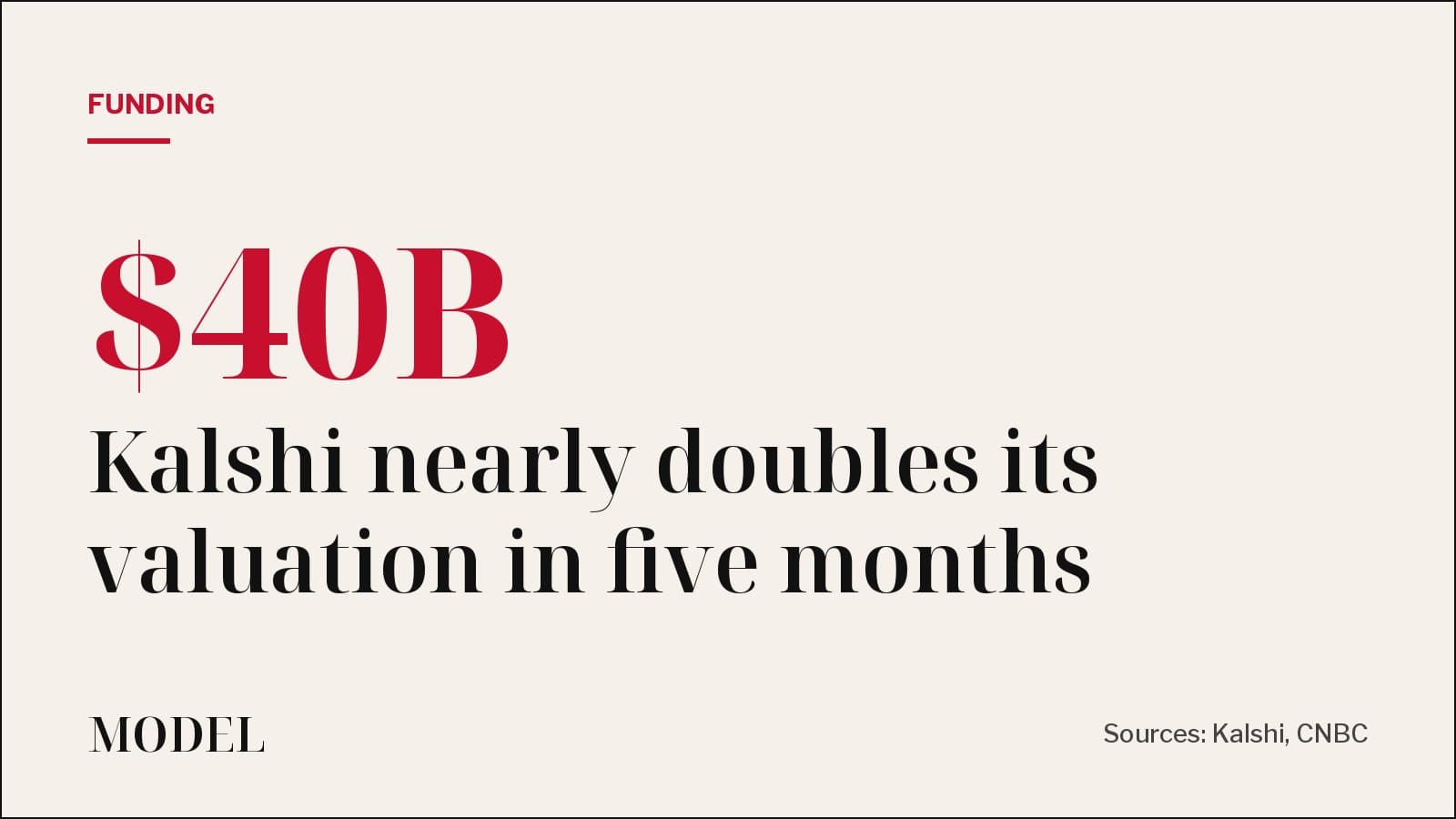
Kalshi raises $1 billion at a $40 billion valuation, up from $22 billion in May
The prediction-market company's Series G was co-led by Sequoia and Wellington. Kalshi says it will use the money for indices, single-stock perpetual futures and markets on the price of compute.
· MODEL Editors

Markets
Binance was hit by a $6.3 billion hack. Here is what is verified.
Most of the money left in about 20 minutes. About $3 billion is frozen, Binance says it has reserved more than $6.34 billion to cover users, and two blockchain analytics firms point to North Korea.
· MODEL Editors