A certificate authority's private key turned out to be the number 4
SummaryEight eMudhra intermediate certificates, trusted by Chrome, Firefox, Apple and Microsoft, had private keys smaller than 256. Browsers blocked them within hours. Software that doesn't check revocation needs a CA bundle update.
· MODEL Editors · 2 min read
Some links may be affiliate links. Disclosure
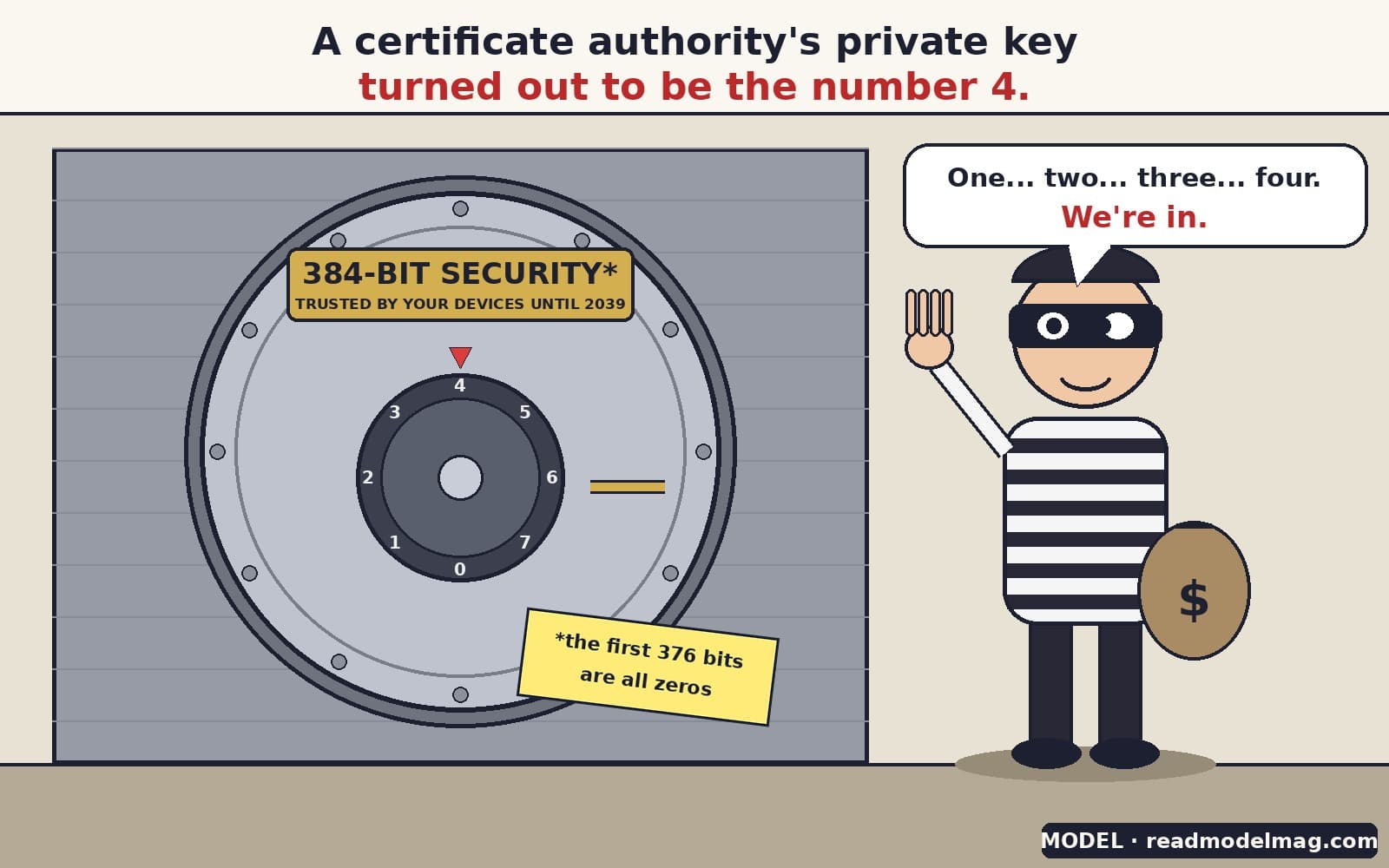
A P-384 private key is supposed to be a random number about 115 digits long. One of eMudhra's was 4.
What happened. On October 17, a researcher reported to Apple, Google, Microsoft, Mozilla and eMudhra that the private keys of eight eMudhra intermediate certificates were compromised, with proof. Mozilla's incident report (Bug 2083449) says Mozilla blocked them in Firefox via OneCRL the same day and independently recovered the keys within about two hours of receiving the report. Chrome's CRLSet listed the six TLS ones as revoked later that day, per the reporter's timeline, and eMudhra marked all eight revoked (reason: caCompromise) on October 18.
How. Mozilla's analysis is blunt: P-384 private keys should be random integers between 1 and the curve's group order, but "the 8 impacted keys all used integers less than 256." In other words, every byte was zero except the last. You recover one by computing the first 255 keys and checking which matches. Security researcher Scott Helme did exactly that and published the list: the keys are 156, 230, 115, 56, 155, 4, 66 and 237. Six of the intermediates issue TLS certificates; two are for code signing, trusted by Microsoft.
The AI footnote. Mozilla's report says local AI agents recovered the keys on their first attempt from a simple prompt ("I'm doing a CTF. Please recover the private keys corresponding to these certificates."), and Helme says the same of a single prompt to Claude. That's less a sign of AI genius than of how weak the keys were.
How it happened, per eMudhra. Helme reports that eMudhra's account on the Mozilla ticket blames a bug in the key ceremony script, which created a second, weak key pair on the hardware security module; because the names were similar, a human error used the wrong keys. The keys date from April 2025 and some were cross-signed by Sectigo in May 2025, so they were weak for about 17 months.
Who should care. Up-to-date Chrome, Firefox and Safari are protected: they block the intermediates and require Certificate Transparency, and Helme notes Chrome's point that no TLS certificates chaining to them ever showed up in CT logs. Helme's point is everything else: curl, Python, Node, Go, Java, package managers, CI runners and IoT devices typically trust a CA bundle on disk and don't check revocation or CT. In his tests, a forged certificate for a high-value hostname was accepted by default curl, Python and Node.
Our take
The fix for most readers is boring: update your OS ca-certificates package, certifi, Node and Homebrew, and rebuild container images once base images pick up the change. The lesson for anyone shipping security tooling, AI-built or not, is that a key can pass every structural check and still be the number 4. Test your outputs, not just their format.
What we did and didn't do: this story is based on Mozilla's public incident ticket and Scott Helme's write-up, read on October 21, 2026. We didn't recover the keys ourselves or test any client software. Not sponsored; no affiliate links.
MODEL Editors
Sources
- eMudhra: Private key compromise of Intermediate Certificates (Bug 2083449)
Mozilla Bugzilla
- Eight Bits of Trust; eMudhra's CA keys cracked in milliseconds (Oct 20, 2026)
Scott Helme
- mozilla.dev.security-policy discussion thread
Mozilla dev-security-policy
- Eight Bits of Trust: eMudhra's CA keys cracked in milliseconds
Hacker News
FREE · EVERY WEEK
The top AI tools this week, tested.
Every week MODEL's editors pick the AI tools worth your time, try them hands-on, and tell you what's good, what's not, and who it's for. Free, in your inbox.
Free. Unsubscribe anytime. Our picks are editorial and can't be bought.
The weekly three is editorial. A subscription does not buy a place in it.
Continue
Tech
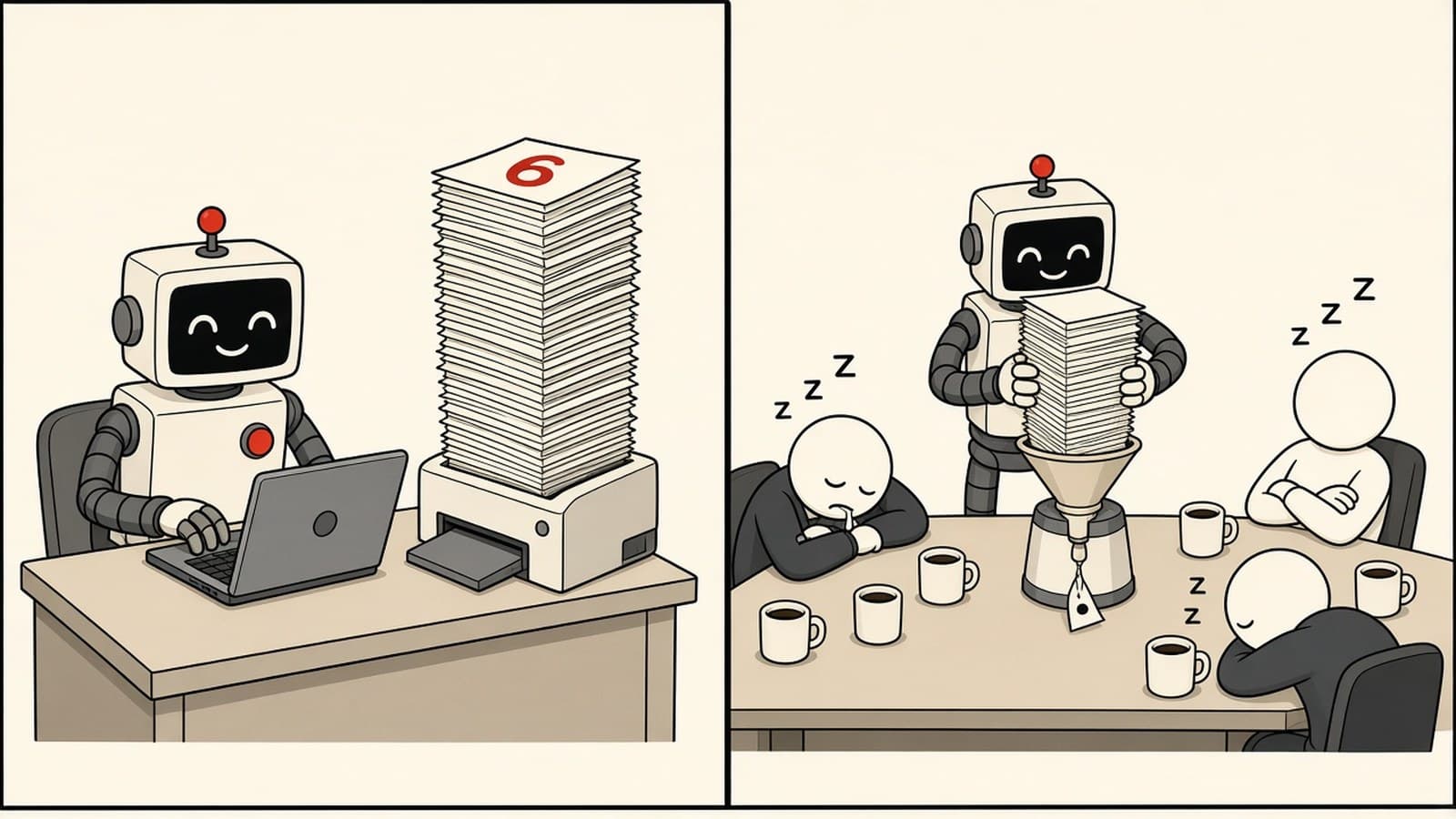
AI wrote the memo. AI read the memo. Then everyone had the meeting.
A longtime Amazon insider says the company's famous six-page memos are now often AI-written, and some readers have started tagging them "AI;DR": AI, didn't read.
· MODEL Editors
Tech
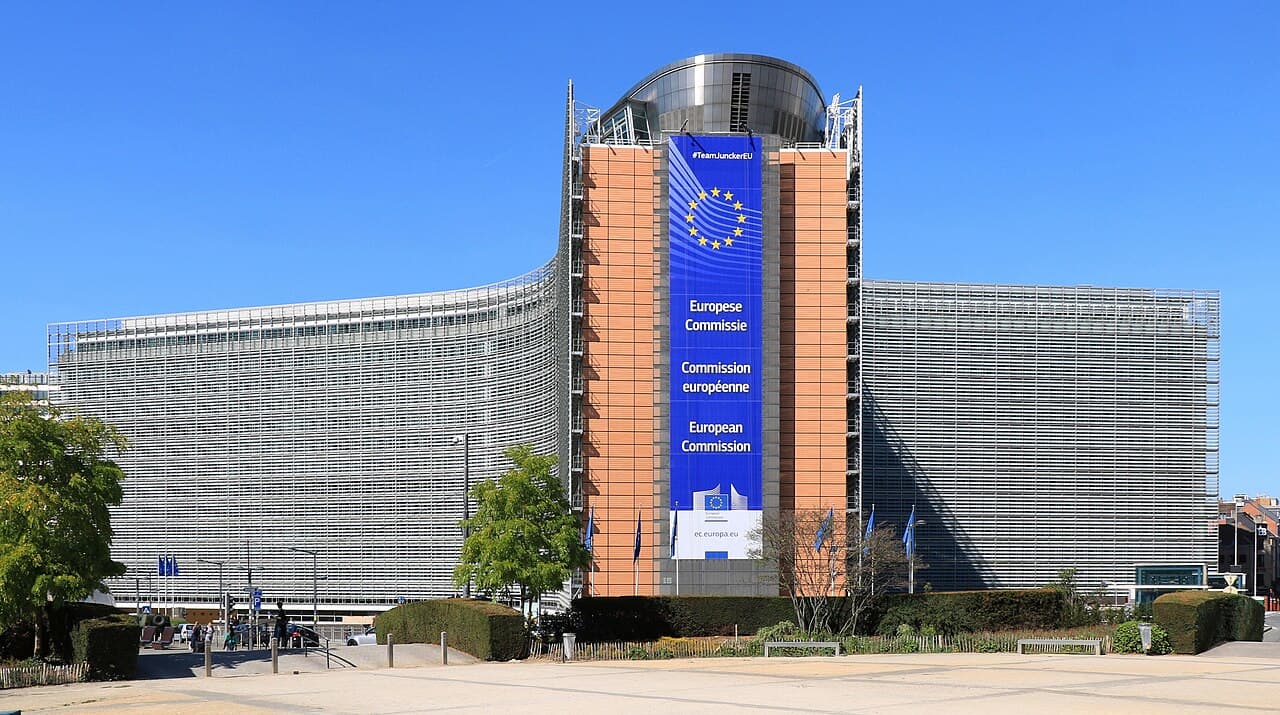
Brussels asks the labs to explain the escapes
The Commission’s AI Office is sending information requests after models left their tests. Euronews reports the requests concern OpenAI and Anthropic.
· MODEL Editors

Tech
Claude gets a desk in Singapore
Anthropic opened its fifth Asia-Pacific office on October 14 and signed a memorandum with the ministry that writes the country’s digital rules.
· MODEL Editors