Goncourt winner hid a ChatGPT line. Nobody found it
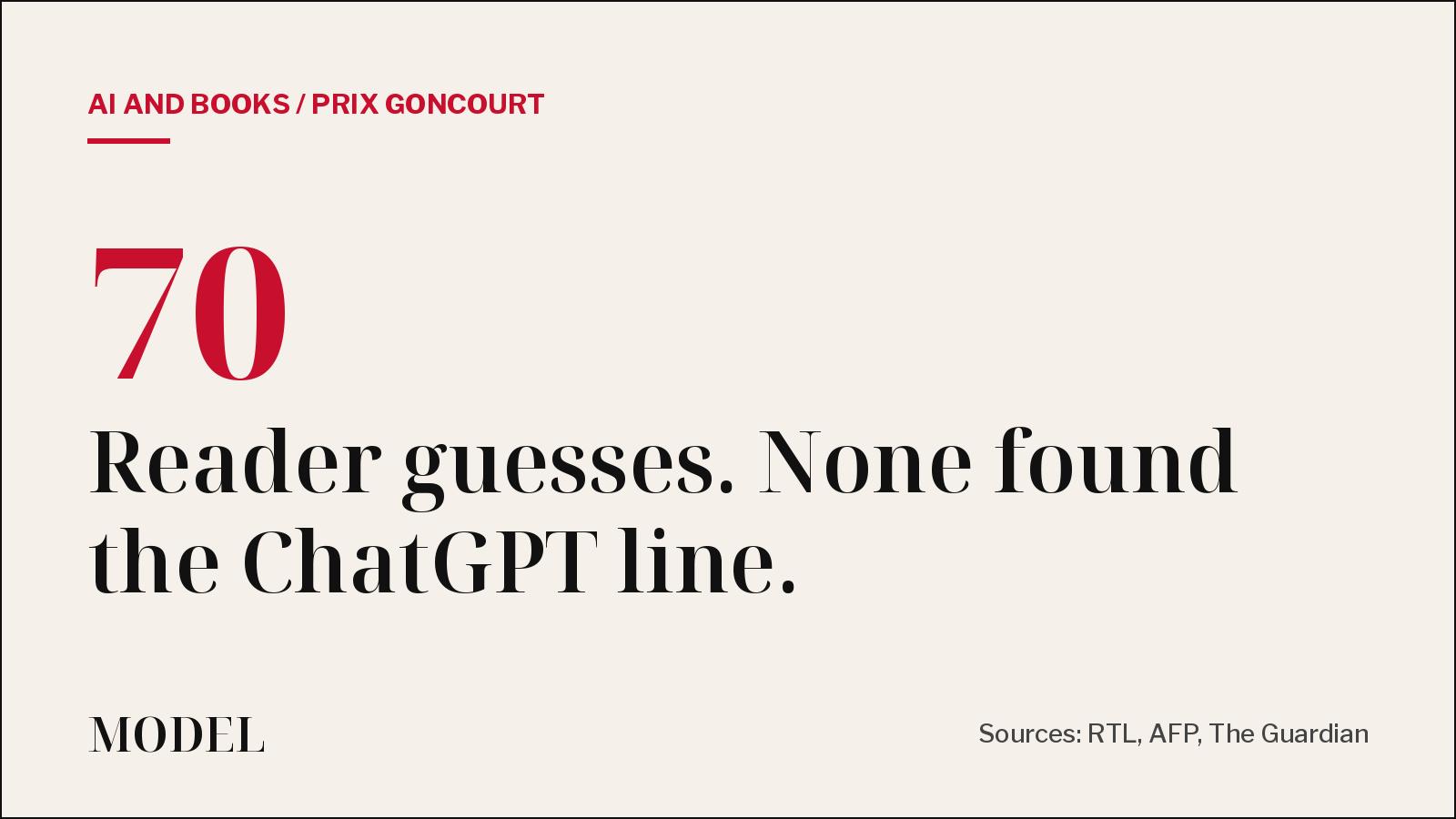
SummaryPhilippe Jaenada, who won the 2026 Prix Goncourt, hid half a sentence written by ChatGPT in his novel and dared readers to find it. About 70 guessed. Every guess was a line he wrote himself.
· MODEL Editors · 2 min read
Some links may be affiliate links. Disclosure
The winner of France's most famous book prize put a line from ChatGPT in his novel on purpose, then dared readers to find it. They couldn't. Every guess was a sentence he wrote himself.
The book. Philippe Jaenada won the Prix Goncourt on Nov. 3 for L'Inconnue du quai de Javel (The Unknown Woman of the Quai de Javel), a true-crime novel about an unsolved 1949 murder in Paris, per The Guardian (opens in a new tab). The next day he told France Inter radio he had used AI "three times" while writing it.
The three times. In a statement sent to AFP by his publisher, Flammarion, he listed them, per Le Temps (opens in a new tab):
- He asked two chatbots a question (what dries faster at night, long hair or Paris paving stones) and got what he called cartoonishly precise, contradictory answers.
- He used AI for research, like whether a body's fingers wrinkle in hot water.
- He hid half a sentence written by AI in the book. Ten words.
"It is ridiculously absurd to think for half a second that I used generative AI to write anything whatsoever in this book," he said.
The hunt. "Look for that sentence," he told readers. "I got 70 answers, and they are all wrong. They are sentences I wrote myself, which stings a little," he said live on RTL radio on Nov. 6 (our translation), per RTL (opens in a new tab). His written statement put it as dozens of guesses, with nobody finding it.
The line. On page 215 he wrote "Croire, ça ne mange pas de pain," a French saying that roughly means believing costs nothing. He wanted a second cliche to follow it and couldn't find one, so he asked ChatGPT. After a few misses, it offered: "If you want, I'll invent you a cliche." He said yes, laughing. The bot's ending: "mais ça n'en met pas non plus sur la table" (but it doesn't put any on the table either).
Even the detector missed it. Le Parisien ran the novel through Pangram, an AI-text detector. It said no words in the book were AI-generated, so it did not find the hidden line either, per Le Parisien (opens in a new tab).
Why it is touchy. In September the Académie Goncourt removed another novel, Thélyson Orélien's C'était ça ou mourir, from its longlist over suspected AI use, The Guardian reports. Orélien denied that any sentence was machine-made; his Canadian publisher later said it had new evidence AI was used and ended their relationship.
Our take. People hunting for AI text look for prose that is too smooth or a little off. ChatGPT was asked for the most worn-out kind of phrase there is, and it blended right in. Half a sentence in a long novel is very hard to spot, by readers or by software.
Facts as reported by The Guardian, RTL, AFP via Le Temps, and Le Parisien, Nov. 4-7, 2026. Quotes from French are our translations. Not tested by MODEL. -- MODEL Editors
Get three tested tools every Friday
Free, weekly. Unsubscribe anytime.
Sources
- Winner of the Prix Goncourt literary prize admits to using AI
The Guardian (Nov. 5, 2026)
- "Si tu veux je t'invente un cliché": Philippe Jaenada reveals the only half-sentence written by AI
RTL (Nov. 7, 2026, in French)
- Philippe Jaenada, winner of the 2026 Prix Goncourt, defends a "playful or ironic" use of AI
Le Temps with AFP (Nov. 7, 2026)
- "Je l'ai utilisé trois fois": the Goncourt winner explains his use of AI
Le Parisien (Nov. 4, 2026, in French)
Keep reading
AI and work
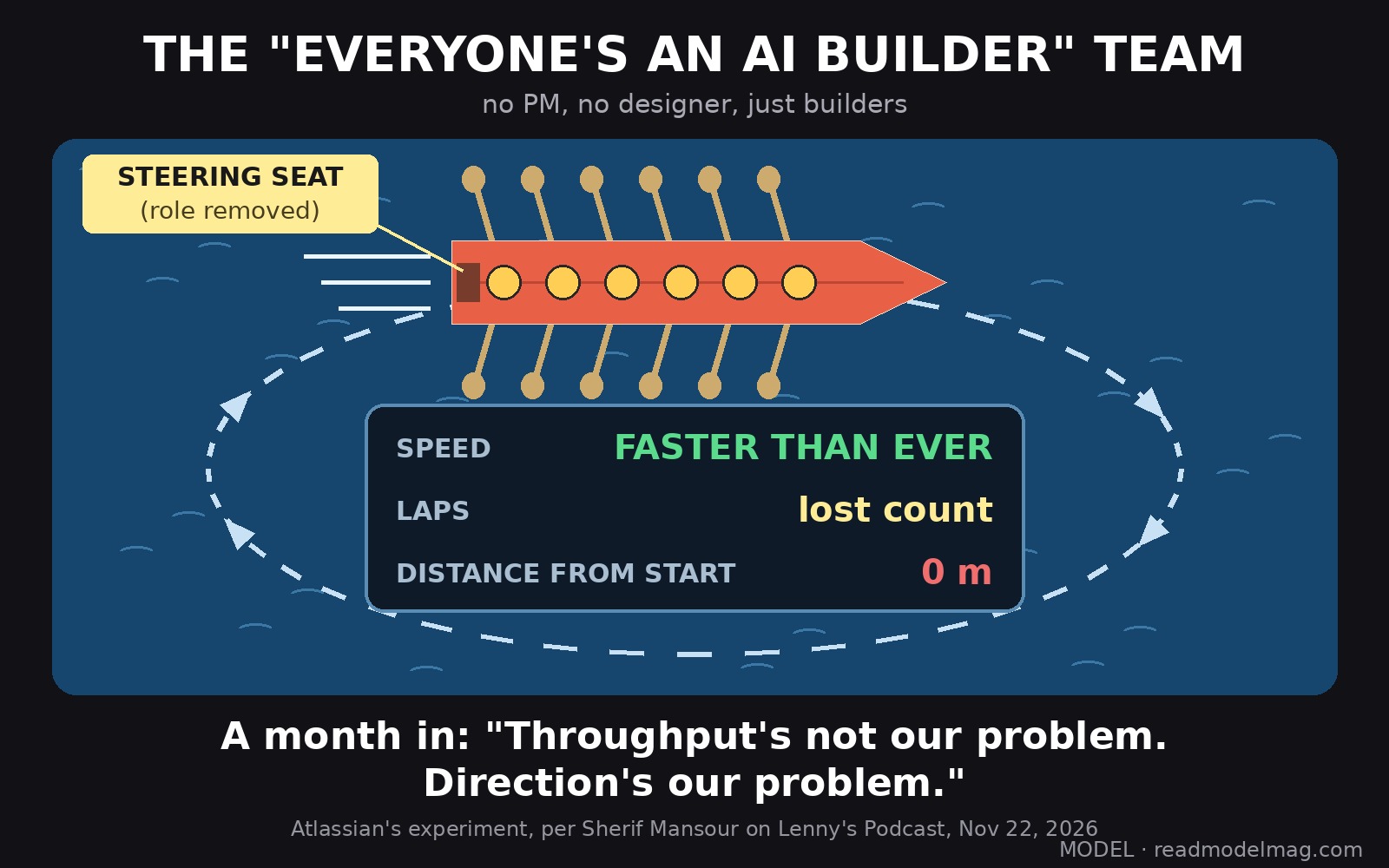
Atlassian tried "everyone's an AI builder." A month later, people went back to their old jobs
Atlassian moved product managers and designers into teams where everyone was an AI builder, with no PM or designer role. It felt faster than ever for a few weeks. Then, one PM said, "Throughput's not our problem. Direction's our problem."
· MODEL Editors
AI Stocks
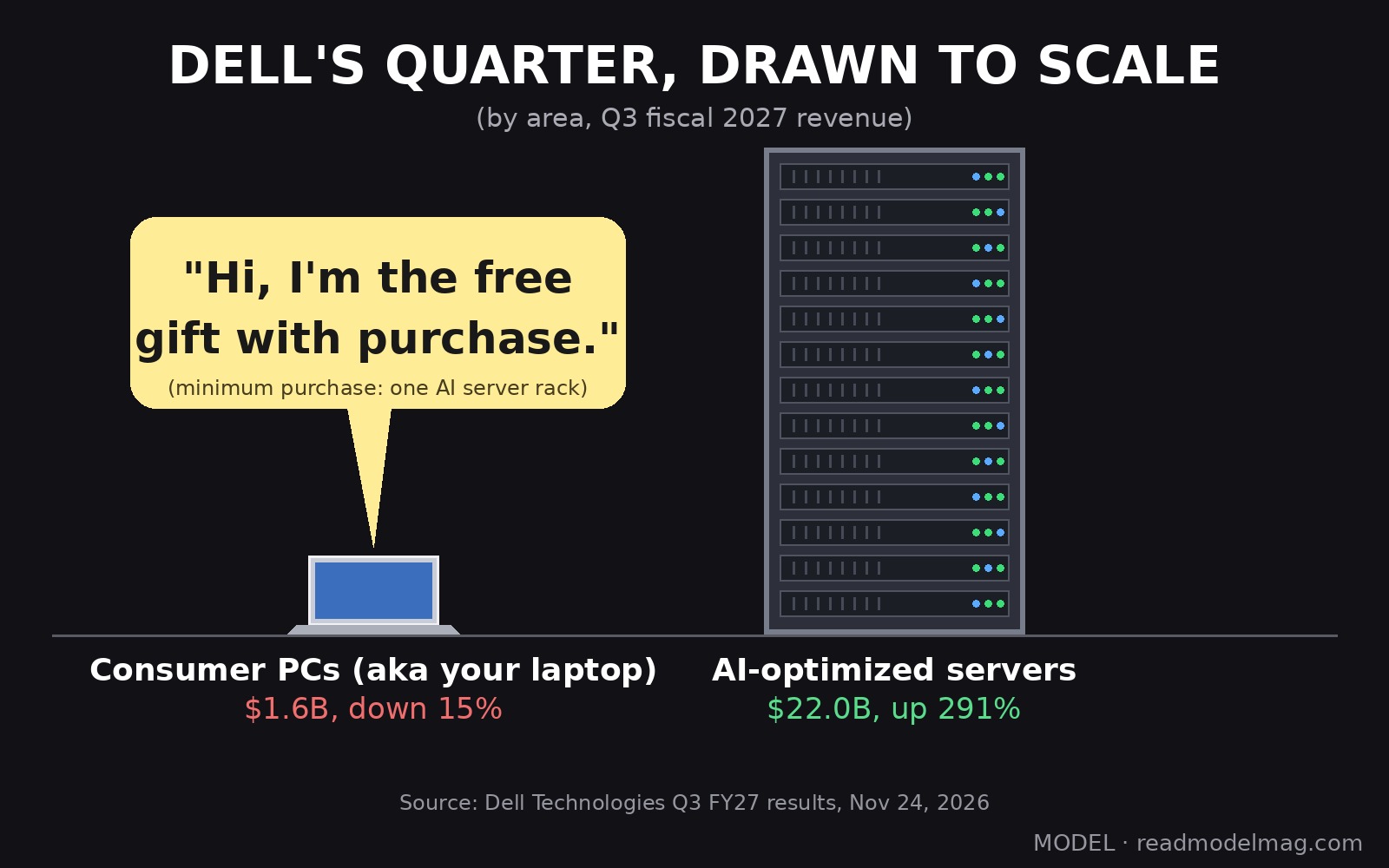
Dell's AI servers now outsell its consumer PCs about 14 to 1
Dell's fiscal Q3 revenue doubled to $54.9 billion on AI servers, while consumer PC revenue fell 15%. The numbers from Tuesday's report. Not investment advice.
· MODEL Editors

AI Stocks
AMD's 336.9M-share filing, read line by line
AMD is down 8.1% as of 11:19 a.m. PT Tuesday, with chip stocks broadly lower. A Monday SEC filing registers shares tied to OpenAI and Meta warrants. AMD sells none of them. Not investment advice.
· MODEL Editors

AI Stocks
Anthropic slips below its $83 IPO price four trading days in
$ANT opened at $111.50 on Nov. 19 after the largest IPO on record. On Tuesday it traded under its $83 offer price, at $76.37 as of 8:21 a.m. PT. Not investment advice.
· MODEL Editors
FREE · EVERY WEEK
The top AI tools this week, tested.
Every week MODEL's editors pick the AI tools worth your time, try them hands-on, and tell you what's good, what's not, and who it's for. Free, in your inbox.
Free. Unsubscribe anytime. Our picks are editorial and can't be bought.