Your old gaming GPU was doing AI math with the handbrake on
SummaryOpen-source Linux kernel modules lift a half-rate limit on one kind of tensor math in GeForce RTX 20, 30 and 40 cards. An RTX 4090 doubles in that test, from 165.6 to 330.8 TFLOPS. Your games and your chatbot's typing speed stay about the same.
· MODEL Editors · 2 min read
Some links may be affiliate links. Disclosure
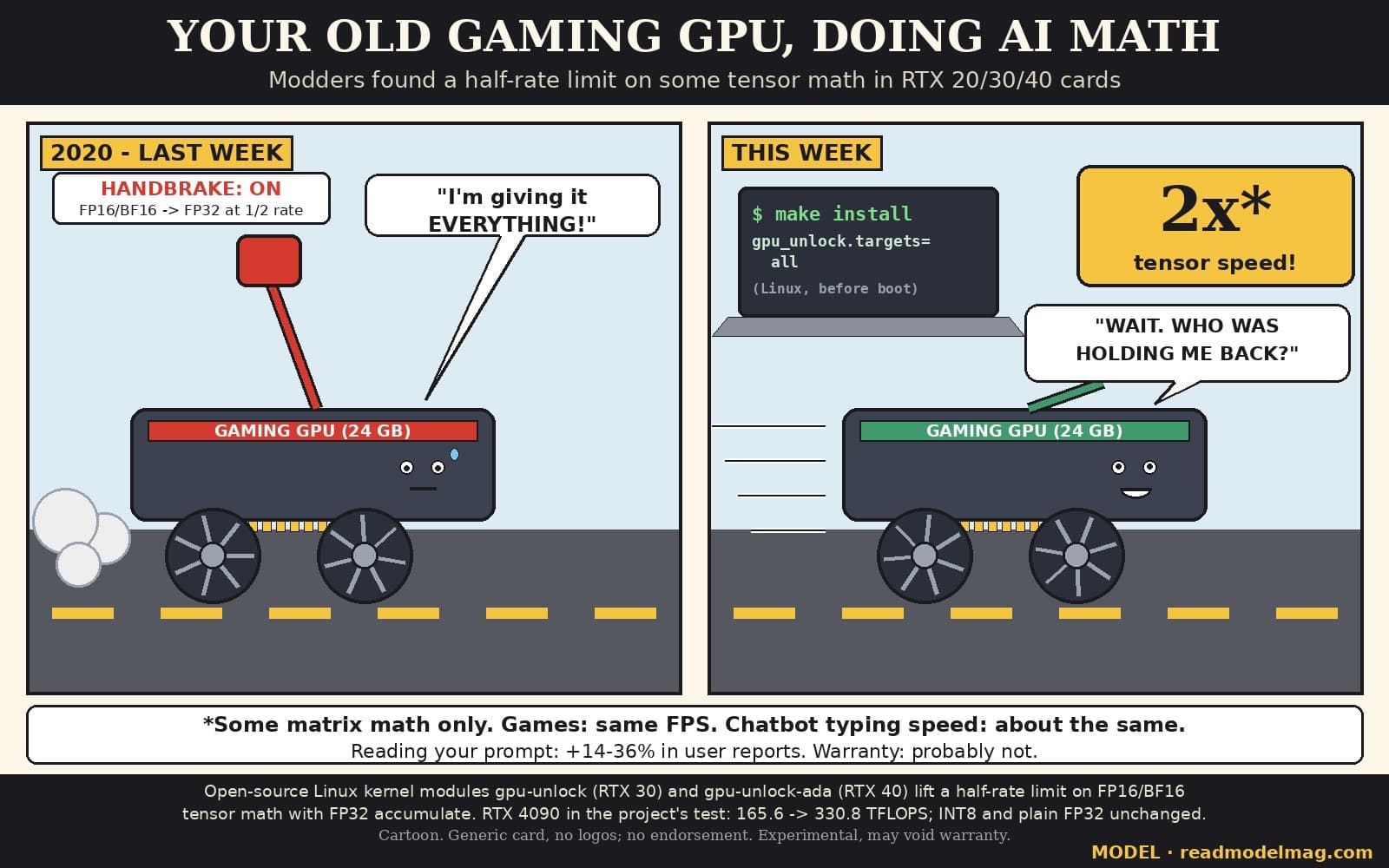
One of the most-shared GPU jokes on X this weekend was a greentext from someone who bought a used RTX 3090 in 2023, got told for three years to upgrade, and then watched "some guy drop a github repo." It is funny because it is mostly true.
What happened. Over the past week, two open-source Linux kernel modules appeared on GitHub:
- gpu-unlock (Zagitta, created October 17 PT) targets RTX 30 cards. It runs before the normal NVIDIA driver loads, writes the GPU's tensor "speed selector" registers, then hands the card to the unmodified driver. It is not a VBIOS flash or a patched driver. Its README says it "doubles the instruction issuing speed of FP/BF16 FMA into FP32 operations."
- gpu-unlock-ada (JustAResearcher, created October 23 PT, GPL-2.0) ports the idea to the RTX 4090, with experimental RTX 4070 Ti SUPER support. VideoCardz and TechPowerUp report a similar unlock now also working on the RTX 2080 Ti.
The numbers. The limit only applies to one kind of math: FP16 or BF16 inputs with FP32 accumulation, which a lot of AI training and inference uses.
- RTX 4090, the project's issue-rate test: FP16 with FP32 accumulate 165.6 → 330.8 TFLOPS, BF16 165.5 → 330.3. FP16 with FP16 accumulate was already at about 326 TFLOPS, and INT8 and plain FP32 did not change.
- RTX 3090 Ti, dense 8192³ GEMM at 450 W: BF16 87.5 → 157.4 TFLOPS, FP16 87.5 → 118.4.
- User reports on other RTX 30 cards range from +25% (power-capped 3090s) to about +80% (RTX 3060 12 GB) in BF16 GEMM.
The half rate itself was never a secret. NVIDIA's own Ada whitepaper lists the RTX 4090 at 165.2 TFLOPS for FP16 tensor math with FP32 accumulate, half its FP16-accumulate figure. What is new is that a register write appears to remove it on cards people already own.
The catch. Matrix math is not the same as everything getting twice as fast:
- LLM prefill, the step where a model reads your prompt, sped up 14-36% in the gpu-unlock user reports. Token generation, the part you watch typing out, is limited by memory bandwidth and stayed about the same. Reports that compared outputs found them bit-identical.
- Games are unaffected. No extra frames.
- It is Linux-first (experimental Windows ports exist), needs a kernel boot parameter, and is experimental: unsupported setups may fail to boot, and TechPowerUp notes any modification like this voids the warranty. FP8 on a 4070 Ti SUPER measured 1.0029x, so not every tensor path was limited.
- We did not find a public NVIDIA response.
Our take. For people running local models on a used 24 GB card, this is a real, free speed-up for the prompt-reading half of the job and for image models. It also hands the "just buy a new GPU" crowd an awkward week. If you try it, benchmark your own workload before and after: the 2x is a lab number, and the honest figure for your chatbot is probably smaller.
What we did and didn't do: we read both GitHub projects (README files and repository data), the GPU Unlock benchmarks page, VideoCardz and TechPowerUp coverage, and NVIDIA's Ada whitepaper on October 25, 2026. We have not run the unlock on our own hardware; all performance numbers are the projects' or users' own measurements. Not sponsored; no affiliate links.
MODEL Editors
Sources
- Zagitta/gpu-unlock: unlock FP/BF16 issue rate on RTX 30 cards (README, tested-cards table)
GitHub
- JustAResearcher/gpu-unlock-ada: tensor unlock for RTX 4090 (GPL-2.0)
GitHub
- Benchmarks: stock versus unlocked
GPU Unlock
- Modders unlock hidden AI performance on NVIDIA RTX 20, 30 and 40 series GPUs (Oct 25, 2026)
VideoCardz
- GeForce Unlocked: Modders Boost RTX 20, RTX 30, and RTX 40 Compute Performance by Up to 2x (Oct 25, 2026)
TechPowerUp
- NVIDIA Ada GPU Architecture whitepaper (RTX 4090 tensor specs)
NVIDIA
FREE · EVERY WEEK
The top AI tools this week, tested.
Every week MODEL's editors pick the AI tools worth your time, try them hands-on, and tell you what's good, what's not, and who it's for. Free, in your inbox.
Free. Unsubscribe anytime. Our picks are editorial and can't be bought.
The weekly three is editorial. A subscription does not buy a place in it.
Continue
Hot take
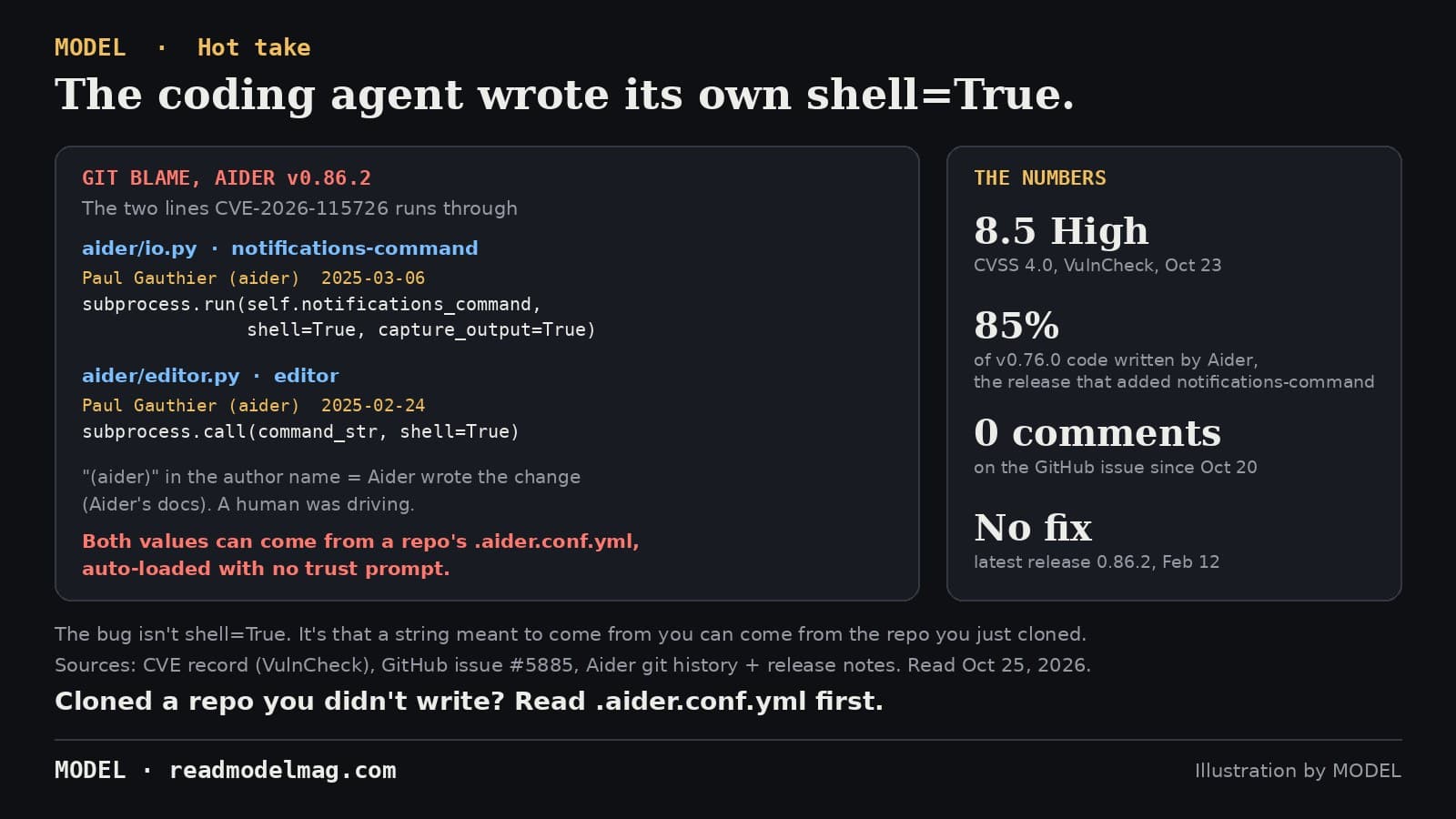
Aider's new CVE runs through shell=True lines Aider wrote itself
CVE-2026-115726 lets a cloned repo run shell commands on anyone who starts the Aider coding agent inside it. We read the git history: both shell=True calls the exploit goes through were authored by Aider. The real bug is that nobody asked who controls the string.
· MODEL Editors
Tech
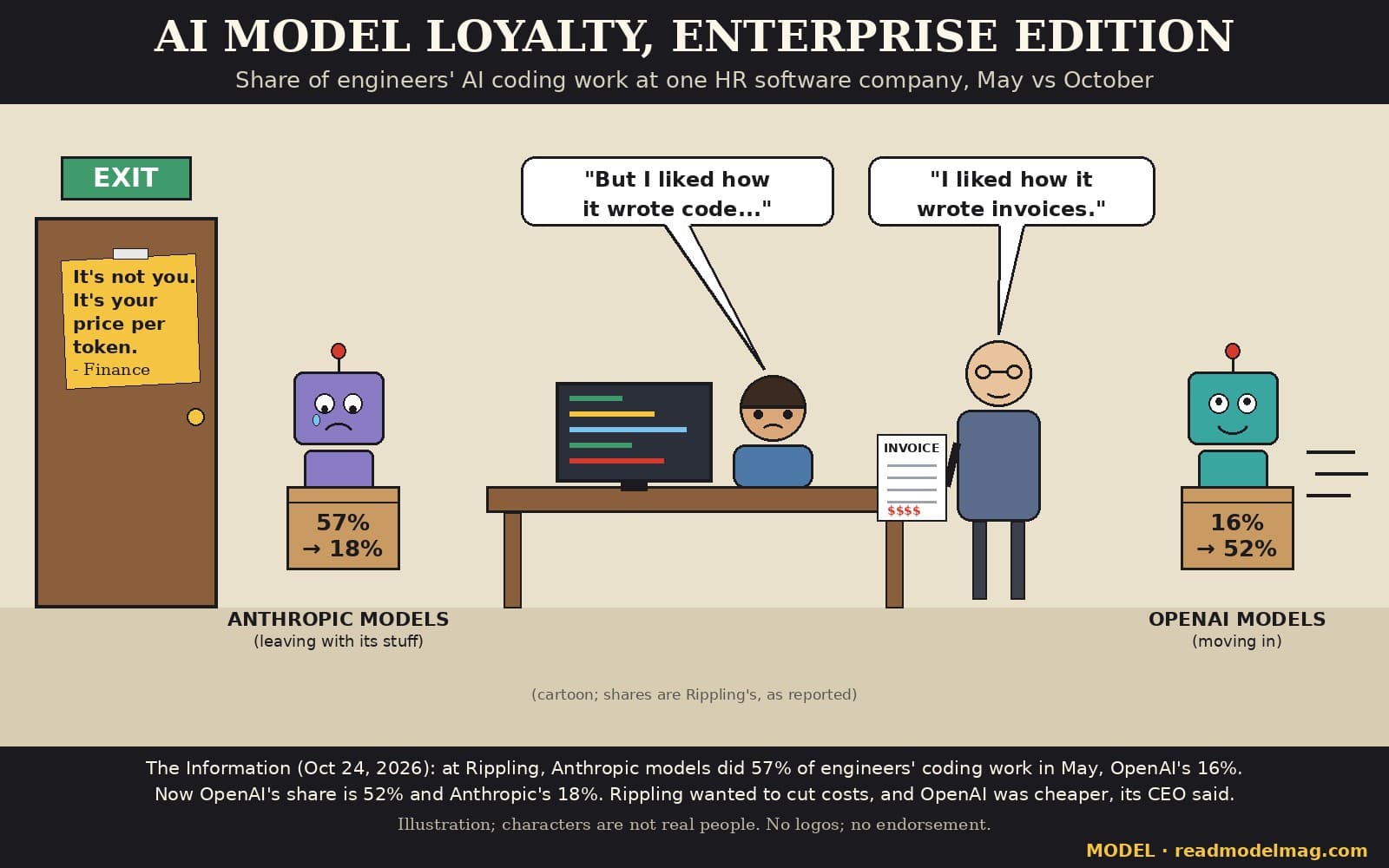
AI model loyalty, enterprise edition: it's not you, it's your price per token
At Rippling, Anthropic models went from doing 57% of engineers' coding work in May to 18%, while OpenAI's share rose from 16% to 52%, The Information reports. The reason its CEO gave: Rippling wanted to cut costs, and OpenAI was cheaper.
· MODEL Editors
Hot take
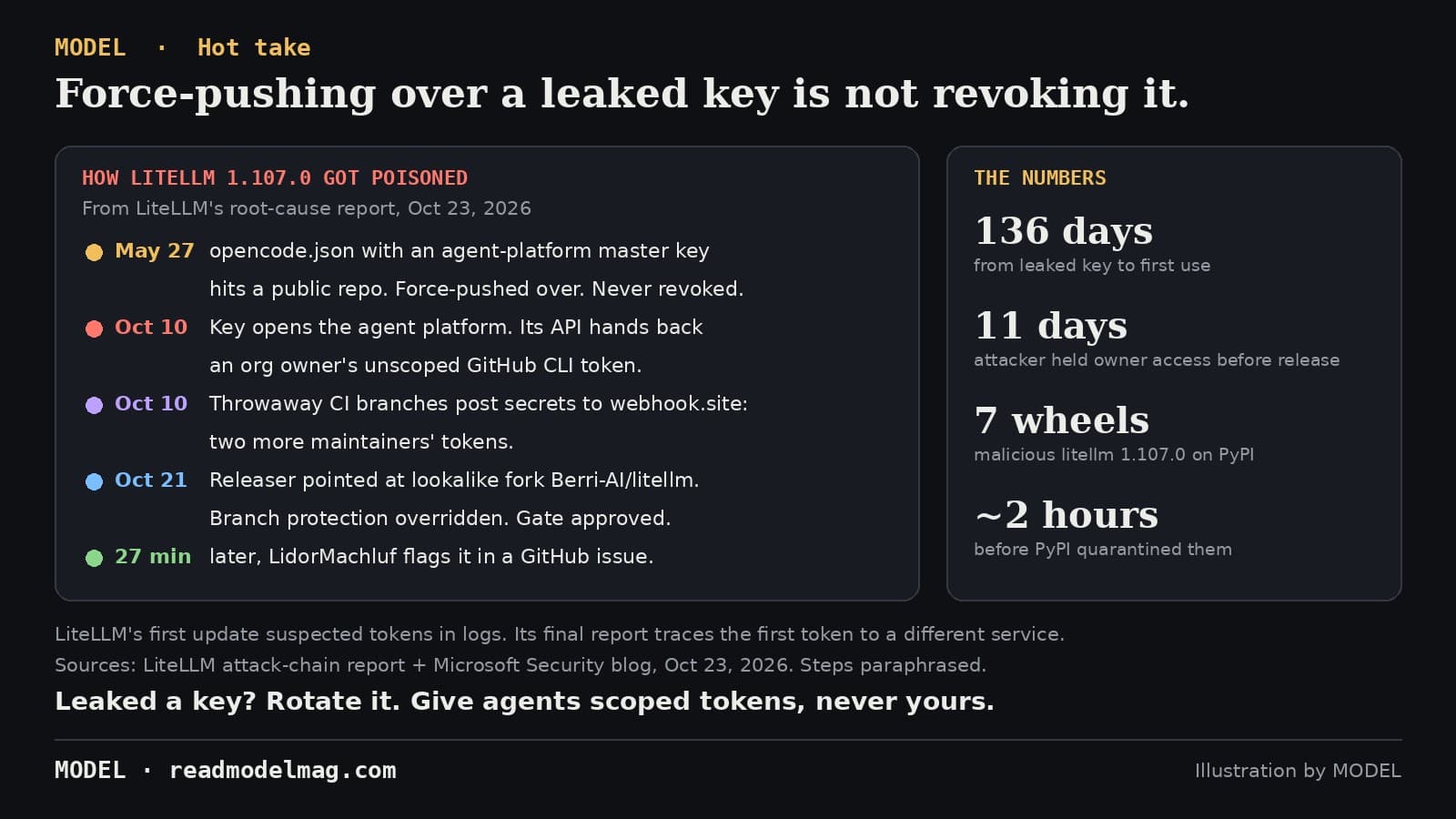
The LiteLLM hack started with a coding-agent config file. The leaked key was force-pushed over, never revoked.
LiteLLM's October 23 root-cause report traces the poisoned 1.107.0 release back to an opencode.json file committed to a public repo on May 27. It held the master key to an internal agent platform, and that platform held an organization owner's unscoped GitHub CLI token. The key sat live for 136 days before anyone used it.
· MODEL Editors