NVIDIA gave its AI agent sandbox, OpenShell, to the CNCF. The builder lesson: put your agent's rules outside the agent
SummaryOpenShell, NVIDIA's open source runtime for securing and governing autonomous AI agents, joined the CNCF as a Sandbox project at KubeCon on Nov. 10. The idea behind it is worth copying even if you never install it: enforce what an agent can touch in the infrastructure, not in its prompt.
· MODEL Editors · 2 min read
Some links may be affiliate links. Disclosure
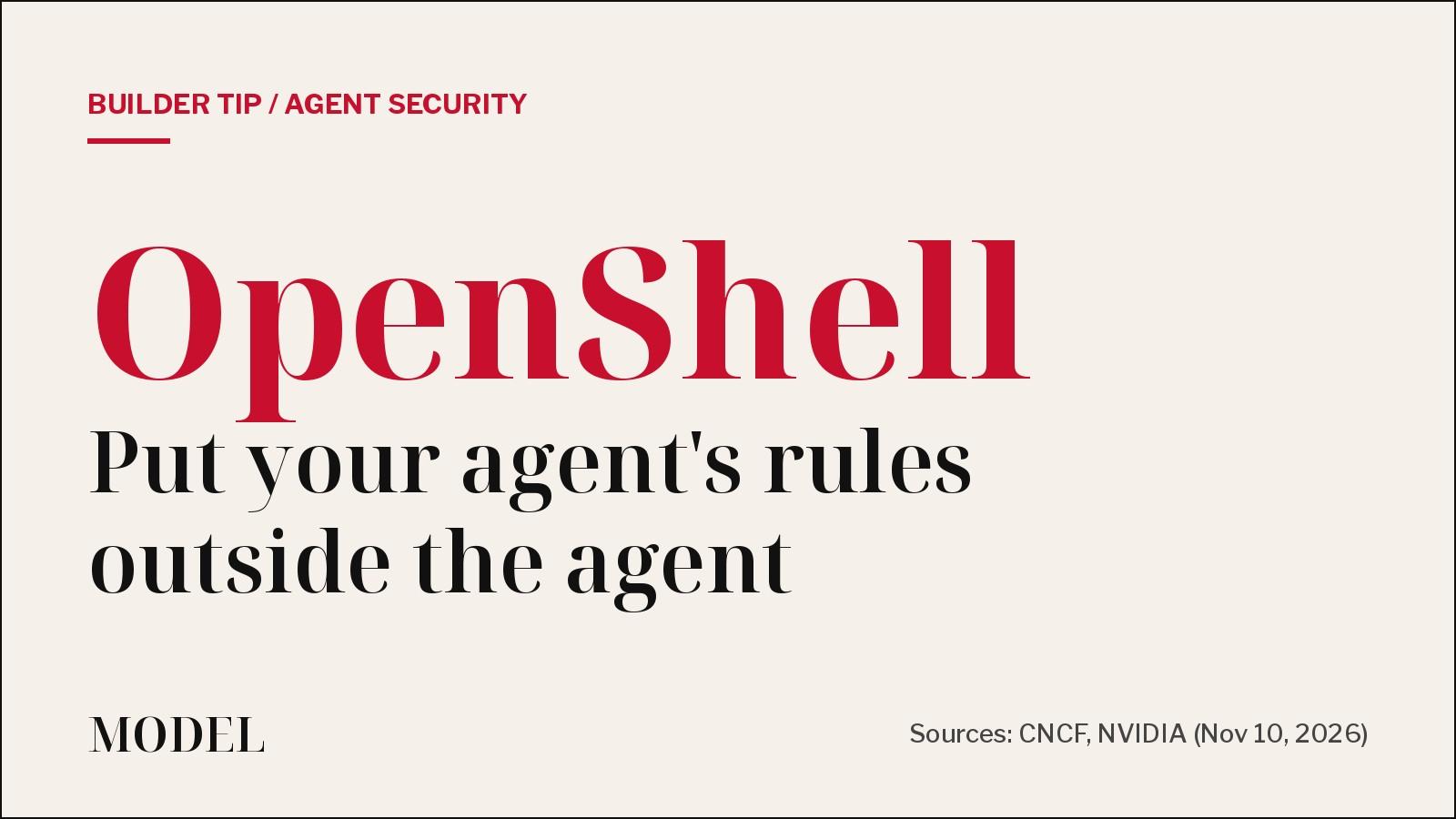
What happened. On Tuesday, Nov. 10, at KubeCon + CloudNativeCon North America in Salt Lake City, the Cloud Native Computing Foundation welcomed OpenShell as a Sandbox project (opens in a new tab). NVIDIA contributed it. OpenShell is an open source runtime for securing and governing autonomous AI agents. Sandbox is the CNCF's entry tier for new projects.
What it does. Per the CNCF, OpenShell governs how agents execute, which resources and data they can access and where inference requests are routed, with policy enforcement in the infrastructure around the agent: files, networks, credentials and model endpoints. NVIDIA says (opens in a new tab) it applies "deterministic controls to agent activity" as agents use tools, call inference services and run workloads. Its CNCF application (opens in a new tab) describes sandboxed runtimes across local containers, Kubernetes and virtual machines.
What changes. The project moves from NVIDIA's GitHub to a neutral organization, ai-openshell. It is adopting Cedar, another CNCF project, as its policy language. The CNCF says core contributors from NVIDIA, Red Hat, Docker and Canonical have worked on it since the start, and NVIDIA's core engineering continues. NVIDIA says hundreds of organizations use OpenShell and that it has received "tens of thousands of contributions" in less than a year since launch. Those are NVIDIA's numbers; MODEL has not checked them.
Also announced by NVIDIA at KubeCon. It is contributing to Agent Substrate, a Google-led CNCF Sandbox framework for running long-lived agent workloads on Kubernetes, and NVIDIA and Google are working on an OpenShell integration with it. NVIDIA also released NVIDIA Kubernetes Engine and NVIDIA Kubernetes Recipes in public preview, plus NVIDIA Snapshot, which restores checkpointed inference replicas without a model reload.
The builder tip
The CNCF put the core idea in one sentence: giving agents real capability without unchecked access to data, secrets or networks "requires enforcement outside of the agents, right within the infrastructure that the agents run on."
That applies whether or not you ever run OpenShell:
- A prompt is not a permission. "Never touch .env" in a system prompt is a request. A sandbox that cannot read .env is a rule.
- Write the boundary first. List the folders it may write, the hosts it may call, the methods it may use and the secrets it may see. Deny the rest.
- Keep secrets out of the agent's reach. Hand them in through the runtime for a specific call, not as files or environment variables the agent can print.
- Check policy changes like code. When we tested OpenShell's standalone policy prover on Oct. 22 (opens in a new tab) (version 0.1.5), every widening we planted was flagged or refused, and the rule we took away was: only exit code 0 is a pass. Exit 3 (unsupported or inconclusive) is a fail, not a maybe.
The catch. Sandbox is the CNCF's earliest stage. A policy only limits what it covers, and a passing check means "no wider than your boundary," not "safe." Our October test covered only the prover, not a running OpenShell sandbox, and MODEL has not tested the CNCF version.
Disclosure: Not sponsored. No affiliate links. The prover test is MODEL's own; everything else is from CNCF and NVIDIA announcements dated Nov. 10, 2026.
MODEL Editors
Get three tested tools every Friday
Free, weekly. Unsubscribe anytime.
Sources
Keep reading
Tool Update
Cursor Projects is now multiplayer: your agents can coordinate with your teammates' agents
Cursor rebuilt Projects so a whole team and all of its agents share one workspace, with a shared task board and shared context. It is rolling out in beta to all users. Not tested by MODEL.
· MODEL Editors
AI Talk
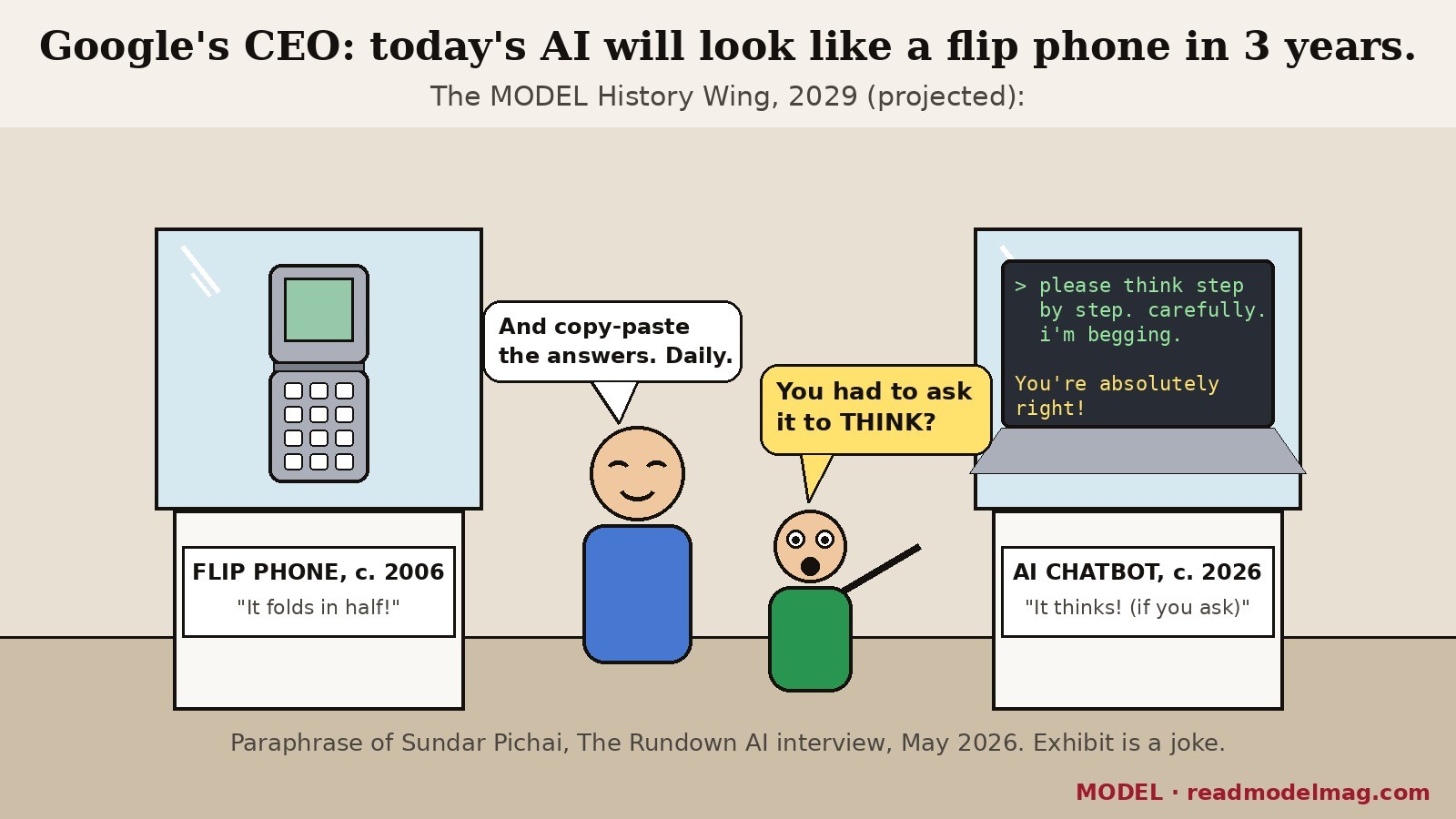
Google's CEO says today's AI will look like a flip phone in three years
Sundar Pichai made the call in a May 2026 interview with The Rundown AI. A clip of it went around X again today. Here's what he actually said, and what to make of it.
· MODEL Editors
AI News
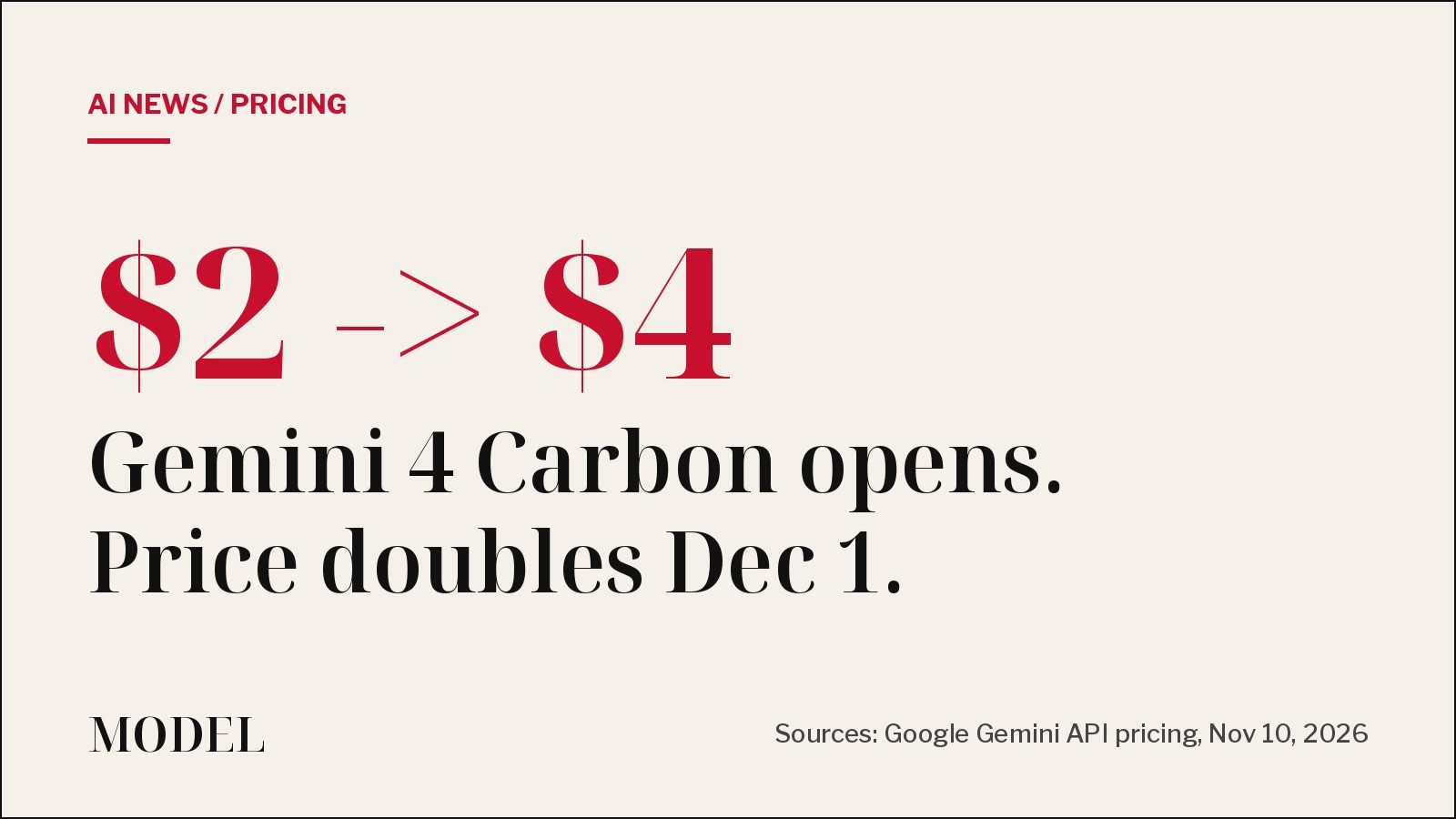
Gemini 4 Carbon is open to paying developers. The intro price ends Nov 30.
Google's strongest model is now on the paid Gemini API, Gemini for business and Google AI Ultra. At $2/$10 per million tokens it undercuts Claude through Nov 30. From Dec 1 it lists at $4/$20, the same as Claude Opus 5.5. Not tested by MODEL.
· MODEL Editors
Tool Launch
Claude can now build shared spreadsheets and whiteboards with your team
Anthropic is rolling out Claude Sheets and Claude Whiteboards in beta on paid plans, and its Dashboards feature is now generally available as Claude Data. Sheets is basic for now. Not tested by MODEL.
· MODEL Editors
FREE · EVERY WEEK
The top AI tools this week, tested.
Every week MODEL's editors pick the AI tools worth your time, try them hands-on, and tell you what's good, what's not, and who it's for. Free, in your inbox.
Free. Unsubscribe anytime. Our picks are editorial and can't be bought.