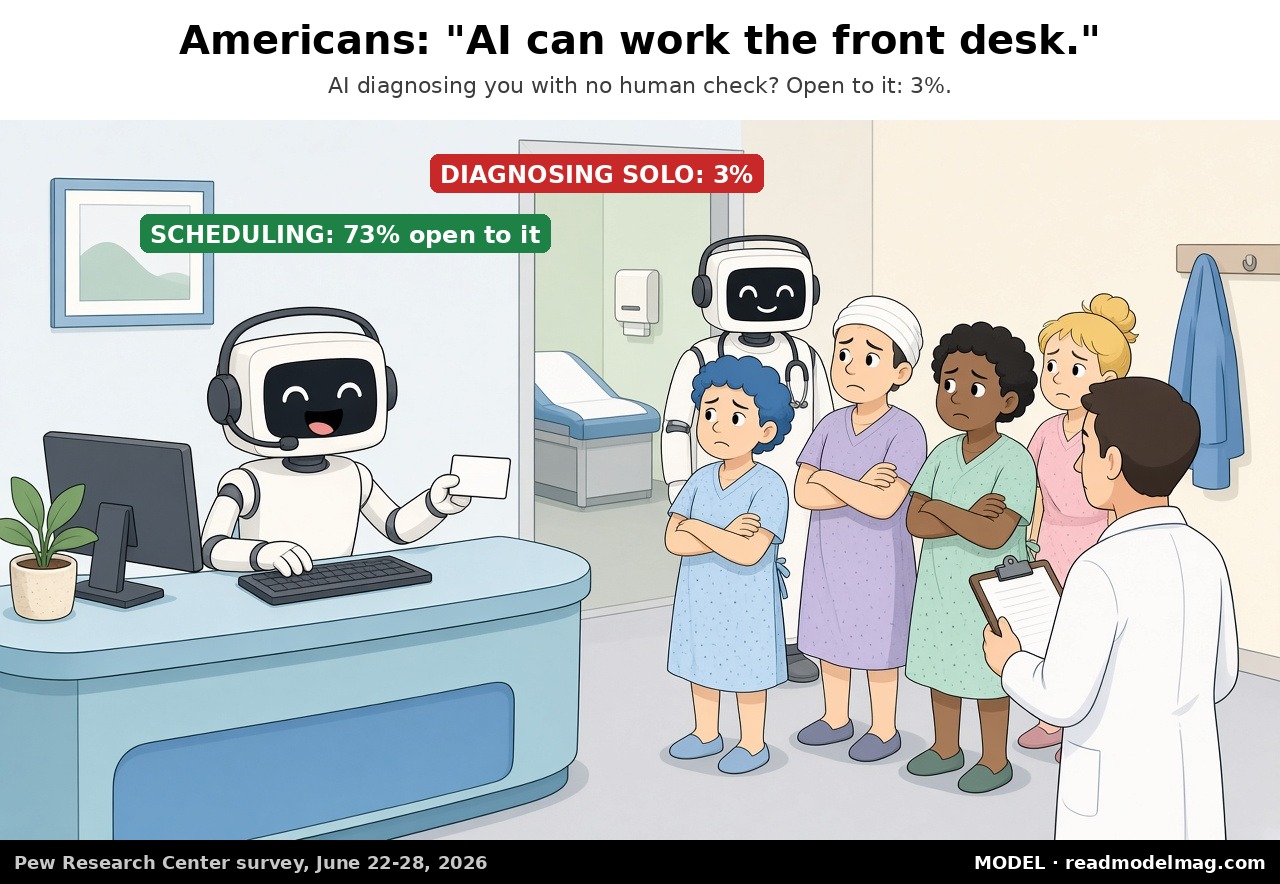
Americans will let AI book the appointment. Only 3% want it diagnosing them alone.
SummaryA Pew Research Center survey found most U.S. adults are open to AI at the front desk, but 60% are uncomfortable with their doctor using AI for diagnoses and treatments.
· MODEL Editors · 1 min read
Some links may be affiliate links. Disclosure
The survey. Pew Research Center asked 3,488 U.S. adults about AI in healthcare from June 22 to 28, 2026, and published the results on Oct. 29. The margin of error for the full sample is plus or minus 1.8 percentage points (Pew methodology (opens in a new tab)).
Front desk: yes. People are most open to AI doing office work. 73% are open to AI scheduling an appointment (29% on its own, 44% if a human does a final review), and 78% are open to AI translating for a patient (26% on its own, 52% with human review) (Pew (opens in a new tab)).
Diagnosis: with a human, please. Only 3% are open to AI making a diagnosis on its own. 47% are open to it if a human does a final review, and 41% don't want AI doing it at all. For insurance claim decisions, 5% are open to AI deciding alone and 46% want AI to have nothing to do with it (Pew (opens in a new tab)).
Overall comfort. 60% say they would be uncomfortable if their doctor used AI for things like diagnoses and treatments; 30% would be comfortable and 10% aren't sure. Adults ages 18 to 29 were the most uncomfortable of any age group, at 68% (Pew (opens in a new tab)).
The MODEL take. If you build AI tools for clinics, the survey points to a clear product line: automate the paperwork, and put a human sign-off on anything that touches a diagnosis or a claim. Tell patients when AI is involved, too. Pew's Galen Stocking told CBS News people say it is extremely important that their provider tell them (CBS News (opens in a new tab)).
Not tested by MODEL. Not sponsored. Not medical advice.
Get three tested tools every Friday
Free, weekly. Unsubscribe anytime.
Sources
- Americans Are Open to AI in Healthcare, but Want Humans Making Final Calls
Pew Research Center
- Methodology
Pew Research Center
- Americans wary of AI in healthcare for diagnoses and insurance claims, survey finds
CBS News
Keep reading
AI labs
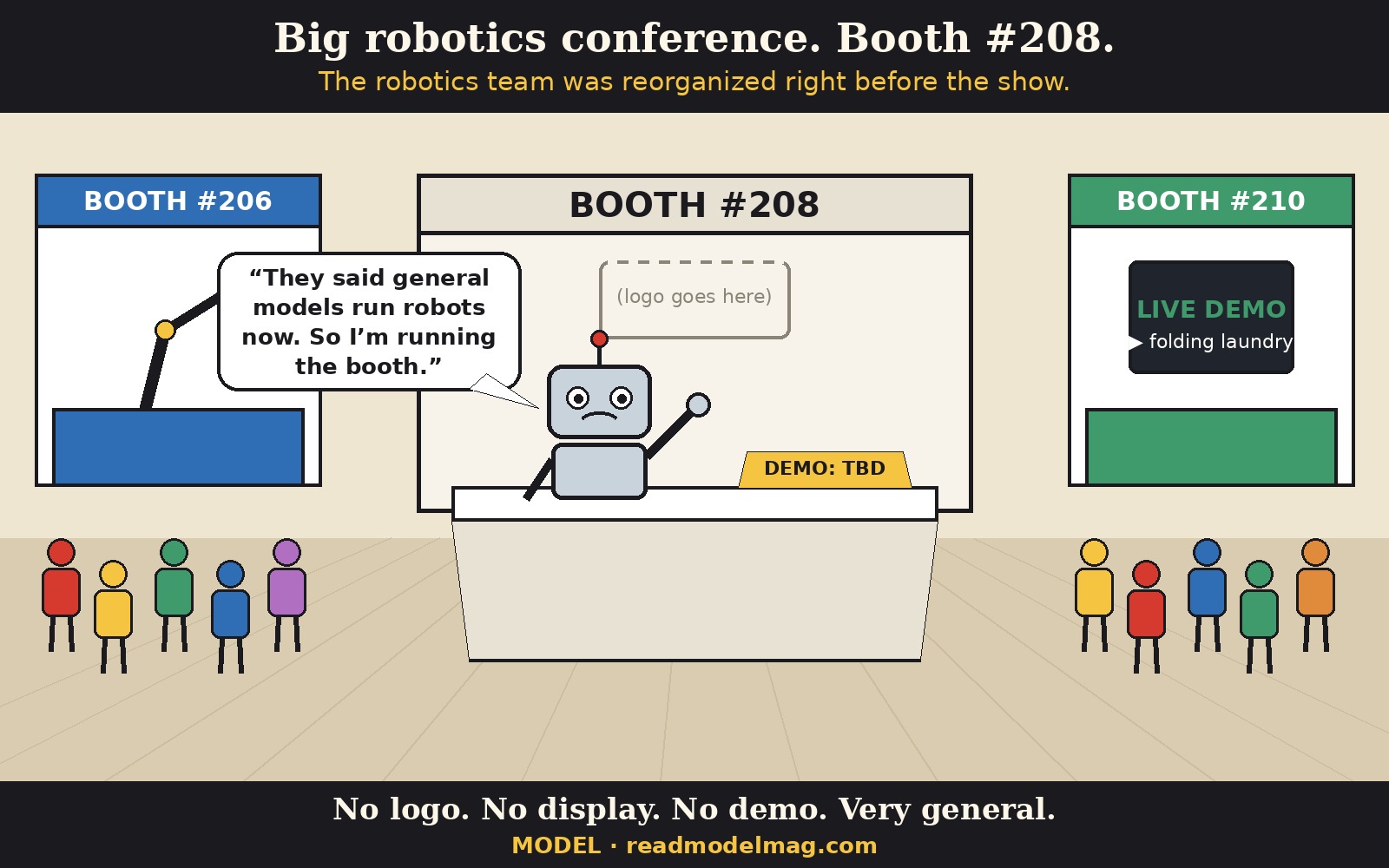
OpenAI folds its robotics team into the rest of the company, leaving booth #208 bare
OpenAI reorganized its stand-alone robotics team so recently that its booth at a top robotics conference had no logo, display or demo, Fortune reported. OpenAI says it's speeding up robotics, not retreating.
· MODEL Editors

Tech news
SpaceX caught a Starship upper stage with its launch tower for the first time
On Starship Flight 15, the ship spent about 22 hours in space, orbited Earth 14 times and came back to be caught by the tower's 'chopstick' arms at Starbase, Texas. The booster did not make it back.
· MODEL Editors
Tech stocks
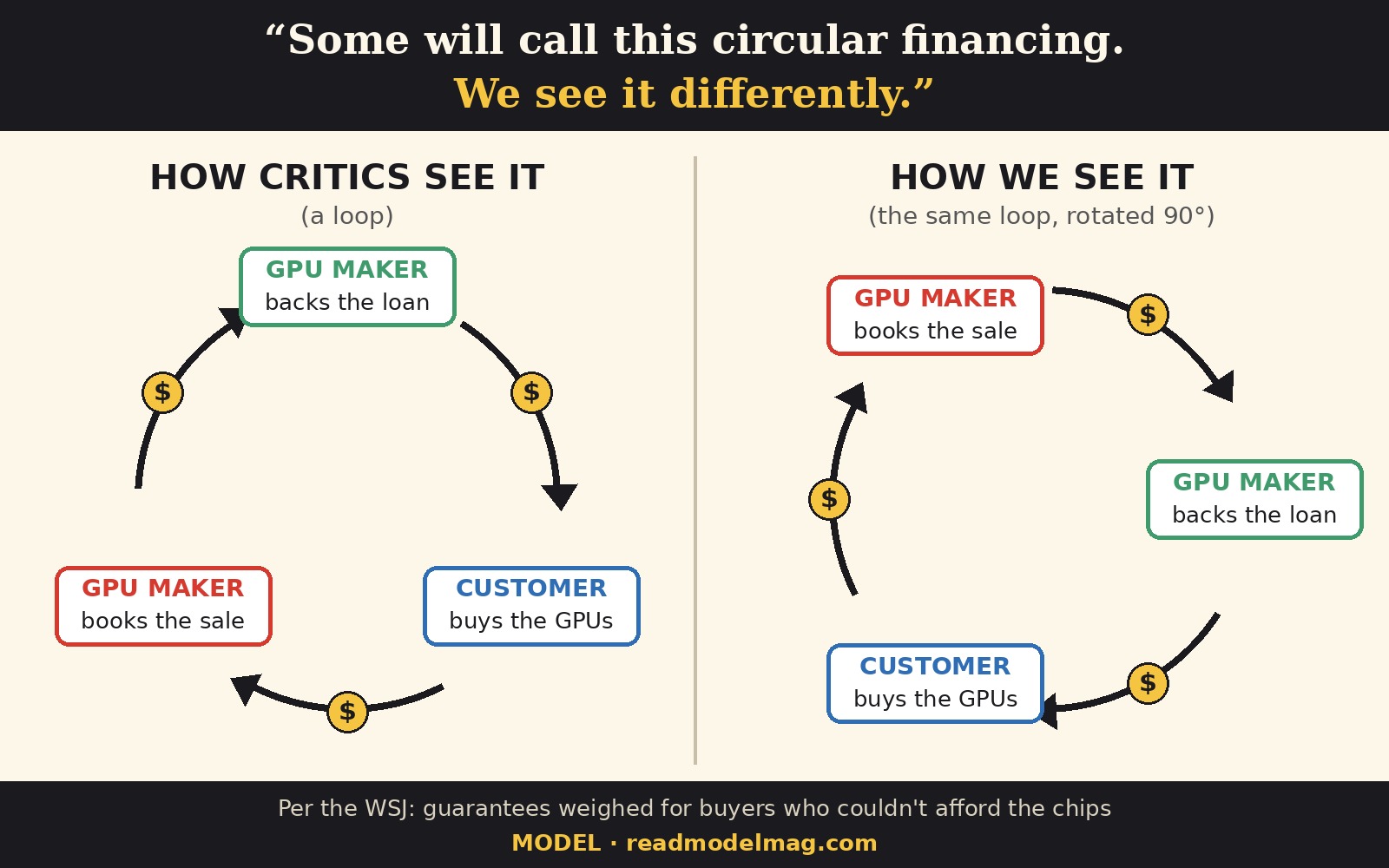
Nvidia's circular financing: what the WSJ reported about guarantees for chip buyers
Nvidia weighed billions of dollars in guarantees for customers that couldn't afford its chips, and Colette Kress, now interim CEO, pushed to rein some of them in, the Wall Street Journal reported.
· MODEL Editors

Tech
Workday's Friday outage started with a backup test. Here's what is confirmed
Workday, the HR and payroll platform used by more than 11,500 organizations, put some customer systems into maintenance mode on Friday, Nov. 13, after a problem found while testing its backup systems left some data in an inconsistent state.
· MODEL Editors
FREE · EVERY WEEK
The top AI tools this week, tested.
Every week MODEL's editors pick the AI tools worth your time, try them hands-on, and tell you what's good, what's not, and who it's for. Free, in your inbox.
Free. Unsubscribe anytime. Our picks are editorial and can't be bought.