AI keeps inventing the same fake packages. That's the risk
SummaryA USENIX Security 2025 paper found 19.7% of packages recommended by 16 code models didn't exist, and 43% of the fake names came back on every rerun. A 2026 replication says rates fell but didn't vanish. Our take: check the install line before you run it.
· MODEL Editors · 2 min read
Some links may be affiliate links. Disclosure
The riskiest line in AI-written code may not be a bug. It may be the install command.
Code models sometimes recommend packages that don't exist. Security researchers call the attack that follows "slopsquatting": someone registers the made-up name, and the next developer who copies the suggestion installs whatever is there. It's an old problem by AI standards. What makes it worth a hot take is how predictable the made-up names are.
The baseline study. "We Have a Package for You!" by Joseph Spracklen, Raveen Wijewickrama, A H M Nazmus Sakib, Anindya Maiti, Bimal Viswanath and Murtuza Jadliwala appeared at the 2025 USENIX Security Symposium. The team ran 16 popular code models on two prompt sets, in Python and JavaScript, and generated 576,000 code samples.
- Of 2.23 million packages the models referenced, 440,445 (19.7%) did not exist on PyPI or npm.
- That came to 205,474 unique fake names.
- Commercial models averaged at least 5.2%. Open-source models averaged 21.7%.
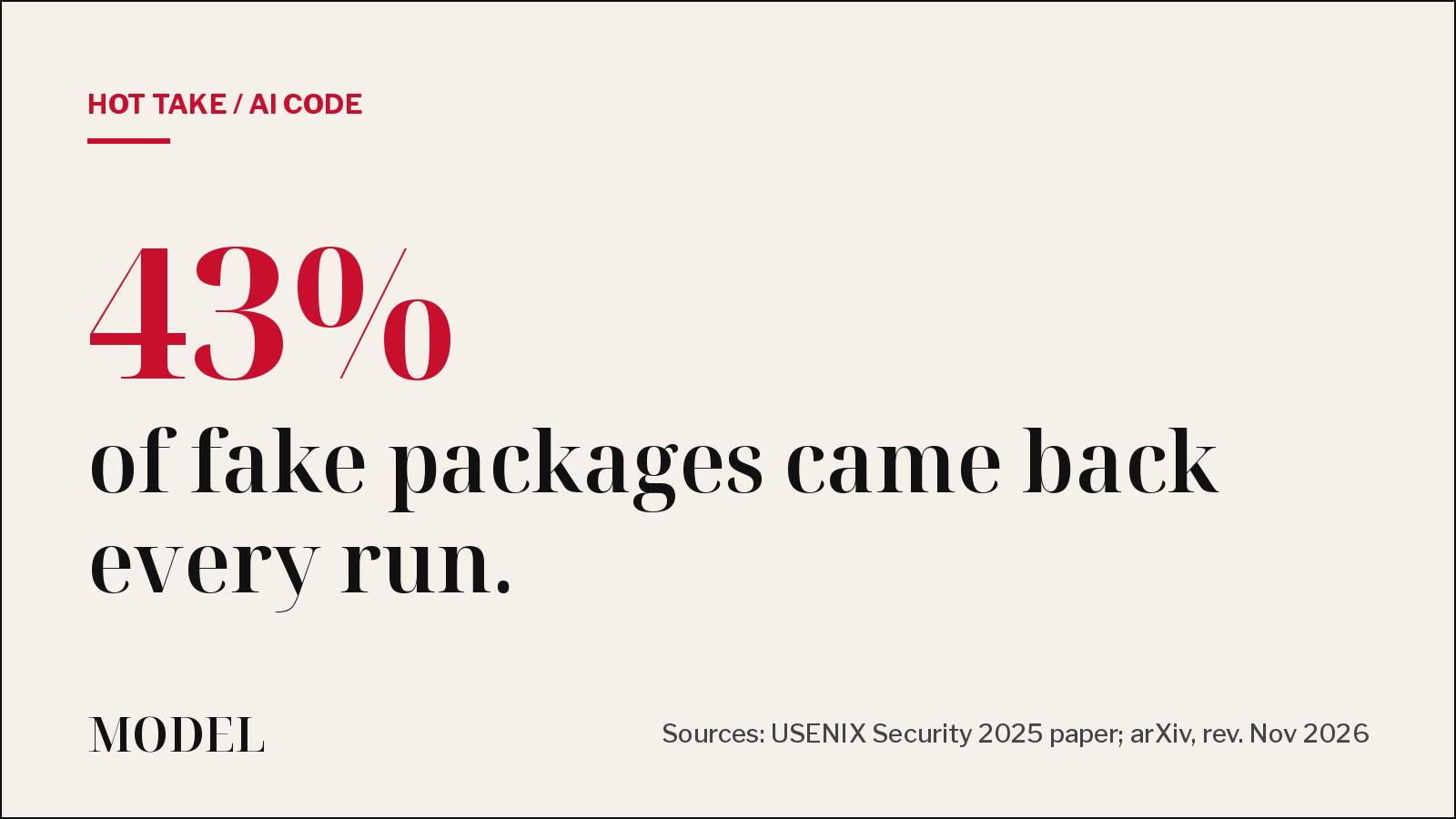
- The team reran 500 prompts that had produced a fake name, 10 times each. 43% of the fake names came back in all 10 runs. 39% never came back. 58% came back more than once.
- Across models, 81% of fake names came from only one model.
The repeat rate is the part to remember. A one-off typo is noise. A name a model produces every time is a name someone else can find and register first. Socket's slopsquatting explainer makes the same point and cites the same figures.
The 2026 update. Independent researcher Aleksandr Churilov reran the study's method on five 2026 frontier models over 199,840 Python and JavaScript generations. The latest revision of the paper (v4, Nov 9, 2026) checks names against the live PyPI and npm registries and reports:
- Fake names in 3.6% to 5.0% of package mentions (2.2% to 3.4% of generations), about the level of 2024's commercial models.
- The open-weight gap seen in 2024 is gone. Python is worse than JavaScript for every model.
- 104 fake names were produced by all five models. An earlier version reported 127; the revision says 26 of those were correct imports whose module name differs from the package name.
Socket's explainer cites the earlier version's numbers (4.62% to 6.10%, 127 shared names). We use the revised ones above.
The catch. These are research setups built to trigger and count hallucinations, not audits of real projects. Rates have fallen a lot since 2024. And a fake name only hurts you if it gets installed.
Our take. "Sloppy AI code" usually means bugs you can see in review. This one hides in a dependency line that looks normal. The defense is boring and it works:
- Before installing a package your assistant suggests, confirm it exists, it's the one you meant, and it has a real history and maintainer.
- Watch for names where the import differs from the install name. That's where models guess most.
- Use lockfiles and pin versions, so an agent can't quietly add something new.
- If an agent can run installs on its own, put a dependency allow-list or a supply-chain scanner in front of it.
Related: Your coding agent copies your worst code.
Not sponsored. MODEL has not rerun these studies; figures are from the papers. -- MODEL Editors
Get three tested tools every Friday
Free, weekly. Unsubscribe anytime.
Sources
- We Have a Package for You! A Comprehensive Analysis of Package Hallucinations by Code Generating LLMs (arXiv:2406.10279, USENIX Security 2025)
arXiv / USENIX Security Symposium 2025
- The Range Shrinks, the Threat Remains: Re-evaluating LLM Package Hallucinations on the 2026 Frontier-Model Cohort (arXiv:2605.17062, v4)
arXiv
- Glossary: Slopsquatting
Socket
Keep reading
GitHub Copilot
GitHub Copilot Fusion picks your models for you. Here's the catch
Copilot Fusion is a router in the Copilot model picker: it decides whether one model handles a prompt or several draft and review it. GitHub is promoting it again this weekend; here is what the docs actually say. Not tested by MODEL.
· MODEL Editors
The test
agent-browser 0.43.0, tested: the docs' deny-eval policy still lets eval run
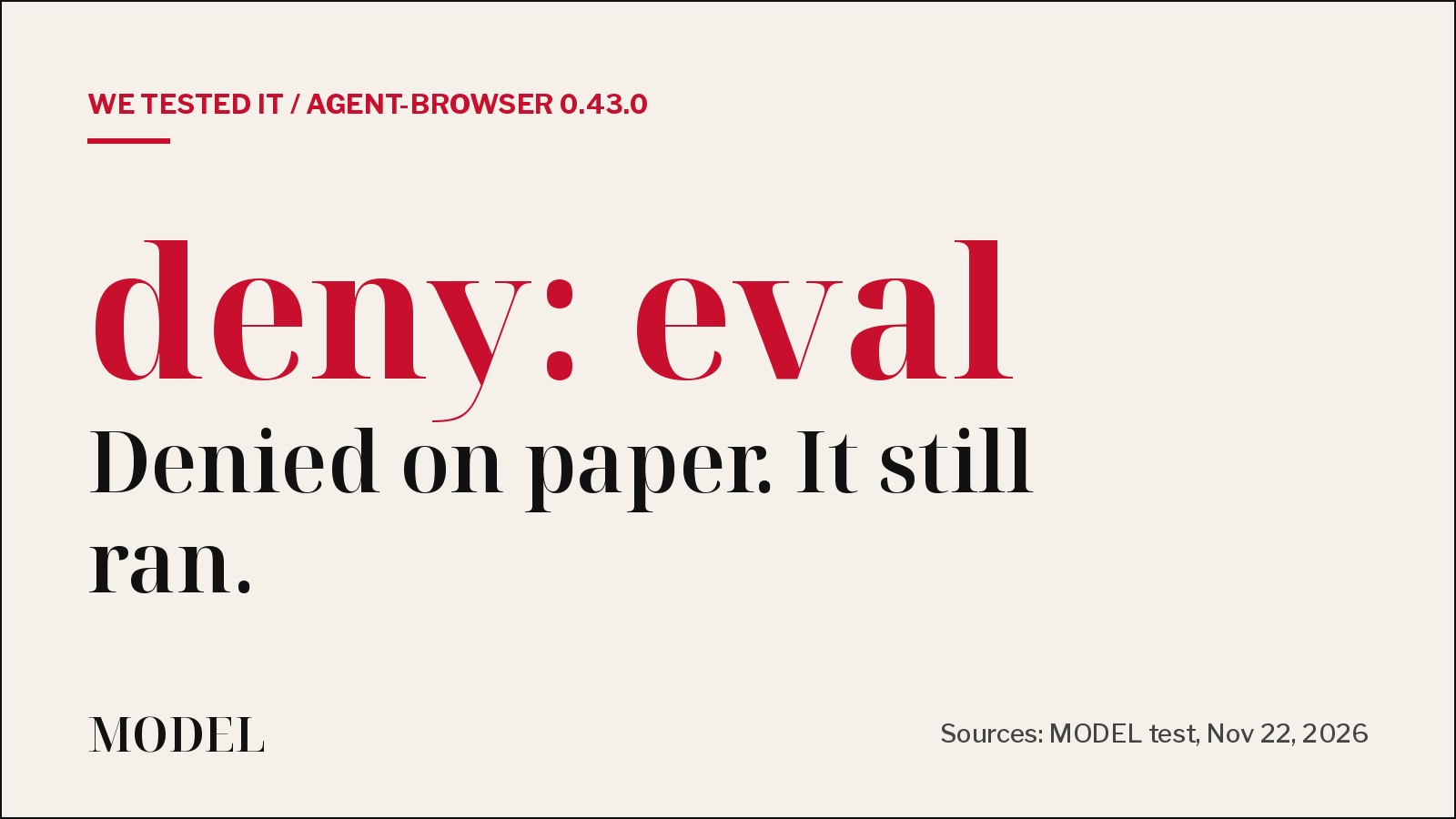
We re-ran our action-policy checks on Vercel Labs' browser tool for AI agents, version 0.43.0, on local test pages with no AI model and no API key. One thing improved. The docs' own example that denies eval still let an eval command change the page.
· MODEL Editors
Open weights
Sarvam's new 105B checkpoint targets cheap chat agents
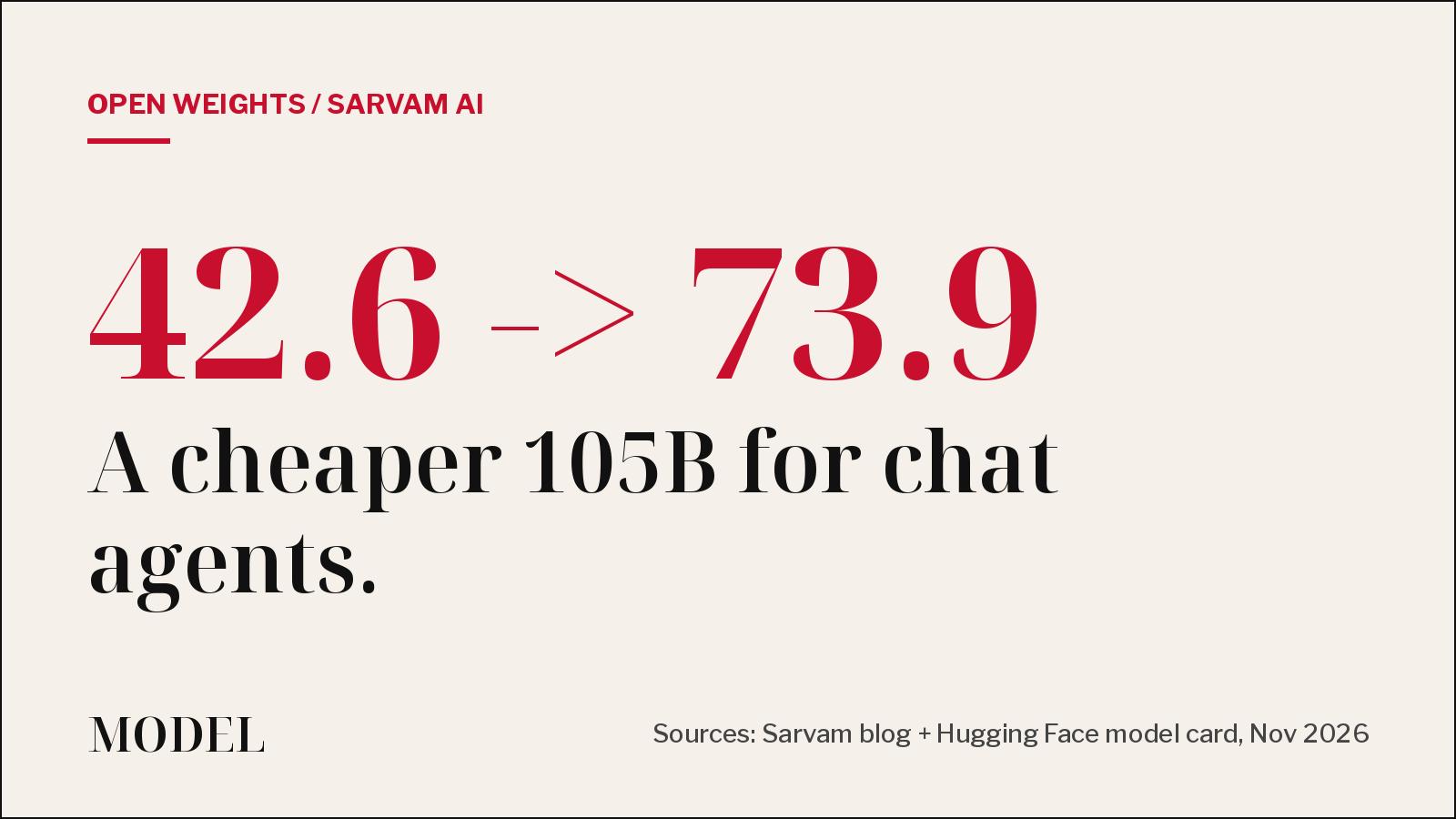
Sarvam AI released Sarvam-105B-1711, an open-weight update built for customer support, voice agents and tool calls in Indian languages. Its own benchmarks put it level with Gemini 3.5 Flash-Lite at a lower price.
· MODEL Editors
Builder tip
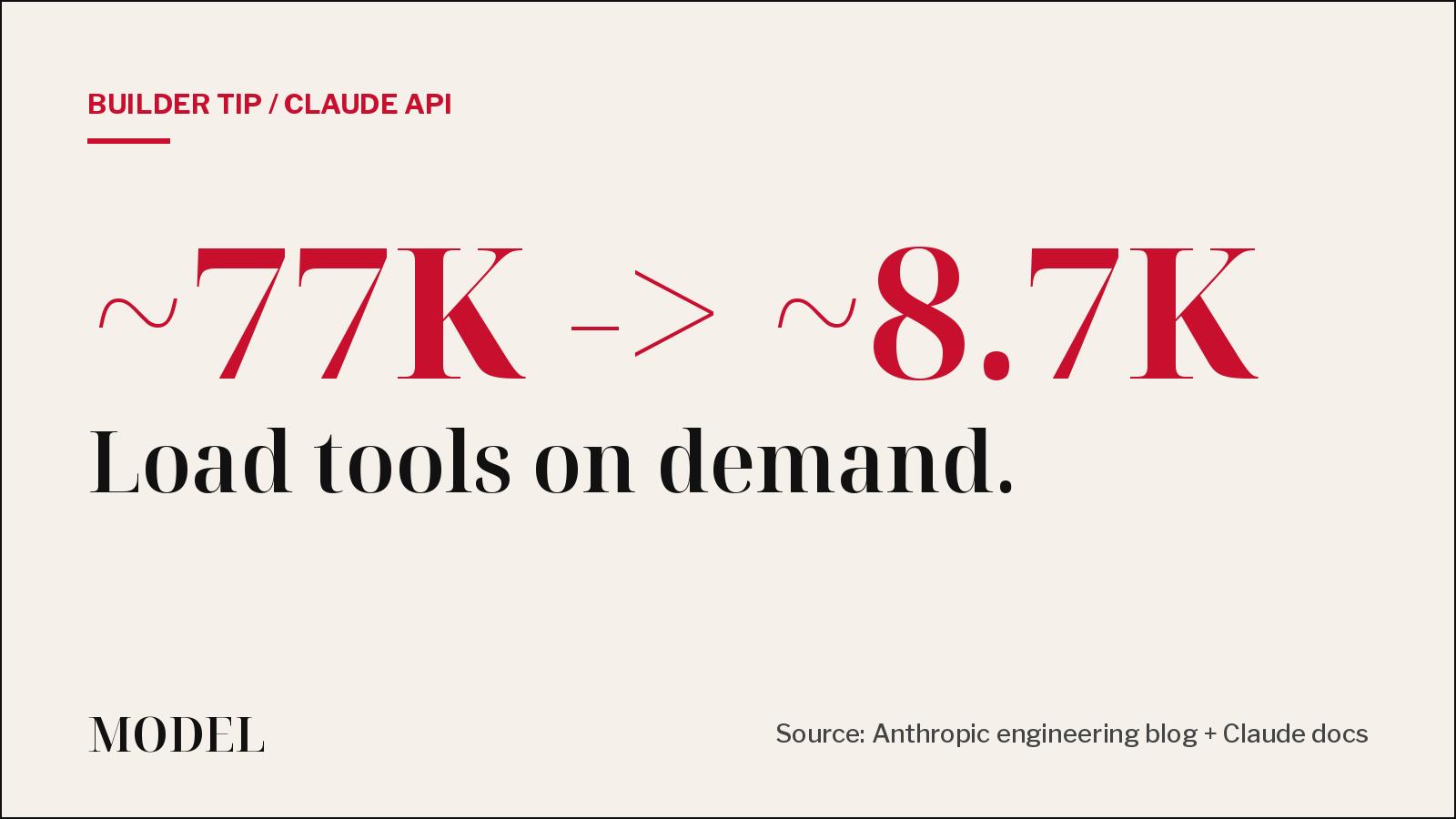
Your agent doesn't need all 58 tools in context. Defer them.
A thread calling Anthropic's tool-use write-up a new paper is going around X this weekend. It is a year old, and the advice still holds: mark most tools defer_loading and let Claude search for the few it needs.
· MODEL Editors
FREE · EVERY WEEK
The top AI tools this week, tested.
Every week MODEL's editors pick the AI tools worth your time, try them hands-on, and tell you what's good, what's not, and who it's for. Free, in your inbox.
Free. Unsubscribe anytime. Our picks are editorial and can't be bought.