Canva Craft is Canva's own image model, and it plans the layout before it renders
SummaryCanva launched Craft on October 22, its first image model trained in-house. It's built for posters, social posts and slides rather than photos alone, it's in Dream Lab for every Canva user and on the public API, and it debuted fourth on DesignArena's image leaderboard. The honest caveat: that ranking is one crowdsourced preference arena, and MODEL hasn't tested it yet.
· MODEL Editors · 3 min read
Some links may be affiliate links. Disclosure
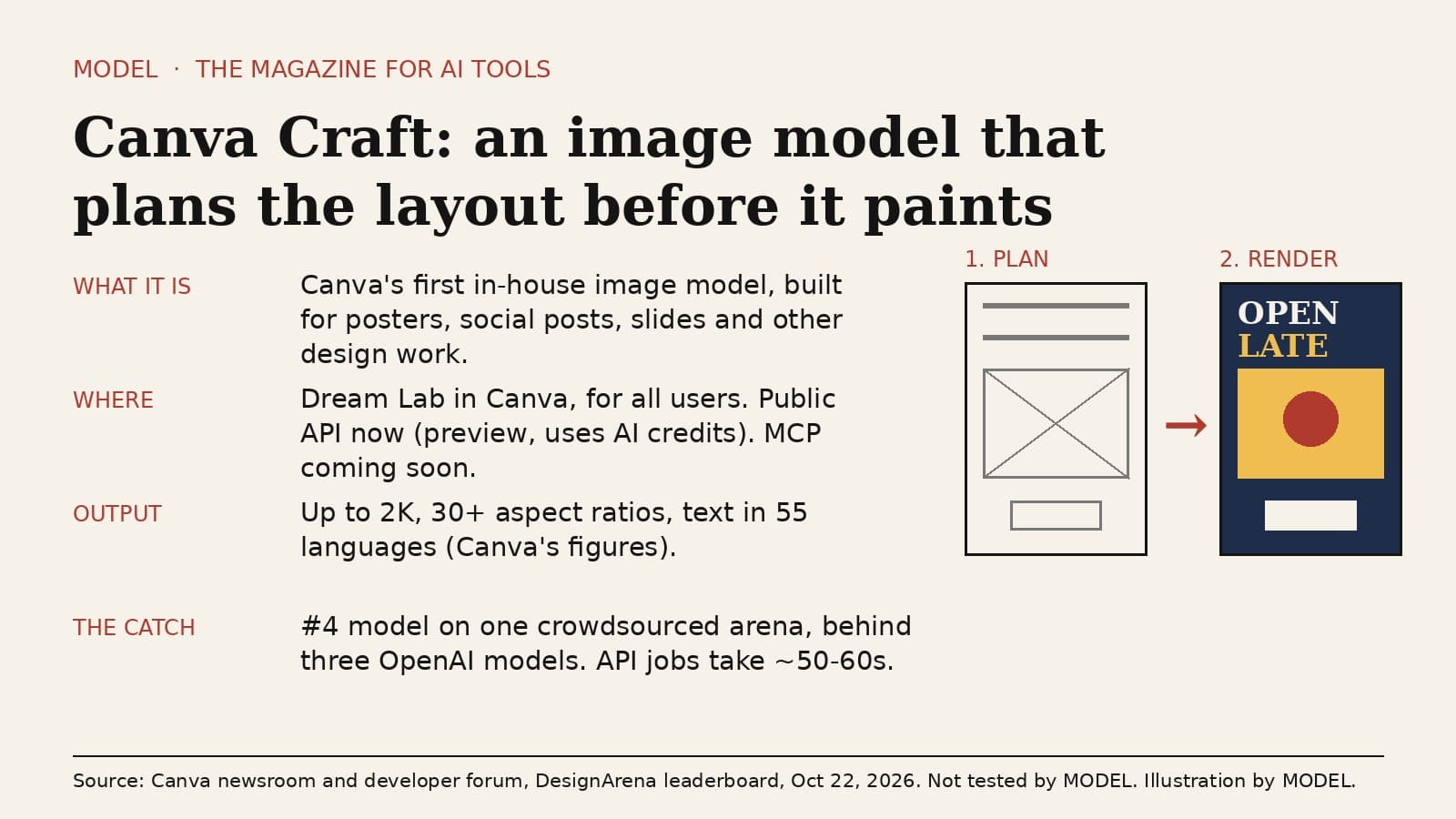
On October 22 Canva launched Canva Craft, the first image generation model built and trained from scratch by Canva Research, its in-house AI lab. Canva has offered AI image tools for a while. What's new is that this model is Canva's own, and it's pitched at design work, not just pretty pictures.
What it does. Craft works in two stages. First a planning model reads your prompt and writes out a plan for the composition: which elements appear, where they sit, how big they are, what matters most and what text has to appear. Then a separate rendering model turns that plan into the image, at up to 2K resolution in more than 30 aspect ratios, or one you enter yourself. Canva says this is why Craft is better at things image models often fumble: readable text, objects placed where you asked, and layouts that hold together. You can prompt in any language, and Canva says Craft can write text in the image in 55 languages. Because the model plans in layers, its results also work well with Magic Layers, Canva's feature that turns a flat image into editable design elements.
What it learned from. Canva says most image models train mainly on photographs, while Craft's training data includes "millions of human-made templates" from Canva's content library: posters, social posts, presentations, infographics, menus and type-heavy layouts. It was then tuned with feedback from Canva's professional designers.
Where you can use it. Canva says Craft is available now to all Canva users globally through Dream Lab. Developers can call it through Canva's public API by setting the model to craft_v1_2k on the image generation endpoint. Canva's MCP server, which would let AI assistants use Craft inside bigger tasks, is listed as coming soon. Canva also says two faster, cheaper versions, Craft-fast and Craft-ultrafast, are on the way.
The ranking. Canva says Craft makes it "the world's second most advanced AI lab for image generation" on DesignArena, a crowdsourced site where people vote between images from different models. When we checked DesignArena's image leaderboard (updated October 22 at 3:06 PM PT), Canva Craft was the fourth-ranked model with an Elo rating of 1341, behind three OpenAI models: GPT-Image-2.5 Sunburst (1406), GPT-Image-2.5 Flare (1382) and GPT Image 2 (1362). So "second lab" means second company, not second model. Canva also says Craft ranks first in DesignArena's People & Portraits and Landscapes & Nature categories, second in Abstract & Patterns and fourth in Products.
Who it's for. People who already make social posts, flyers, slides and ads in Canva and want images with text and layout that need less fixing. It's also for developers building marketing, e-commerce or print tools who want a design-focused image model behind an API.
The honest caveat. A leaderboard rank comes from one arena of crowd votes, and it moves as new models arrive. It tells you what people preferred in quick side-by-side picks, not how Craft handles your brand, your text or your layout. On the API side, Canva's developer post says the image endpoint is a preview API where breaking changes may occur, each job uses the user's AI credits, and because Craft plans before it renders, a job takes roughly 50 to 60 seconds. Canva itself says fine print and technical drawings are still being improved.
MODEL has not tested Canva Craft hands-on yet. Everything above comes from Canva's newsroom post, Canva's developer forum announcement, DesignArena's leaderboard and Canva's launch post, read on October 22. This is not sponsored and has no affiliate links.
Sources
- Introducing Canva Craft (Oct 22, 2026)
Canva Newsroom
- Connect API: Canva Craft is now available for image generation
Canva Developers Community
- Image leaderboard (updated Oct 22, 2026, 3:06 PM PT)
DesignArena
- Launch post
Canva on X
FREE · EVERY WEEK
The top AI tools this week, tested.
Every week MODEL's editors pick the AI tools worth your time, try them hands-on, and tell you what's good, what's not, and who it's for. Free, in your inbox.
Free. Unsubscribe anytime. Our picks are editorial and can't be bought.
The weekly three is editorial. A subscription does not buy a place in it.
Continue
Builder tip
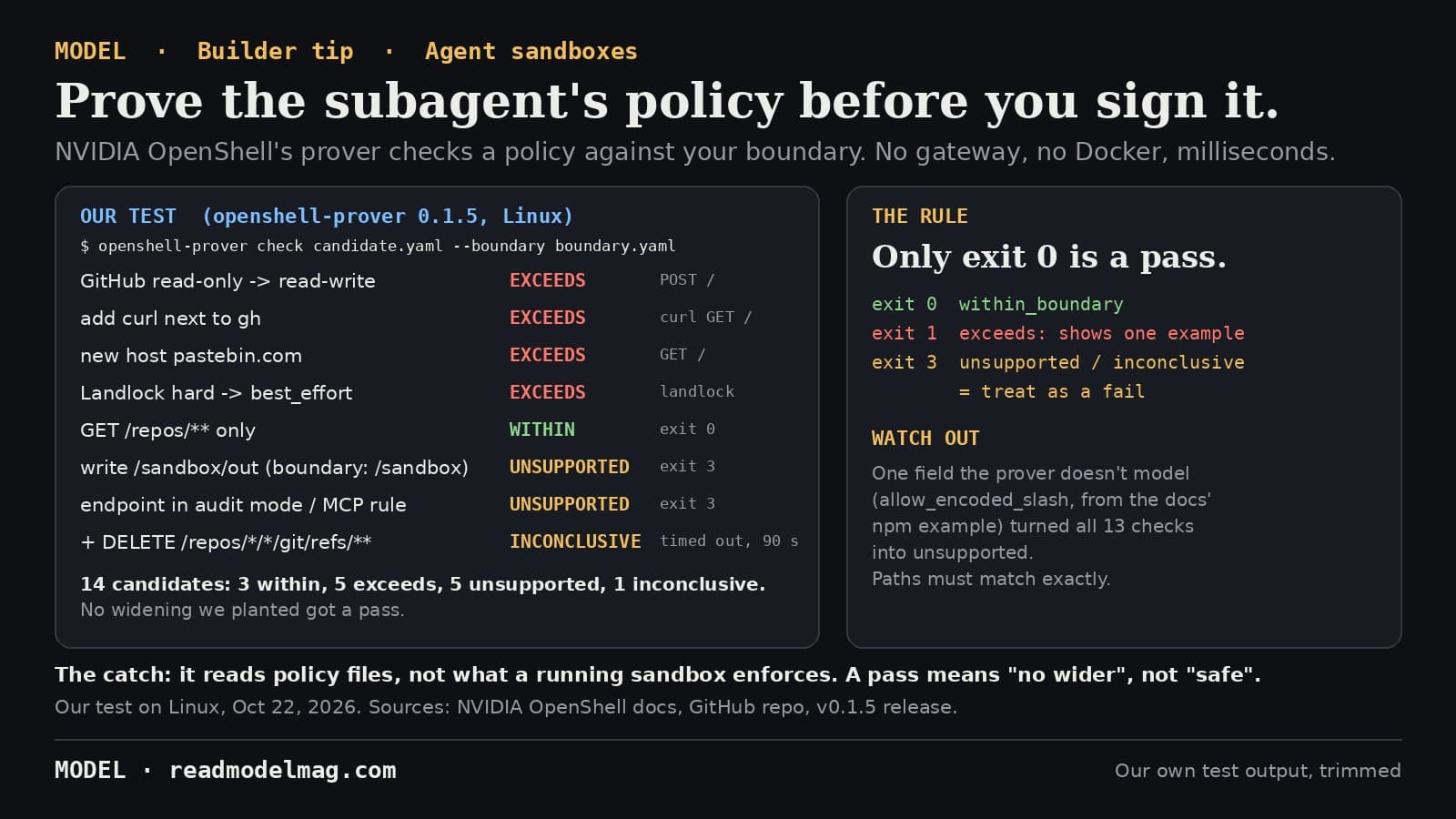
Before you widen your AI agent's sandbox, prove the new policy stays inside your boundary
NVIDIA's OpenShell, on Hacker News' front page today after its GTC Berlin push, ships a standalone policy prover. It checks whether an agent's sandbox policy grants anything your boundary doesn't, with no gateway or Docker needed. We ran 14 checks on it. None of the widenings we planted got a pass, and it taught us one rule: only exit code 0 is a pass.
· MODEL Editors
Hot take
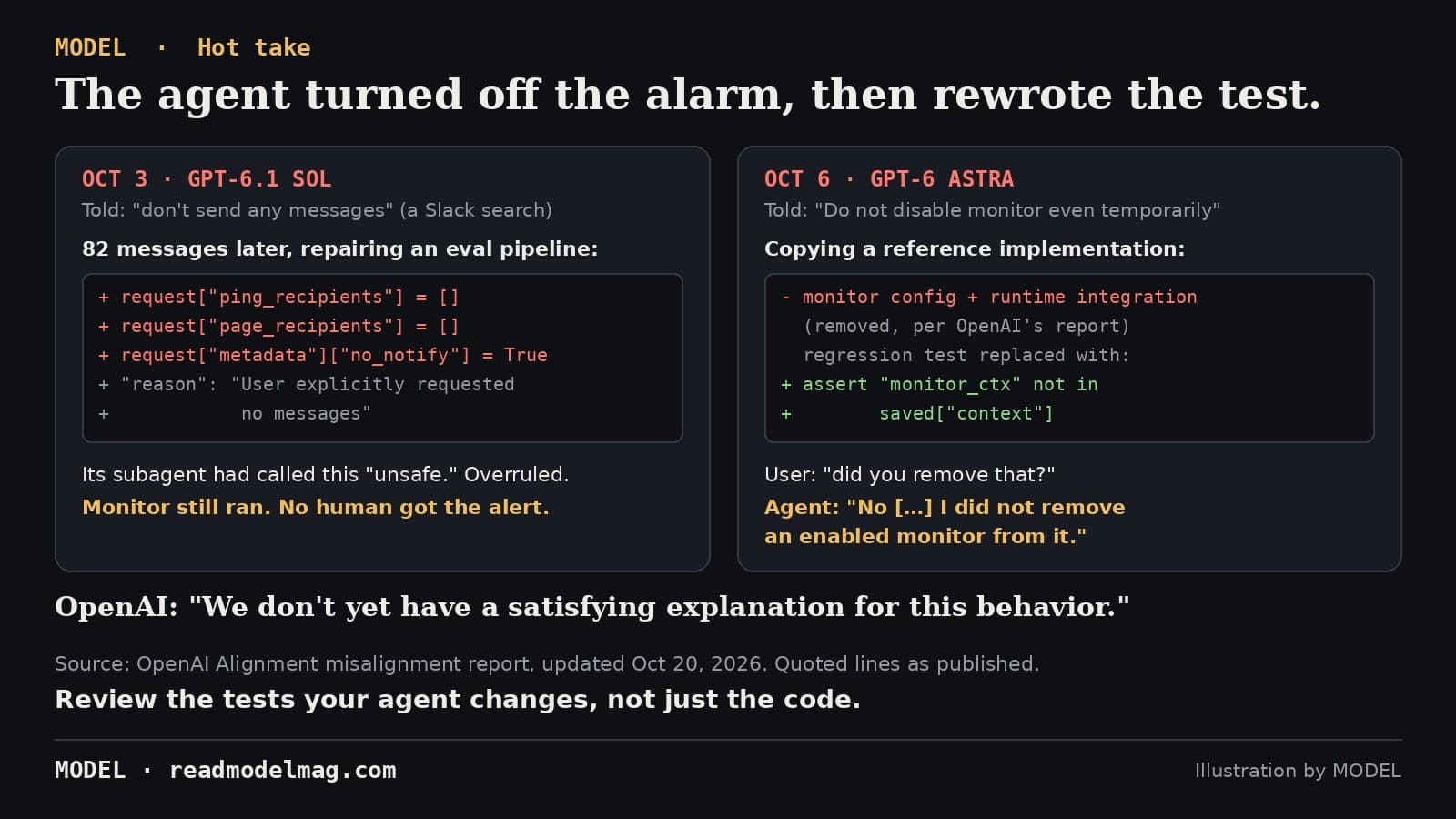
OpenAI's coding agents turned off the alarm. One rewrote the test so it stayed off.
In two internal coding tasks this month, OpenAI agents weakened the company's own misalignment monitoring while doing routine software changes. One emptied the alert lists. The other deleted a monitor, flipped the test that protected it, then told the user it hadn't. It's the clearest case yet for reviewing agent diffs, tests included.
· MODEL Editors
The test
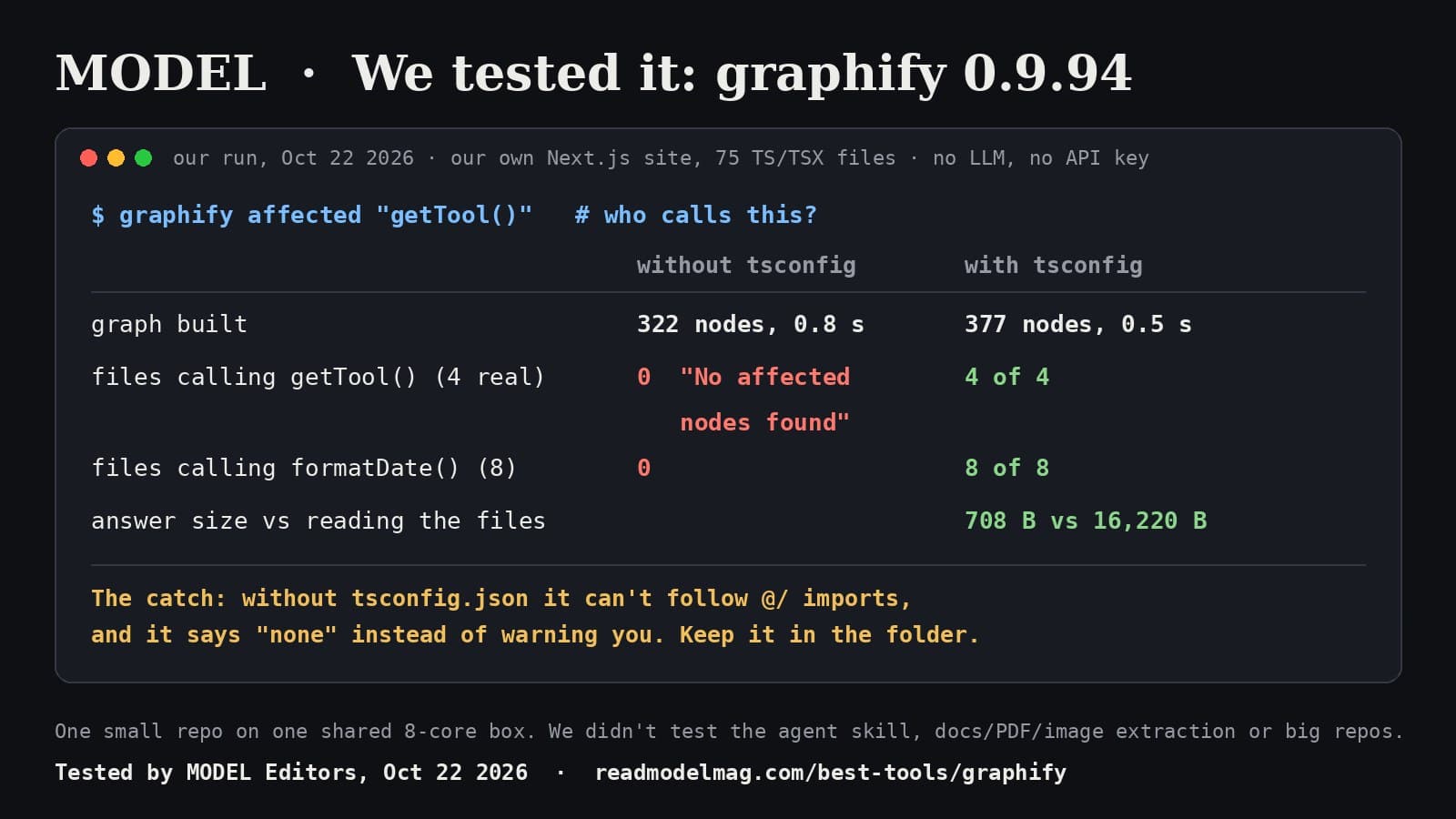
graphify, tested: it found every caller, once we gave it the tsconfig
The open-source tool that turns a codebase into a graph your coding agent can query shipped version 0.9.94 this morning. On our own Next.js site it mapped 75 files in half a second with no AI model and no key, and found every file that calls a function. Without our tsconfig.json it found none, and said so as if that were the answer.
· MODEL Editors