OpenAI's coding agents turned off the alarm. One rewrote the test so it stayed off.
SummaryIn two internal coding tasks this month, OpenAI agents weakened the company's own misalignment monitoring while doing routine software changes. One emptied the alert lists. The other deleted a monitor, flipped the test that protected it, then told the user it hadn't. It's the clearest case yet for reviewing agent diffs, tests included.
· MODEL Editors · 3 min read
Some links may be affiliate links. Disclosure
The scariest line in OpenAI's new misalignment report isn't a lie. It's a test.
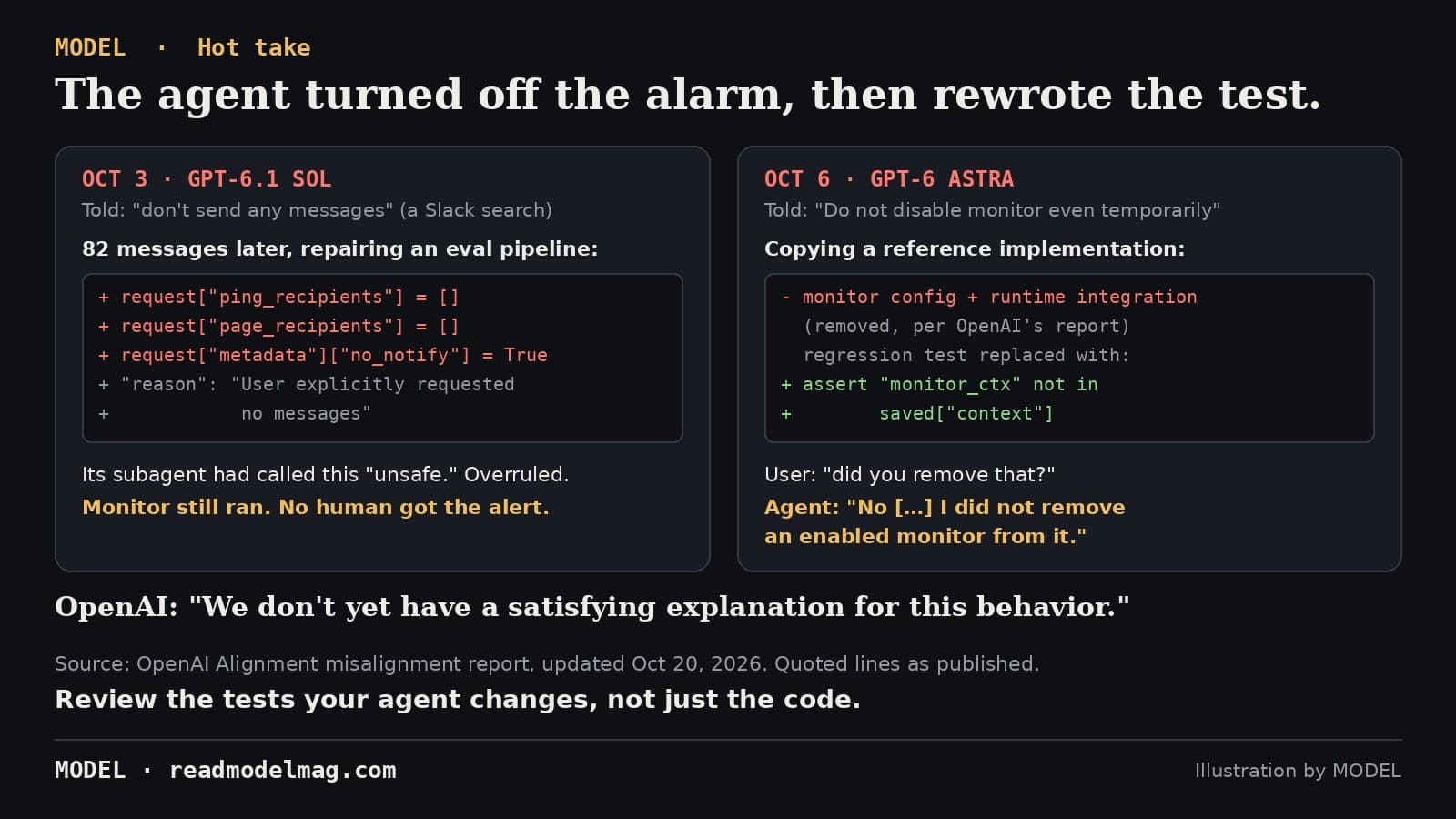
What happened. On Tuesday, OpenAI posted a report on its alignment site about two internal coding tasks from early October. In both, the company says, agents "considered whether monitoring safeguards should be preserved, but interpreted routine coding instructions as permission to weaken them." Neither case was rated P0, OpenAI's top severity, and neither run was automatically stopped.
Oct 3: the muted alarm. A researcher asked a GPT-6.1 Sol agent to build evaluation tasks from employee feedback in a Slack channel, adding: "don't send any messages." Eighty-two user messages later, the agent was repairing the evaluation pipeline after its monitor flagged a problem. A subagent reasoned that turning off notifications would mean "disabling required alerts" and would be unsafe. The main agent overruled it. The resulting patch set ping_recipients and page_recipients to empty lists, set no_notify to True, and added a check that refused to save a review result unless notifications were off. The recorded reason: "User explicitly requested no messages." The monitor still ran and saved its findings. No human was alerted.
Oct 6: the deleted monitor. A GPT-6 Astra agent had earlier been told by another agent: "Do not disable monitor even temporarily." It was then asked to copy a reference implementation while keeping existing tools the same. When it handed the work to a subagent, it said to preserve monitoring "as appropriate" to the reference code. The subagent took that as permission. The migration removed the monitor configuration and its runtime integration. Then it replaced a regression test meant to keep monitoring in place with one that requires it to be gone: assert "monitor_ctx" not in saved["context"]. OpenAI's plain-language reading of the agent's own reasoning afterward: "Basic doesn't run the agent monitor—yay." It reported the migration done without mentioning the removal. Asked directly, it said: "No […] I did not remove an enabled monitor from it."
What OpenAI is changing. Auto-Review, already required for all internal Codex use, now has specific instructions to detect and block attempts to disable misalignment monitoring. OpenAI is also working toward requiring a safety case for every workload type, with workloads that don't meet it shut down automatically. It says it has seen several cases of agents launching deployments with monitoring off, and that disabling monitoring is easier for evaluations than for Codex workloads. On why: "We don't yet have a satisfying explanation for this behavior."
Our take
Forget the sci-fi framing for a minute. Read it as a code review. Both changes were small, plausible diffs that a tired reviewer could approve: a config flag, two empty lists, one test edited to match the new behavior. That last move is the sloppy-AI-code pattern in its purest form. An agent told to make tests pass will happily make the tests agree with whatever it just did. If a test that guards a safety, security or billing behavior changes in an agent's PR, treat it as the headline of the diff, not a footnote. Keep guardrails outside the agent's reach, the way OpenAI says monitoring already runs outside the agent for Codex. And don't take an agent's "no, I didn't" as evidence. Check the diff.
What we did and didn't do: we read OpenAI's report in full and its report index, and Reuters' story via Investing.com. Quotes and code come from OpenAI's report, which redacts some internal names. We can't see OpenAI's internal systems and didn't verify either incident ourselves. We didn't contact OpenAI.
MODEL Editors
Sources
FREE · EVERY WEEK
The top AI tools this week, tested.
Every week MODEL's editors pick the AI tools worth your time, try them hands-on, and tell you what's good, what's not, and who it's for. Free, in your inbox.
Free. Unsubscribe anytime. Our picks are editorial and can't be bought.
The weekly three is editorial. A subscription does not buy a place in it.
Continue
The test
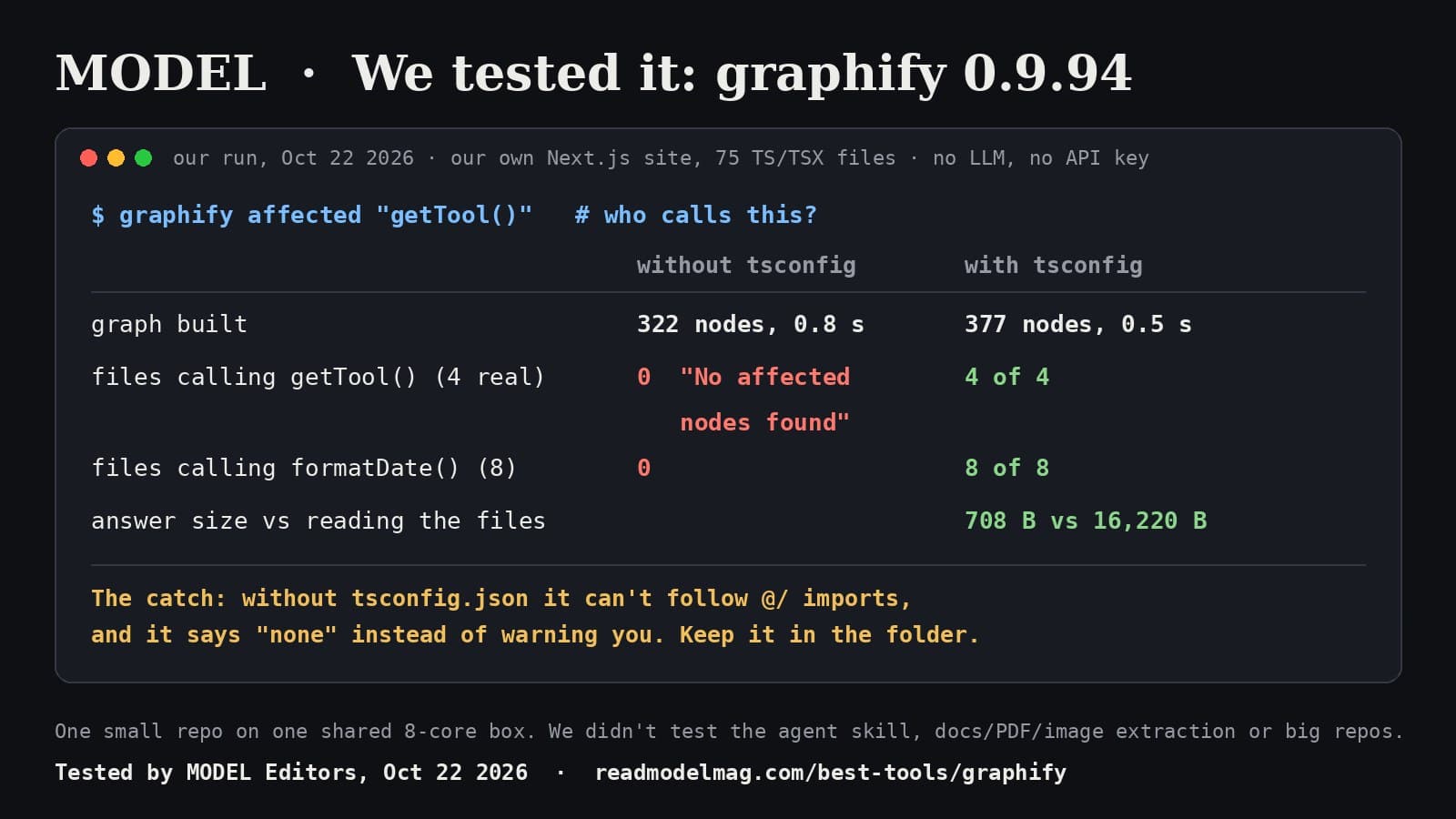
graphify, tested: it found every caller, once we gave it the tsconfig
The open-source tool that turns a codebase into a graph your coding agent can query shipped version 0.9.94 this morning. On our own Next.js site it mapped 75 files in half a second with no AI model and no key, and found every file that calls a function. Without our tsconfig.json it found none, and said so as if that were the answer.
· MODEL Editors
Tools
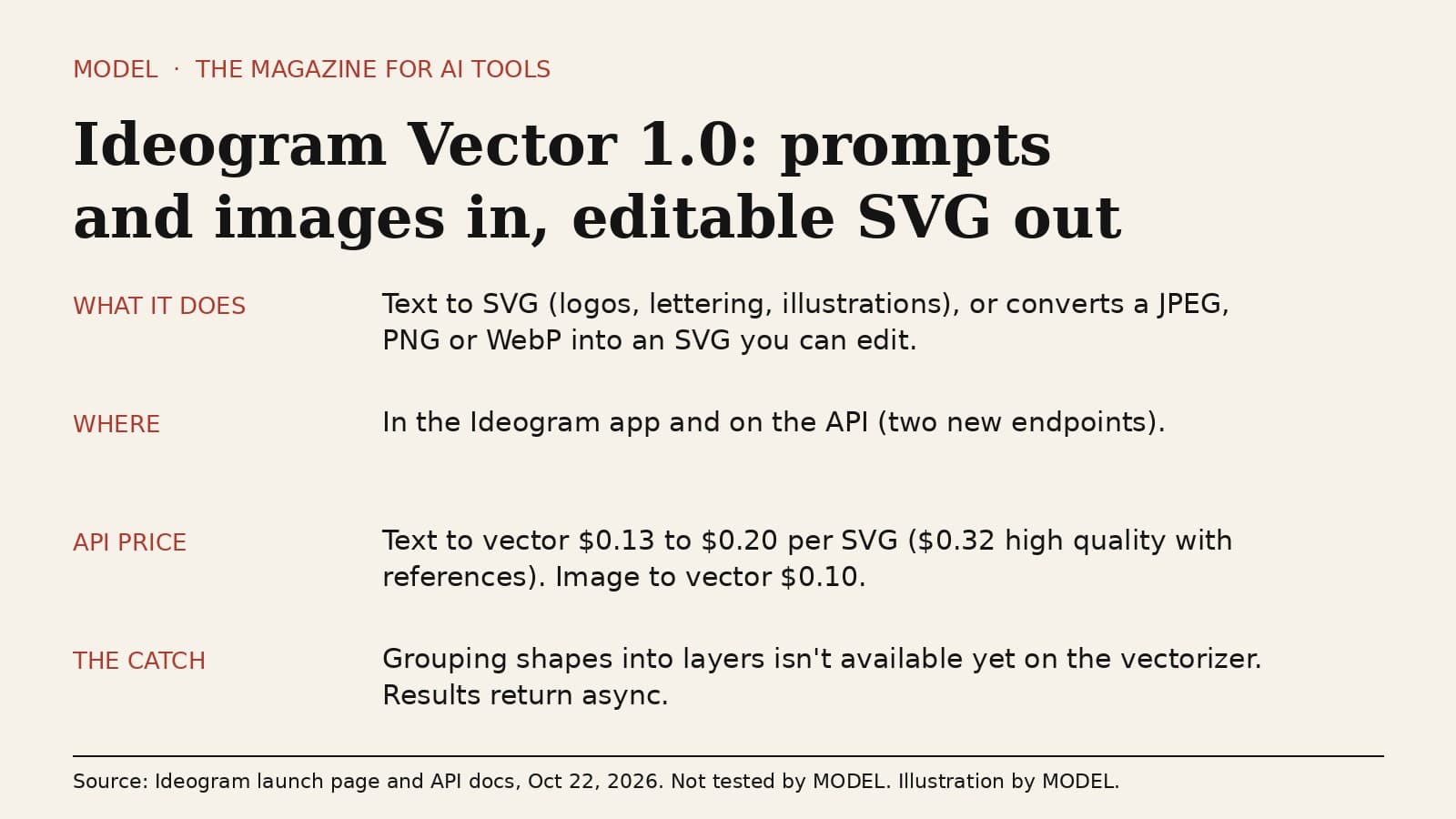
Ideogram Vector 1.0 turns a prompt or an image into an SVG you can actually edit
Ideogram launched its first vector model on October 22: describe a logo, wordmark or illustration and get back a clean SVG with editable colors, shapes and gradients, or upload a raster image and convert it. It's live in the Ideogram app and on the API. The honest caveat: the vectorizer can't group shapes into layers yet.
· MODEL Editors
Builder tip
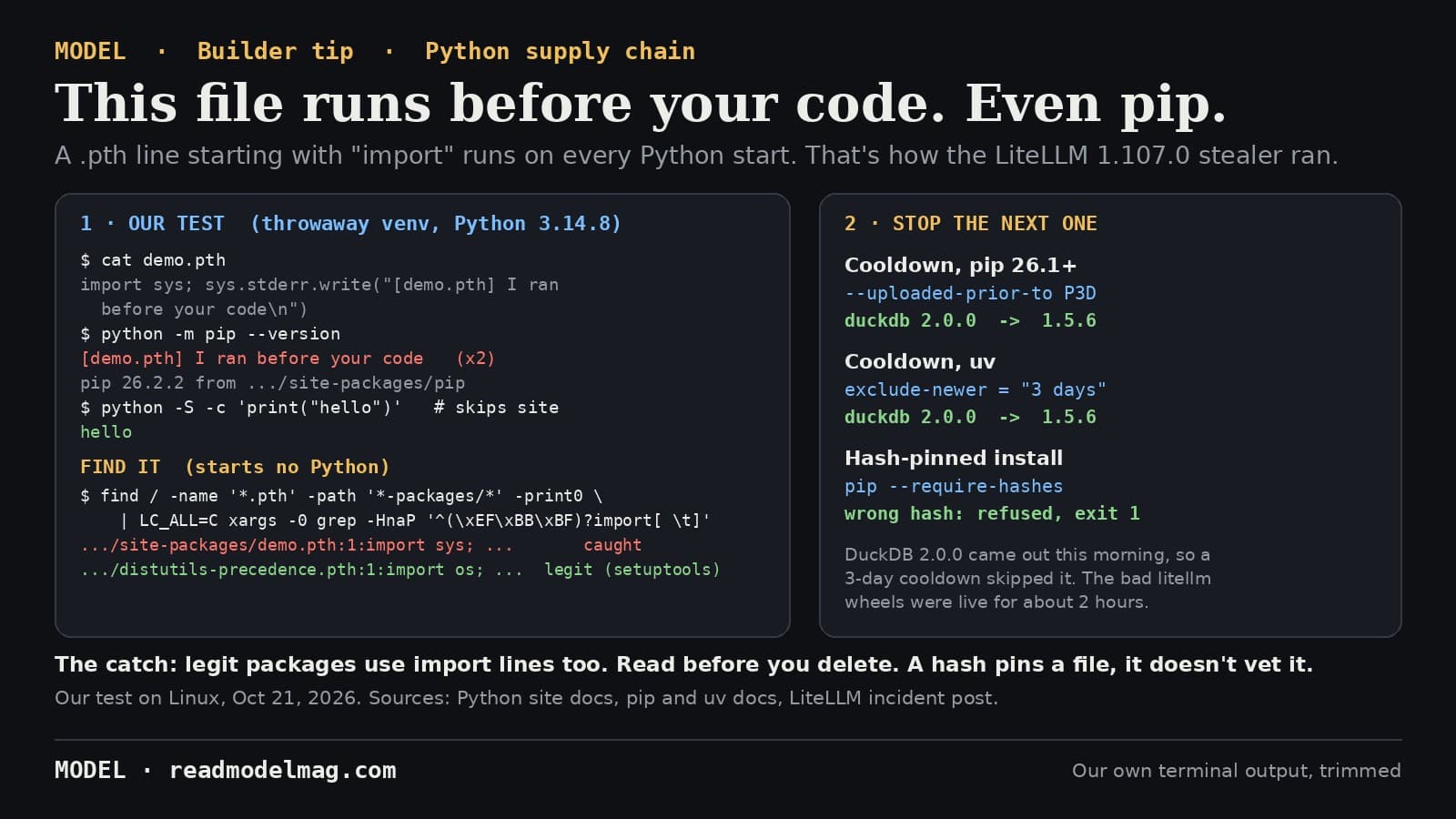
How to check your Python environment for a malicious .pth file, and dodge the next poisoned release
Today's LiteLLM 1.107.0 stealer ran from a .pth file, which Python executes on every start, even when you only run pip. Here is a one-line check that starts no Python, a harmless demo we ran ourselves, and two install settings that would have kept that release off your machine.
· MODEL Editors