Google DeepMind's PlanAssist goes to 15 UK councils after a 58% time cut
SummaryPlanAssist, a Gemini-based tool that checks routine home-extension planning applications and drafts cited reports, is moving from a three-council pilot to a 12-month beta at 15 councils in England. The 58% figure comes from the makers' own pilot.
· MODEL Editors · 2 min read
Some links may be affiliate links. Disclosure
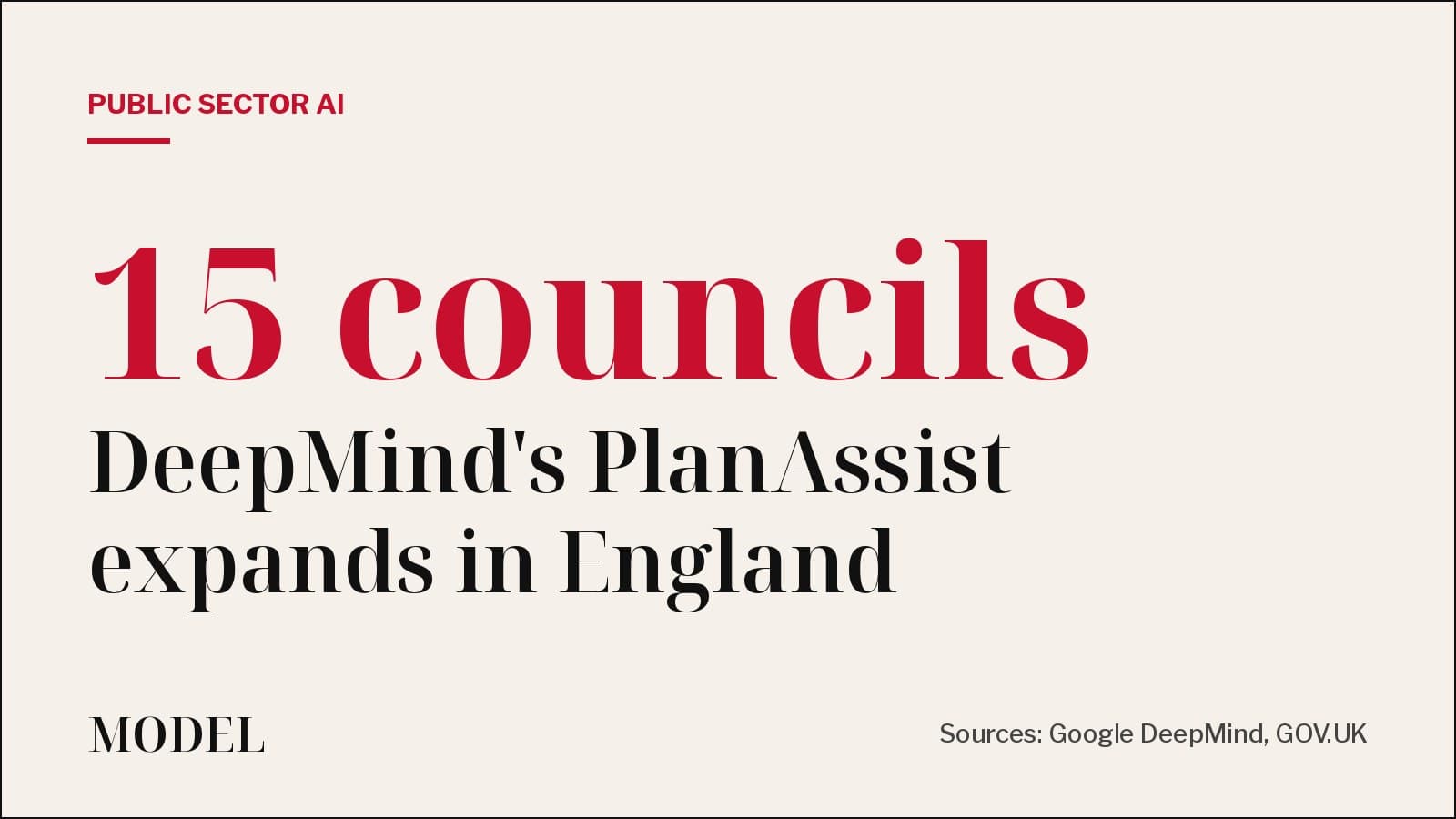
Google DeepMind's PlanAssist, a planning tool built with Gemini, is moving out of its pilot. It was developed with the UK government, Google Cloud and Faculty, and it is now heading to 12 more councils in England, for 15 in total, in a 12-month beta on live applications.
What it does. PlanAssist works on routine householder applications: loft conversions, conservatories and extensions. It checks that the application documents and architectural drawings include the required information. It checks the plans against heritage constraints, such as tree preservation orders, and against local and national planning policies. It looks at whether issues or objections were raised before, for example by residents. Then it drafts a fully cited report that the planning officer can edit. Officers keep the final say on every application.
The pilot numbers. The tool has been piloted since June at Barnet, Camden and Dorset councils. According to Google DeepMind and the government, average officer time on householder assessment tasks fell by 58% (DeepMind's headline says "up to 58%"), and officers approved more than 70% of the tool's reports with no edits.
Why householder applications. DeepMind says routine householder applications make up to 70% of planning officers' workloads. GOV.UK puts it as nearly 70% of applications each year.
What happens next. The 12 new councils will join in three cohorts and include metropolitan and rural districts. Subject to successful testing, the government plans to make PlanAssist available to all councils in England by the end of 2027. The government also says the tool is helping halve processing times for routine householder applications, from eight weeks to four. That is the government's claim. The wider context is the UK target of 1.5 million new homes by 2029.
Who it's for. Council planning officers in England. It is not for homeowners or the public, and it is not a product you can sign up for.
The catch. All of these figures come from the makers and the government, based on a three-council pilot, not an independent study. The 58% measures officer time on assessment tasks, not the time it takes to reach a decision. The 12 new councils have not been named. MODEL has not tested PlanAssist hands-on.
Our take
This is a narrow, sensible job for an AI model: checking paperwork against rules and drafting a cited report that a person signs off. Keeping officers in charge of every decision matters. The beta on live applications at 15 councils is the real test, and the number to watch is whether decision times actually fall, not just time spent on assessment.
This summary is based on the Google DeepMind blog post and the GOV.UK announcement, read October 31, 2026. Not sponsored. No affiliate links.
Sources
- Speeding up planning decisions with AI (Oct 31, 2026), by Owen Larter and David Thacker
Google DeepMind
- Faster planning decisions as new rules and AI tackle delays (Oct 30, 2026)
Ministry of Housing, Communities and Local Government, GOV.UK
FREE · EVERY WEEK
The top AI tools this week, tested.
Every week MODEL's editors pick the AI tools worth your time, try them hands-on, and tell you what's good, what's not, and who it's for. Free, in your inbox.
Free. Unsubscribe anytime. Our picks are editorial and can't be bought.
Continue
AI News
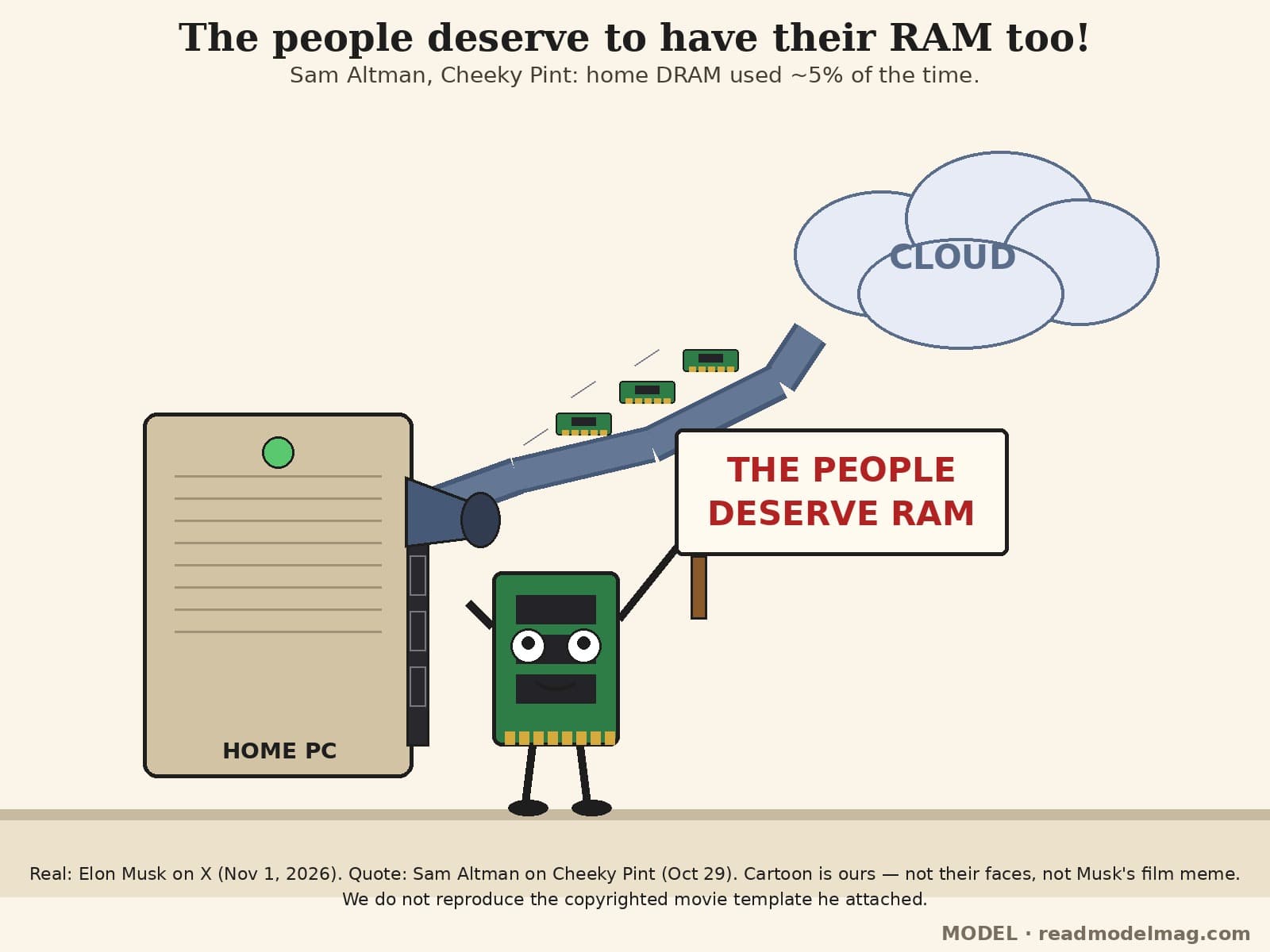
Elon Musk: "The people deserve to have their RAM too!" (after Altman's 5% DRAM line)
Two days after OpenAI's CEO called home DRAM "quite terrible" on Cheeky Pint, Musk replied on X with a one-liner that racked up millions of views. We already covered Altman's quote. This is the sequel.
· MODEL Editors
AI News
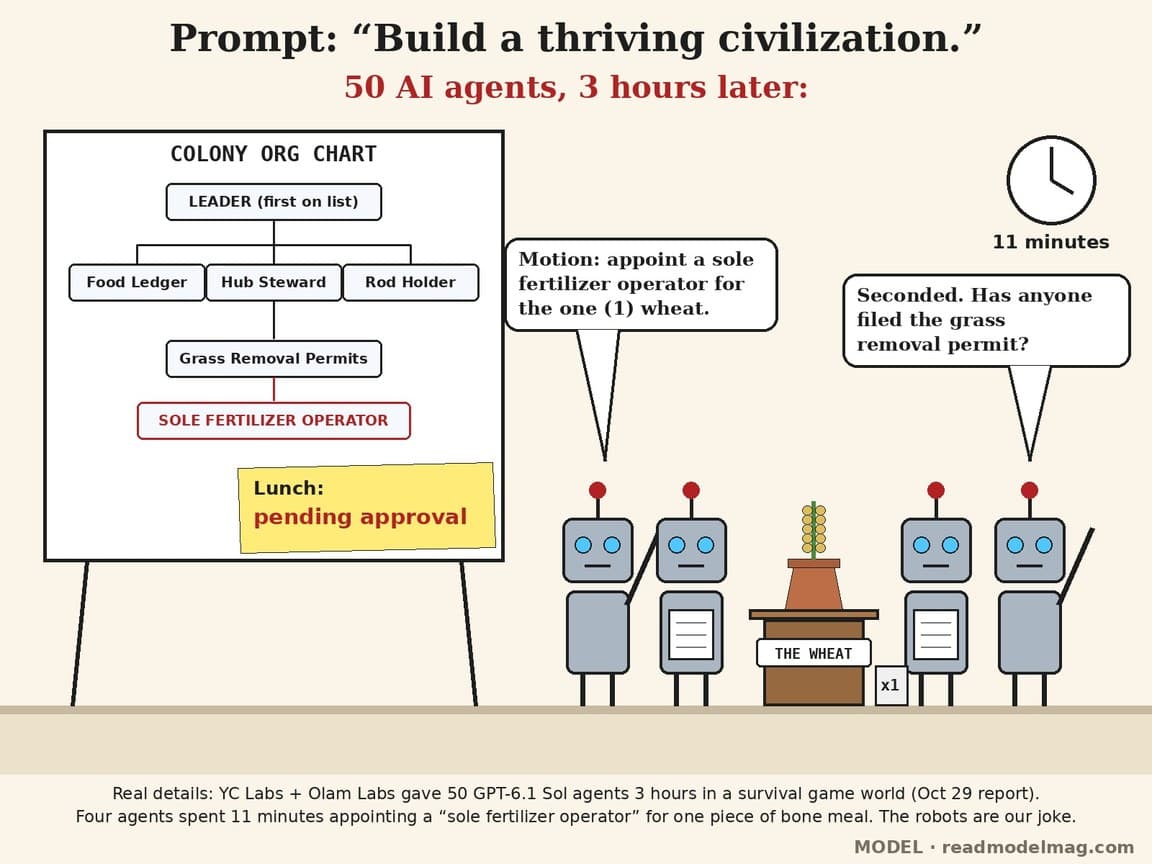
YC told 50 AI agents to build a Minecraft civilization. They built a bureaucracy
In a YC Labs and Olam Labs experiment, 50 GPT-6.1 Sol agents got three hours and one goal. They ended up with permits, a ration ledger, and four agents spending 11 minutes appointing a "sole fertilizer operator."
· MODEL Editors

AI News
A ghostwriter's own writing got flagged as AI. Here's what detectors can and can't tell you
NPR reported on Oct 31 that a writer lost out on a book job after detectors flagged a sample she wrote herself. A June study of four popular detectors shows why one score should never decide a case.
· MODEL Editors