The Fed is gaming out an AI bust: Warsh lays out three scenarios
SummaryFed Chairman Kevin Warsh said Monday that Board staff are modeling outcomes for AI, from broad gains to a stock-market slump and higher unemployment. Governor Michael Barr put numbers on the debt behind the buildout. Nvidia was down about 4% a day before earnings.
· MODEL Editors · 2 min read
Some links may be affiliate links. Disclosure
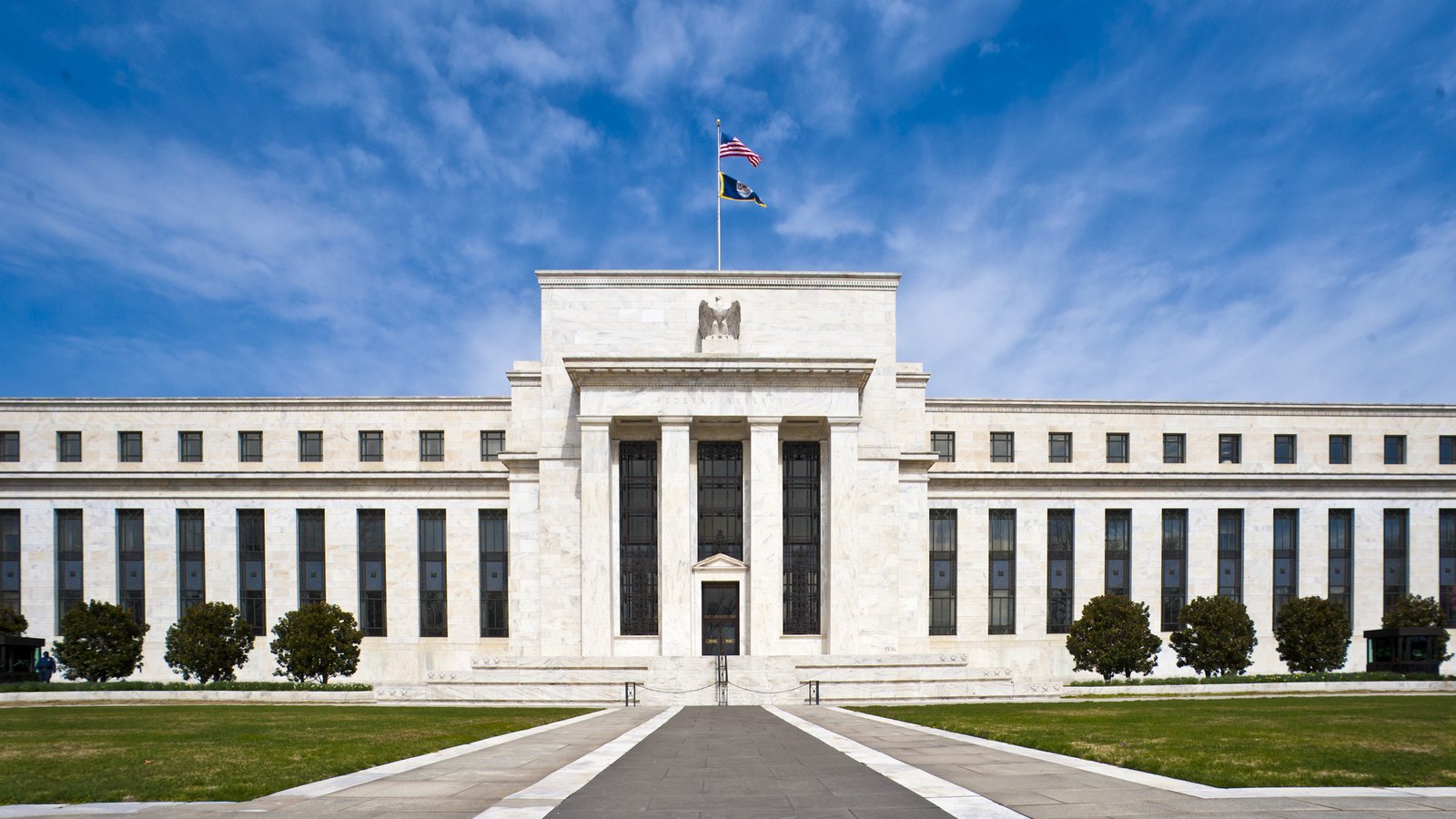

What happened. Opening a Fed conference on productivity and jobs in San Francisco on Monday, Nov. 16, Federal Reserve Chairman Kevin Warsh said the Board's staff "has begun to evaluate various contingencies" for AI, which he calls "super intelligence," or SI, using model-based scenarios (Federal Reserve (opens in a new tab); CNBC (opens in a new tab); Reuters (opens in a new tab)).
The three scenarios. Warsh described them as "illustrative scenarios, not forecasts":
- Broad gains. Productivity rises and the gains are "shared broadly across labor and the owners of capital." Real GDP growth stays above its long-run average and the U.S. stays close to full employment.
- Growth with job losses. GDP growth still rises, but automation displaces jobs and could push unemployment "above levels consistent with full employment."
- AI disappoints. "After significant capital investment and stock market gains, expected returns could turn down and equity valuations could fall, leading to an economic slowdown and a more notable rise in unemployment. In time, the economy would recover, but without the productivity gains."
He also flagged that SI "empowers all, including bad actors," with the Fed watching critical infrastructure, and said the Fed's role is "neither advocacy nor opposition."
The debt behind the buildout. In a separate speech the same day, Fed Governor Michael Barr summarized the Fed's latest Financial Stability Report, released Friday (Federal Reserve (opens in a new tab)):
- On-balance-sheet debt of the seven largest AI firms is expected to exceed $800 billion before the end of 2026.
- The Fed's estimate of the potential maximum value of their off-balance-sheet obligations (leases, long-term contracts, residual value guarantees) now exceeds $3 trillion.
- Hyperscalers and big GPU makers hold over $100 billion in equity stakes in AI labs and cloud start-ups, which Barr calls a form of "circular financing" because that money comes back as GPU and compute purchases.
Barr compared the debt growth to the late-1990s telecom investment cycle and said the off-balance-sheet structures warrant "close monitoring."
Markets. As of 11:27 a.m. PT Monday (Yahoo Finance quote data), $NVDA was down about 4.1% at $156.23, a day before Nvidia's first earnings report without Jensen Huang as CEO. The Nasdaq Composite was down about 2.4%, the S&P 500 about 1.9% and the iShares chip ETF (SOXX) about 4.5%. Prices move all day. Not investment advice.
What we left out. Posts on X tie Monday's selloff directly to Warsh's remarks. Stocks were already lower before he spoke, after a sharp drop in Asia (our earlier story), so we are not claiming cause and effect. Neither speech names individual companies.
What's next. Nvidia reports Tuesday, Nov. 17 (what to watch).
Our take. "AI bubble" used to be a debate between investors on X. Now the Fed chair says his staff is modeling the downside. That is preparation, not a prediction, but anyone building on cheap AI capital should run the same exercise.
MODEL Editors. Not sponsored. Not investment advice.
Get three tested tools every Friday
Free, weekly. Unsubscribe anytime.
Sources
- Opening remarks by Chairman Warsh at the Federal Reserve's Productivity and Jobs Task Force Conference
Federal Reserve Board
- Speech by Governor Barr on some potential financial stability implications of artificial intelligence
Federal Reserve Board
- Fed Chairman Kevin Warsh stresses importance of AI to economy, but says it could 'disappoint'
CNBC
- Fed's Warsh sees risk of stock bust if AI boom disappoints
Axios
- Fed's Warsh says emerging technologies will have 'significant impact,' but risks need to be watched
Reuters via Investing.com
Not investment advice.
Keep reading
AI Stocks
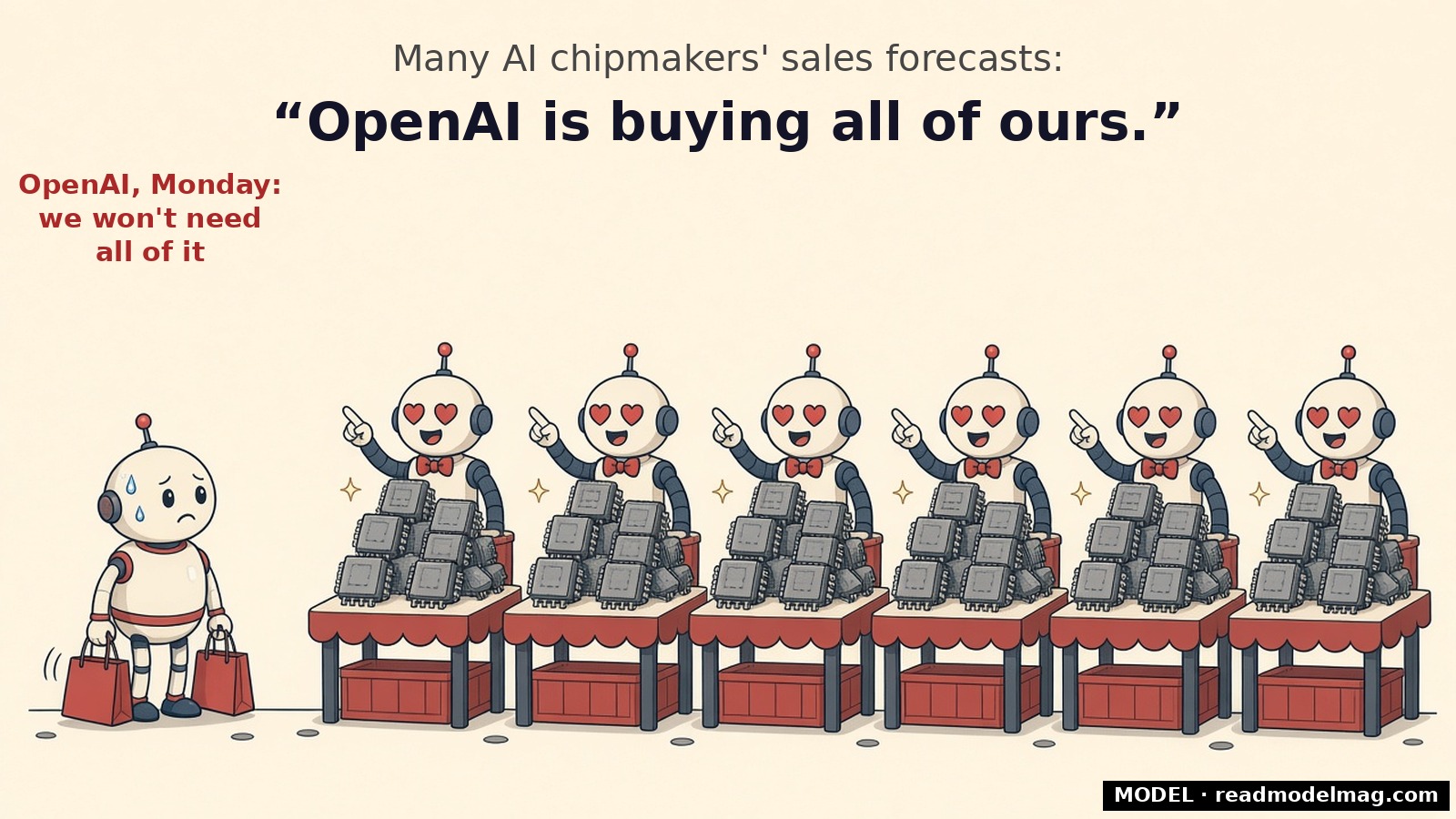
Altman: chipmakers are counting on OpenAI to buy all their chips. It won't.
At a Semafor event Monday, Sam Altman said many AI chipmakers plan as if OpenAI, Anthropic and a few others will take most of their output, so demand gets double counted. The same day, OpenAI signed for 457 MW of AMD-powered capacity.
· MODEL Editors

AI News
Anthropic sets its IPO range at $70 to $78. Nvidia, Google and five other partners add $26 billion on top
Anthropic's second amended S-1, filed November 10, prices 825 million Class A shares at $70 to $78 and lines up a separate $26 billion private placement from Google, Nvidia, AMD, Broadcom, Micron, Microsoft and TSMC.
· MODEL Editors
AI NEWS
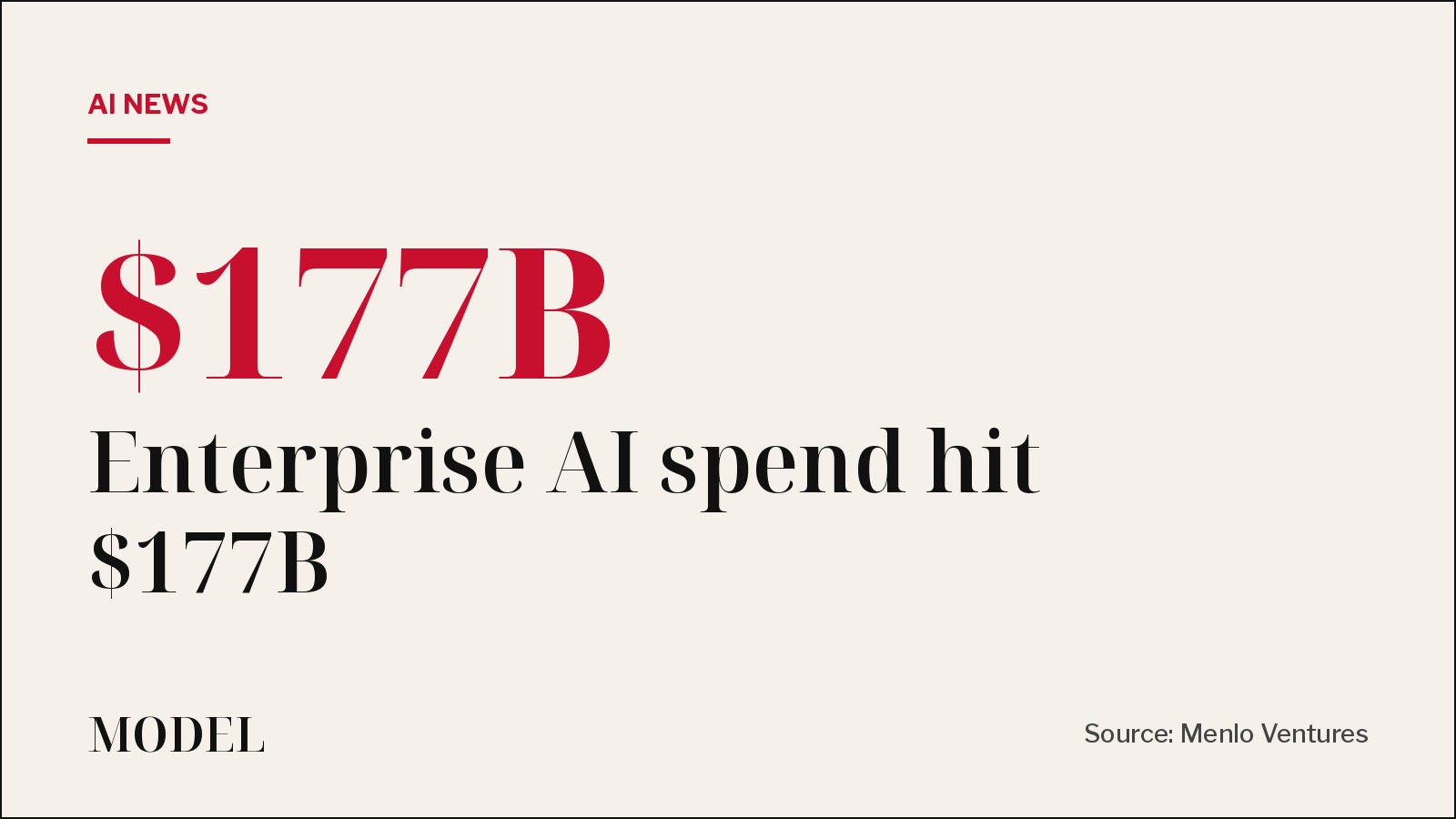
Enterprise AI deployment spend hit $177B. Coding apps alone are $34B.
Menlo Ventures' 2026 State of Enterprise AI estimates $176.8B in enterprise deployment spend by September — 5.4x last year's $33B — with agents driving the bill and Anthropic at 55% of enterprise LLM API spend.
· MODEL Editors
AI News
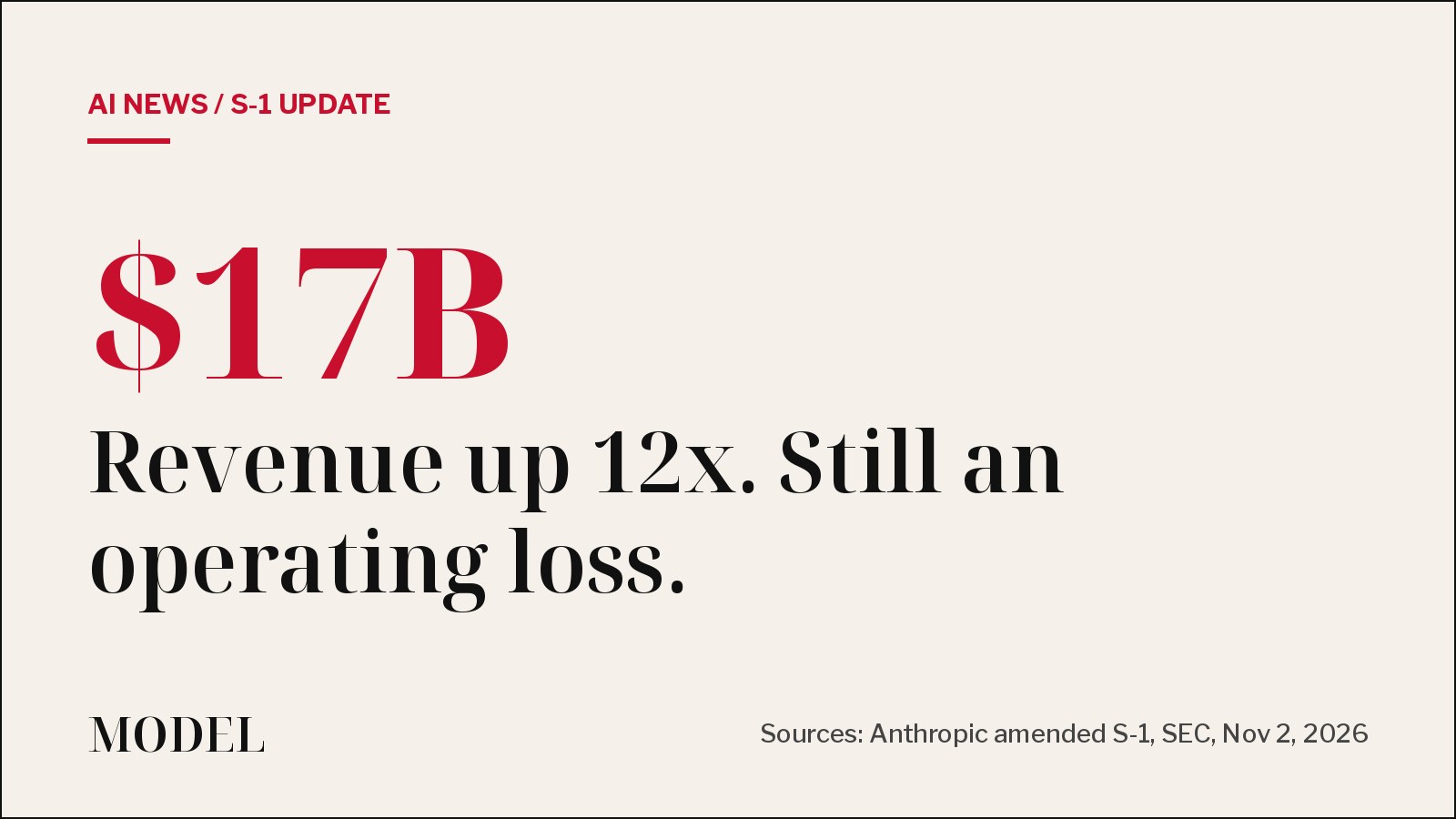
Anthropic made $17 billion last quarter and still posted an operating loss. The compute bill is why
Anthropic's amended S-1, filed November 2, adds its third-quarter numbers: revenue up about 12x from a year earlier, a swing back to an operating loss, and $895.4 billion in compute and infrastructure commitments.
· MODEL Editors
FREE · EVERY WEEK
The top AI tools this week, tested.
Every week MODEL's editors pick the AI tools worth your time, try them hands-on, and tell you what's good, what's not, and who it's for. Free, in your inbox.
Free. Unsubscribe anytime. Our picks are editorial and can't be bought.