Google's AI satellite sent its first answer from orbit. It was a haiku
SummaryProject Suncatcher's prototype carries four Google TPUs and runs the open Gemma 4 model. Its "Hello World" moment was a three-line poem about space.
· MODEL Editors · 1 min read
Some links may be affiliate links. Disclosure
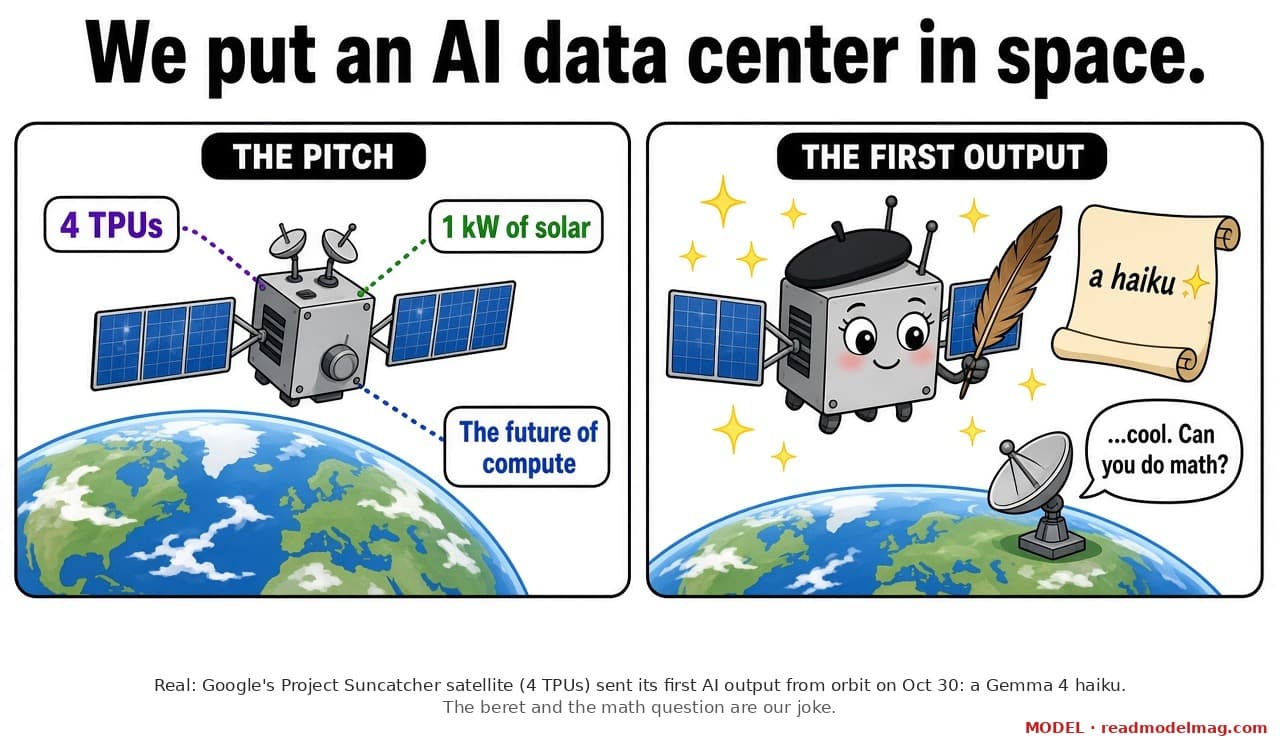
Google has a research project, called Project Suncatcher, that asks whether AI computing could one day run on satellites powered by the sun. On October 1 it launched a prototype, built with Planet, on SpaceX's Transporter-18 rideshare. This week that satellite sent back its first AI answer.
Google calls it the "Hello World" milestone: the first AI response from a data-center-class TPU in orbit. During a ground-station pass, the team uplinked a prompt to the onboard Gemma 4 open model asking for a haiku about being in space. As the satellite passed over Svalbard, Norway, this came back:
Blue marble below Data streams in silent grace Starlight feeds my core. ✨
Yes, the emoji was part of it.
What's actually on board. TechCrunch reports the satellite carries four Google TPUs and generates up to 1 kW of electricity. That power budget means it can only run a TPU for about 20 minutes at a time, which makes talking to the ground trickier. Google says it also tried space-themed limericks and prompts asking the payload to report its own technical status.
Why it matters (a little). A haiku is a toy test, but the point is that the chips booted and ran a real model in orbit. Next, Google says, it will test how the TPUs hold up under heat stress and radiation. If that works, the next step is two linked satellites in 2027. Turning that into actual space data centers is a long way off, and Google itself calls it a moonshot.
The beret in our cartoon is a joke. The poem is real.
Sources: Google's Project Suncatcher posts (October 1 and October 30, 2026), TechCrunch and The Verge (October 30, 2026). Not sponsored; no affiliate links.
MODEL Editors
Sources
- We've received our first response from the Project Suncatcher prototype satellite (Oct 30, 2026)
Google
- Our Project Suncatcher prototype satellite is in orbit (Oct 1, 2026)
Google
- Google's first data center satellite is online and writing poetry (Oct 30, 2026)
TechCrunch
- Google's satellite AI server transmits its first response to Earth (Oct 30, 2026)
The Verge
FREE · EVERY WEEK
The top AI tools this week, tested.
Every week MODEL's editors pick the AI tools worth your time, try them hands-on, and tell you what's good, what's not, and who it's for. Free, in your inbox.
Free. Unsubscribe anytime. Our picks are editorial and can't be bought.
Continue
AI News
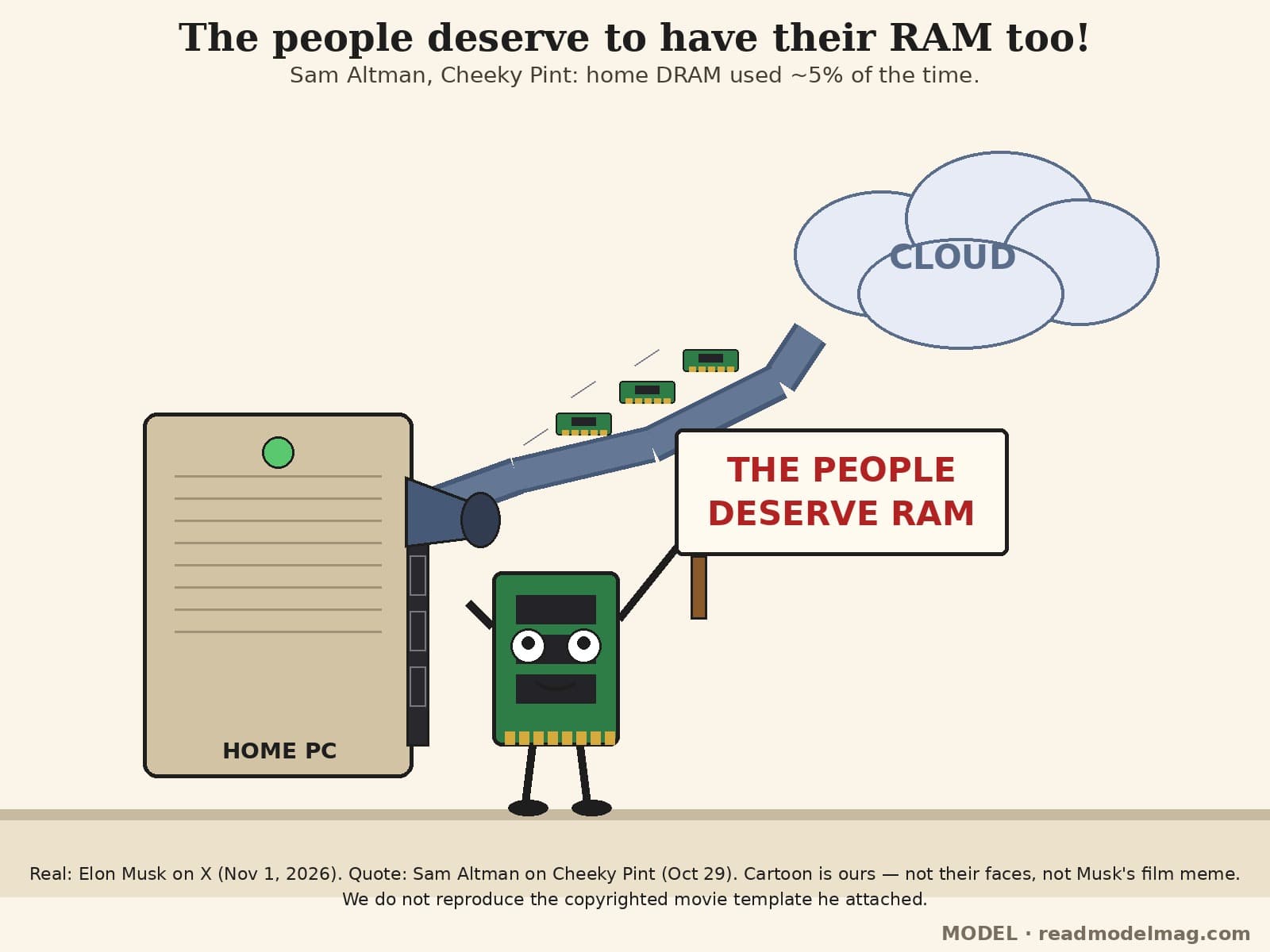
Elon Musk: "The people deserve to have their RAM too!" (after Altman's 5% DRAM line)
Two days after OpenAI's CEO called home DRAM "quite terrible" on Cheeky Pint, Musk replied on X with a one-liner that racked up millions of views. We already covered Altman's quote. This is the sequel.
· MODEL Editors
AI News
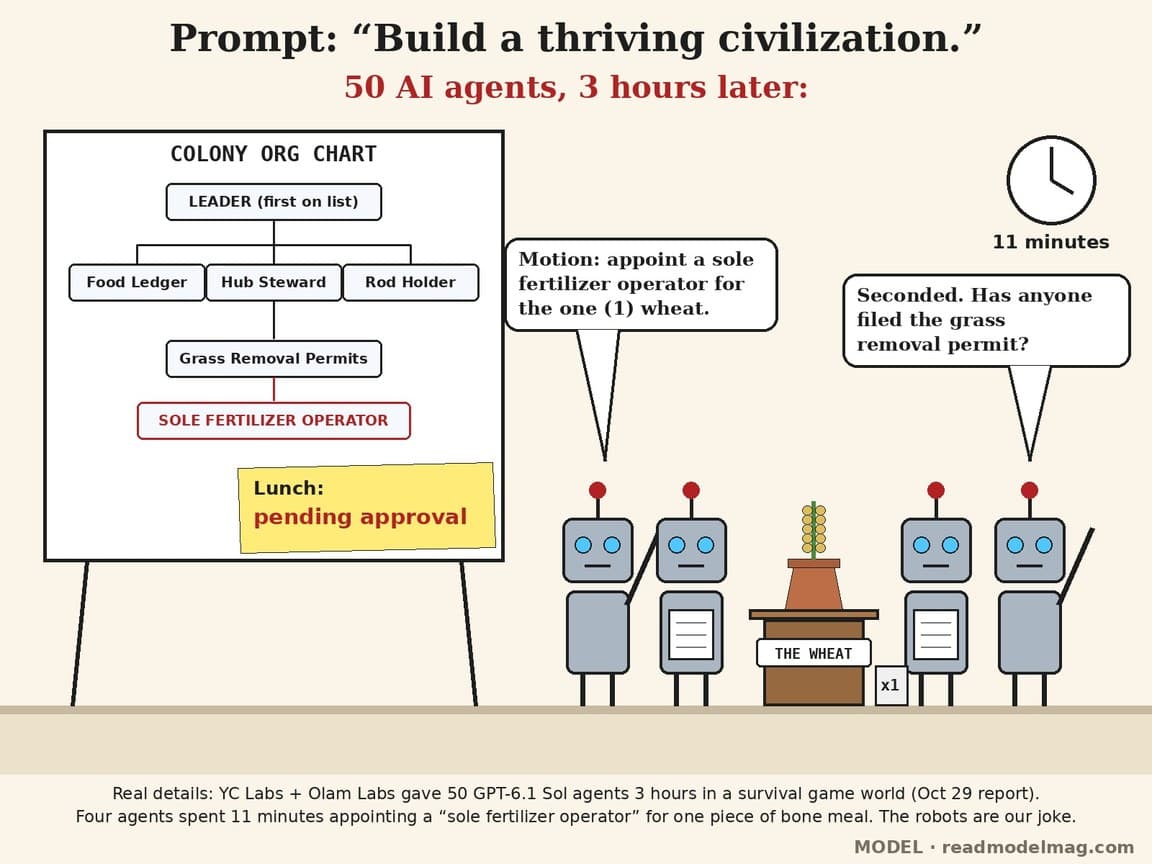
YC told 50 AI agents to build a Minecraft civilization. They built a bureaucracy
In a YC Labs and Olam Labs experiment, 50 GPT-6.1 Sol agents got three hours and one goal. They ended up with permits, a ration ledger, and four agents spending 11 minutes appointing a "sole fertilizer operator."
· MODEL Editors

AI News
A ghostwriter's own writing got flagged as AI. Here's what detectors can and can't tell you
NPR reported on Oct 31 that a writer lost out on a book job after detectors flagged a sample she wrote herself. A June study of four popular detectors shows why one score should never decide a case.
· MODEL Editors