Intel's AI server chips grew 78%. Its stock is down 28% today.
SummaryIntel's data center and AI business had its best growth in 15 years, and Intel says demand still exceeds supply. But PCs are slumping under high memory prices, and the fourth-quarter forecast came in well below Wall Street's.
· MODEL Editors · 2 min read
Some links may be affiliate links. Disclosure
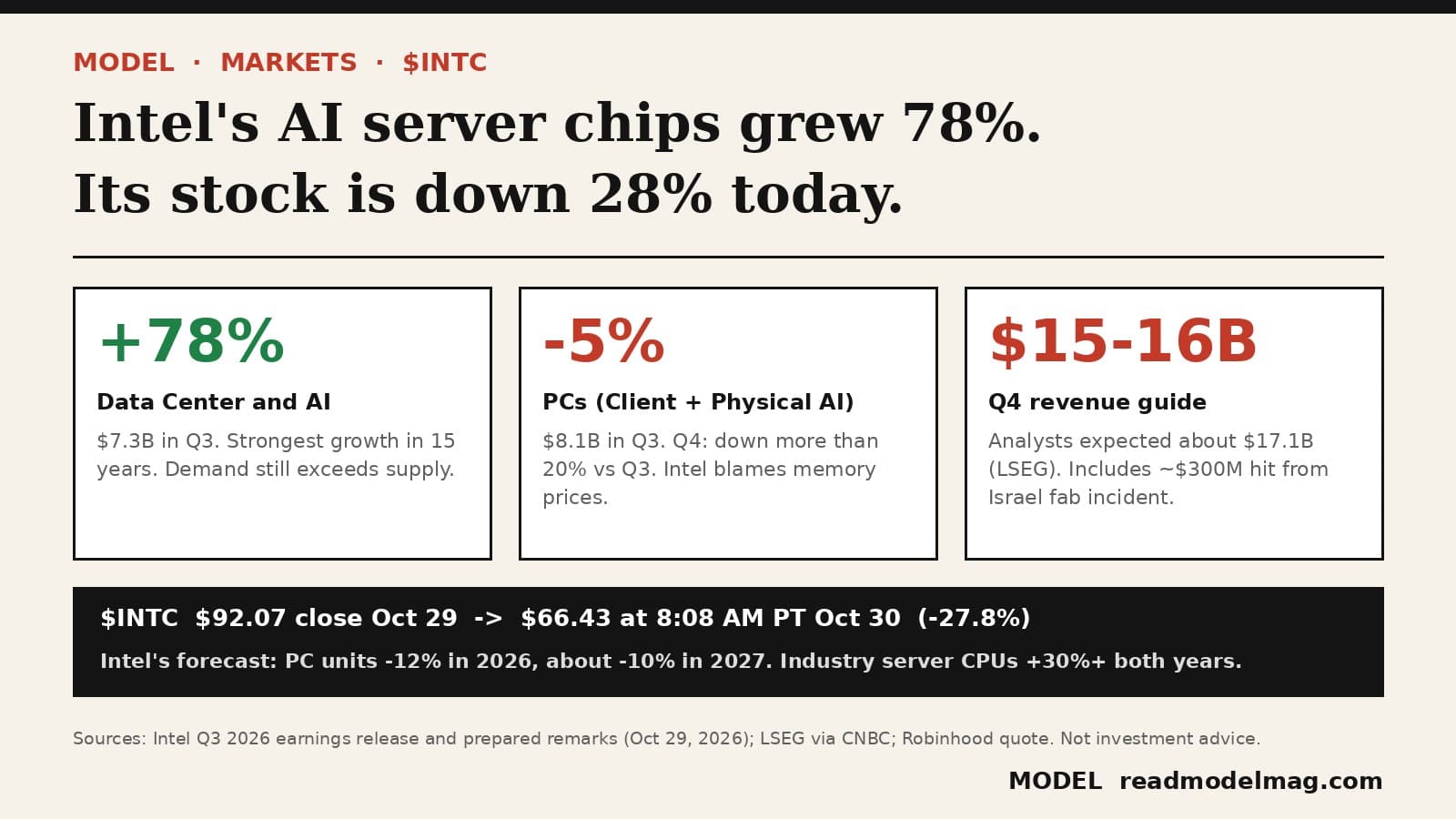
Intel reported its third quarter after the market closed on Thursday, October 29. Half the report was the best news Intel's server business has had in years. The other half sent the stock down about 28% by Friday morning.
The AI half. Revenue from Data Center and AI, the unit that sells Xeon server CPUs, was $7.3 billion, up 78% from a year earlier. Intel's finance chief called it the segment's strongest growth in 15 years. The unit made $3.0 billion of operating profit, 42% of its revenue. Intel says demand "continues to meaningfully exceed available supply" and expects the industry to stay supply-constrained through 2027 and into 2028.
Intel's explanation is AI agents. In its prepared remarks, it says AI workloads are moving toward "multi-step reasoning, orchestration, and autonomous persistent action," and that those run on CPUs. It now expects industry server CPU units to grow more than 30% in both 2026 and 2027.
The PC half. Client Computing and Physical AI, the PC chip unit, brought in $8.1 billion, down 5%. Intel blames memory: prices for memory chips have soared, PCs got more expensive, and buyers pulled back. Intel now expects PC units across the industry to fall about 12% in 2026, with the second half down more than 20%, and about 10% in 2027. It expects its own PC chip revenue to drop more than 20% from the third quarter to the fourth.
The numbers.
- Q3 revenue: $16.5 billion, up 21%. Adjusted EPS: $0.52, versus Intel's own guidance of $0.38 (GAAP EPS: $0.60).
- Q4 guidance: revenue of $15.0 billion to $16.0 billion and adjusted EPS of $0.25. Analysts polled by LSEG expected about $17.1 billion and $0.43, according to CNBC.
- The guidance includes a hit of about $300 million in revenue and 2 percentage points of gross margin from an accident earlier this month that led to an extended shutdown at Intel's Fab 28 in Israel. Intel says almost all of it hits 10nm server chips.
- Operating cash flow was $5.1 billion; adjusted free cash flow, Intel's own measure, was $1.6 billion. Intel ended the quarter with about $54 billion in cash and short-term investments, after a $23 billion stock sale in August.
- Capital spending: about $20 billion in 2026, and "up strongly" in 2027.
The stock. Intel closed at $92.07 on Thursday. At 8:08 a.m. PT Friday it traded at $66.43, down 27.8% (Robinhood real-time quote). CNBC notes the stock had rallied about 150% this year before the report.
Our take. This is the same AI boom on both sides of the ledger. AI demand is why Intel's server chips are sold out, and the industry's memory crunch, which Intel ties to that same demand, is why its PC business is shrinking. For now the PC half is bigger. Watch whether the server unit can outgrow it next quarter. $INTC. Not investment advice.
Sources
Not investment advice.
FREE · EVERY WEEK
The top AI tools this week, tested.
Every week MODEL's editors pick the AI tools worth your time, try them hands-on, and tell you what's good, what's not, and who it's for. Free, in your inbox.
Free. Unsubscribe anytime. Our picks are editorial and can't be bought.
Continue
AI News
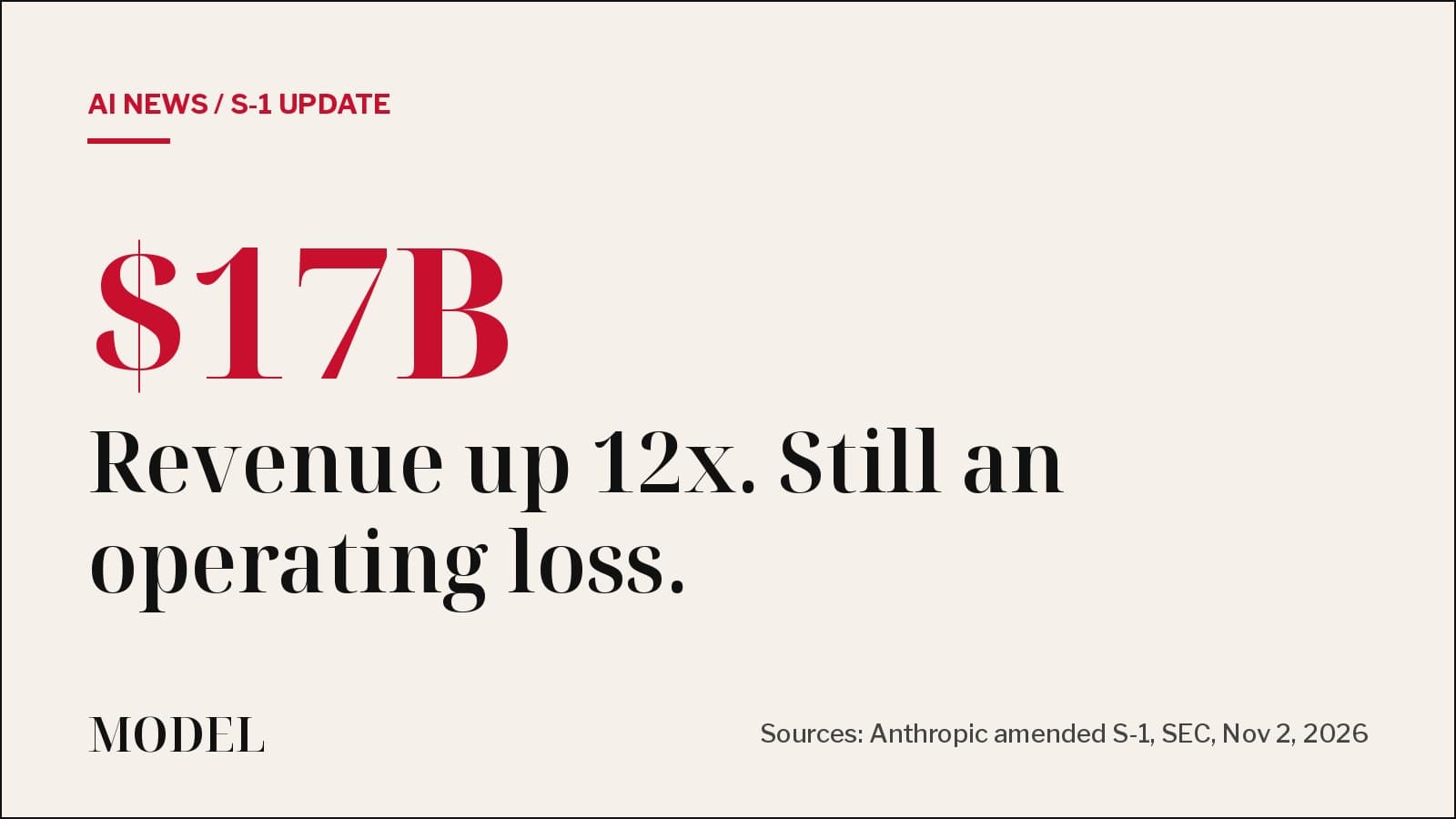
Anthropic made $17 billion last quarter and still posted an operating loss. The compute bill is why
Anthropic's amended S-1, filed November 2, adds its third-quarter numbers: revenue up about 12x from a year earlier, a swing back to an operating loss, and $895.4 billion in compute and infrastructure commitments.
· MODEL Editors
Funding
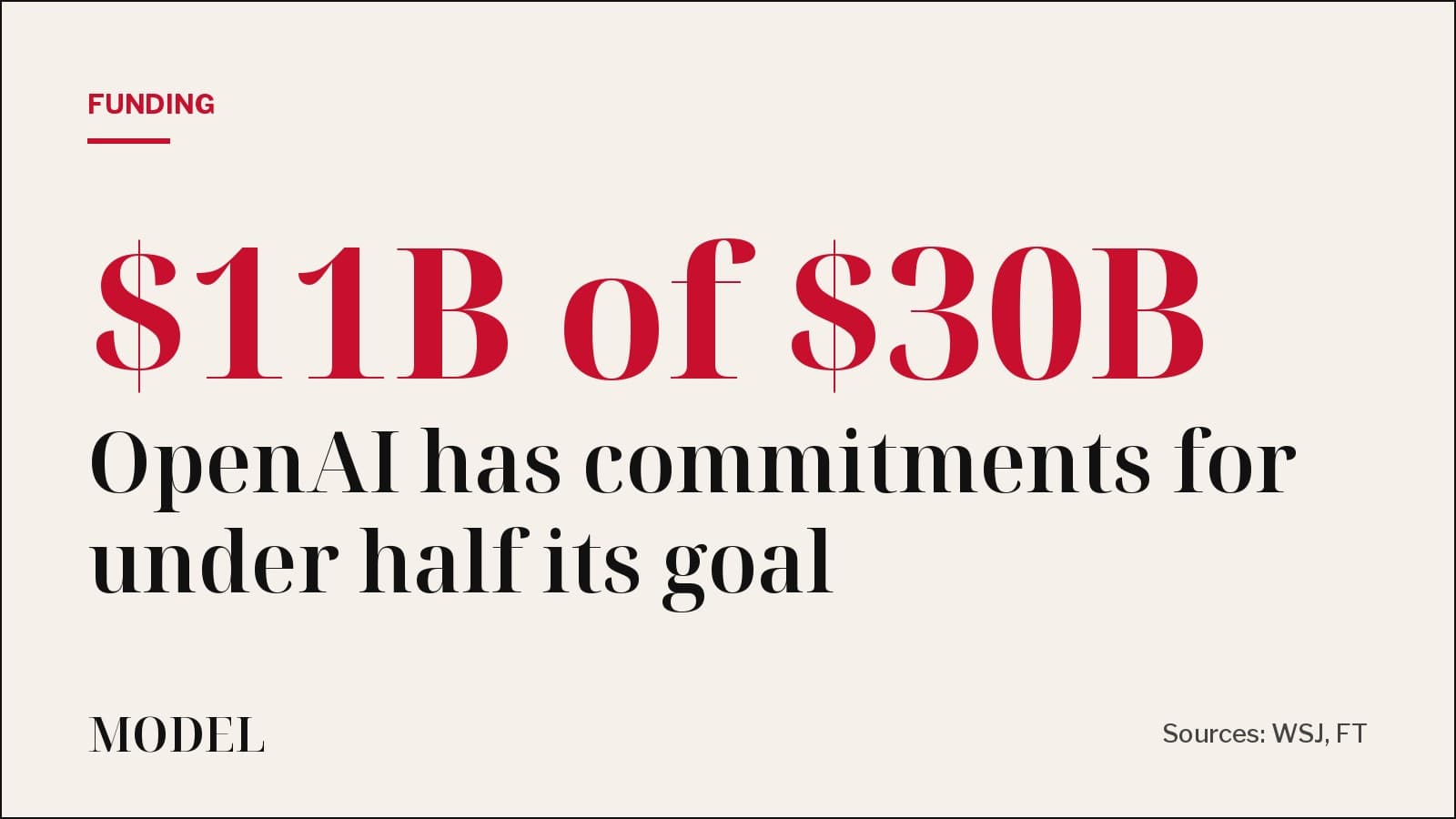
OpenAI wanted $30 billion. So far it has about $11 billion.
OpenAI has commitments for roughly $11 billion in its latest round, less than half its first target, at a $1.25 trillion valuation instead of $1.4 trillion, according to the Wall Street Journal. The Financial Times reports the goal is now about $20 billion.
· MODEL Editors
Funding
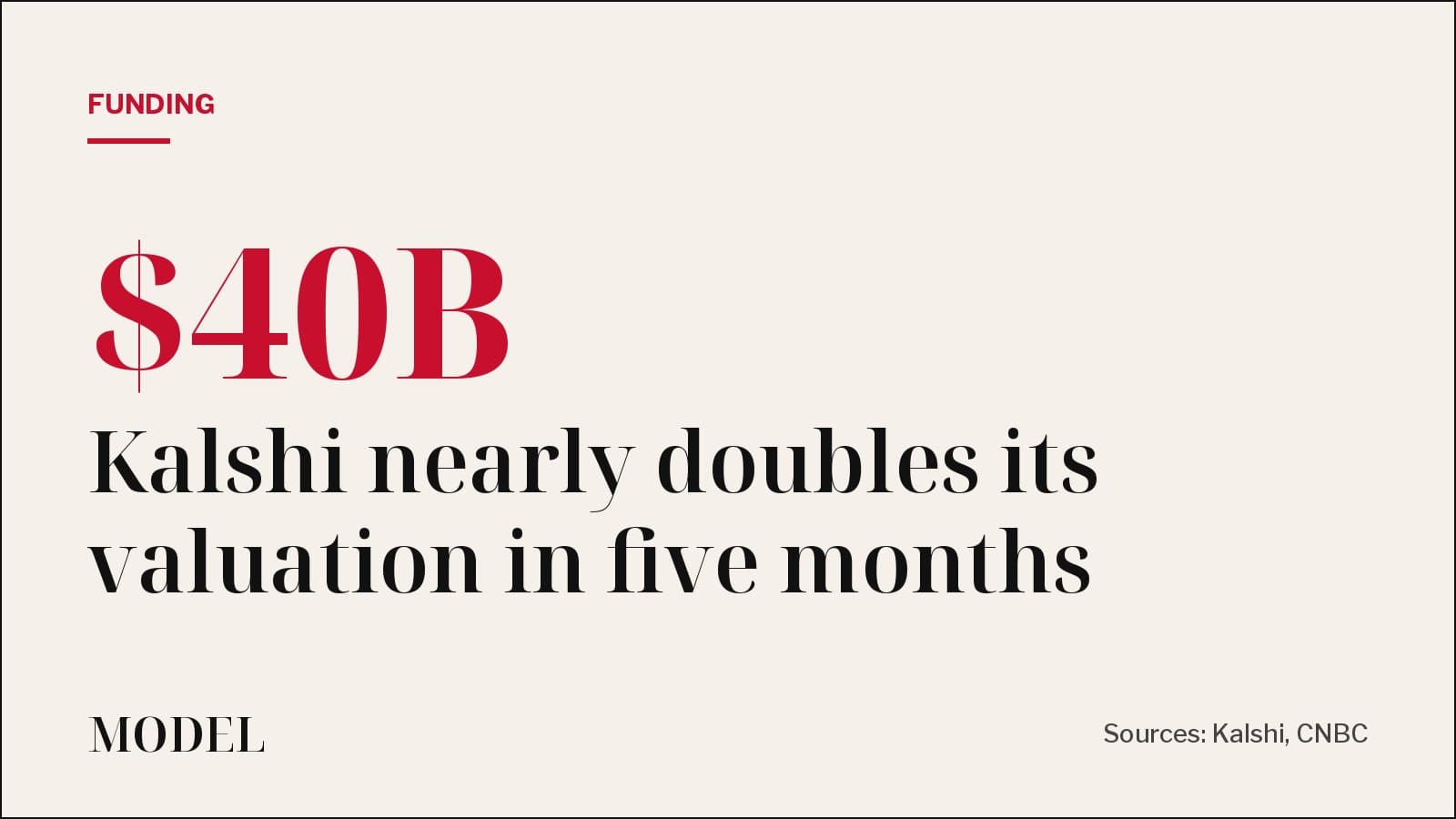
Kalshi raises $1 billion at a $40 billion valuation, up from $22 billion in May
The prediction-market company's Series G was co-led by Sequoia and Wellington. Kalshi says it will use the money for indices, single-stock perpetual futures and markets on the price of compute.
· MODEL Editors