Mathematicians now have AI dietary labels
SummaryMore than 1,000 mathematicians have joined the Association for Human Mathematics, which asks members not to work for AI companies or publish AI-written math. A stricter, optional group keeps AI out of research entirely.
· MODEL Editors · 2 min read
Some links may be affiliate links. Disclosure
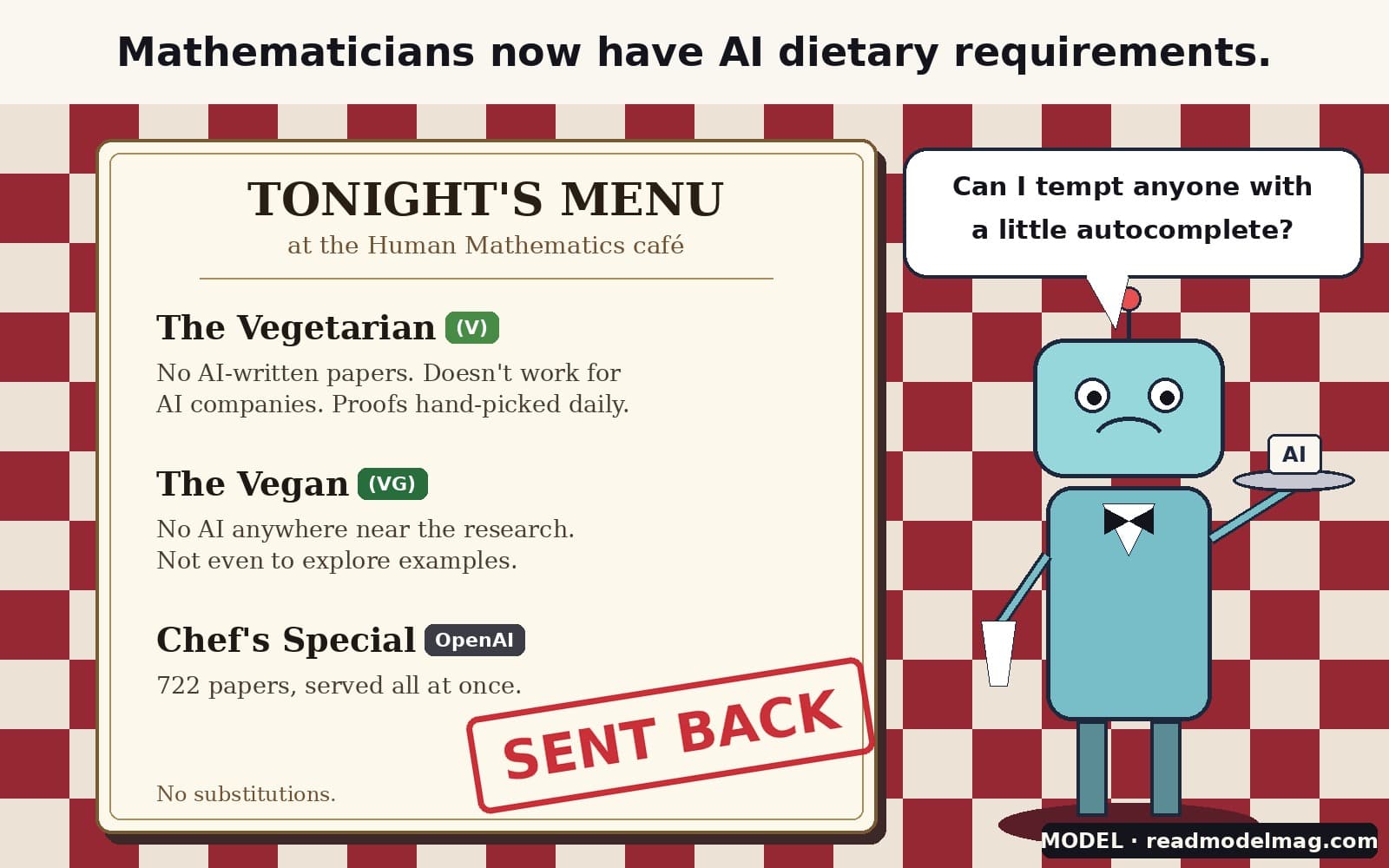
Some mathematicians have decided the best way to handle AI is to leave it off the plate.
What happened. The Association for Human Mathematics (AHM) says it now has 1,008 members, 654 of whom have also joined its optional "AI-free caucus." Membership is free, public, and open to people in mathematical research at graduate level and above. New Scientist reported on October 20 that membership includes professors and PhD students.
The two pledges, plus one. Every member commits to two things: not working with commercial AI companies (technical labor, math expertise, consulting or publicity), and not publishing mathematical writing generated by AI, from papers and referee reports to lecture notes and books. Members of the AI-free caucus go further and don't use AI models in research at all: no prompting AI to find proofs, explore examples or pose questions. The AHM's FAQ says the commitments are "expressions of principle rather than precise legal agreements."
Vegetarians and vegans. New Scientist describes the two groups that result as "vegetarians" (the two required pledges) and "vegans" (who also skip AI in research). Yale's Sam Raskin told the magazine he's a vegetarian member who didn't sign the third pledge because it was slightly unclear whether his occasional use for simple tasks counted. Imperial College London's Steven Sivek, a vegan member, said "We're not denialists" and that the group is working on how the profession should adapt.
Why now. New Scientist links the group to a backlash over how AI companies have released math results, including OpenAI publishing 722 papers at once earlier this month. The AHM's own statement on that release says: "Releasing over 700 files at once is not a demonstration of scholarship, but a demonstration of power."
Our take
The menu joke writes itself, but the complaint underneath is a real one about reviewing work, not a fear of computers. A proof that a machine has checked can still be impossible for a human to learn anything from, and a pile of 700 of them lands on the same volunteer reviewers. Whatever you think of the pledge, "show your work in a form people can read" is a fair rule for AI output in any field, including code.
What we did and didn't do: this story is based on New Scientist's report and the AHM's own members, FAQ and statements pages, read on October 20, 2026. We haven't independently checked the member count beyond the AHM's own list.
MODEL Editors
Sources
- 1000 human mathematicians pledge to shun AI in their research (Oct 20, 2026)
New Scientist
- Members and membership commitments
Association for Human Mathematics
- Membership FAQ
Association for Human Mathematics
- Statements
Association for Human Mathematics
FREE · EVERY WEEK
The top AI tools this week, tested.
Every week MODEL's editors pick the AI tools worth your time, try them hands-on, and tell you what's good, what's not, and who it's for. Free, in your inbox.
Free. Unsubscribe anytime. Our picks are editorial and can't be bought.
The weekly three is editorial. A subscription does not buy a place in it.
Continue
AI News
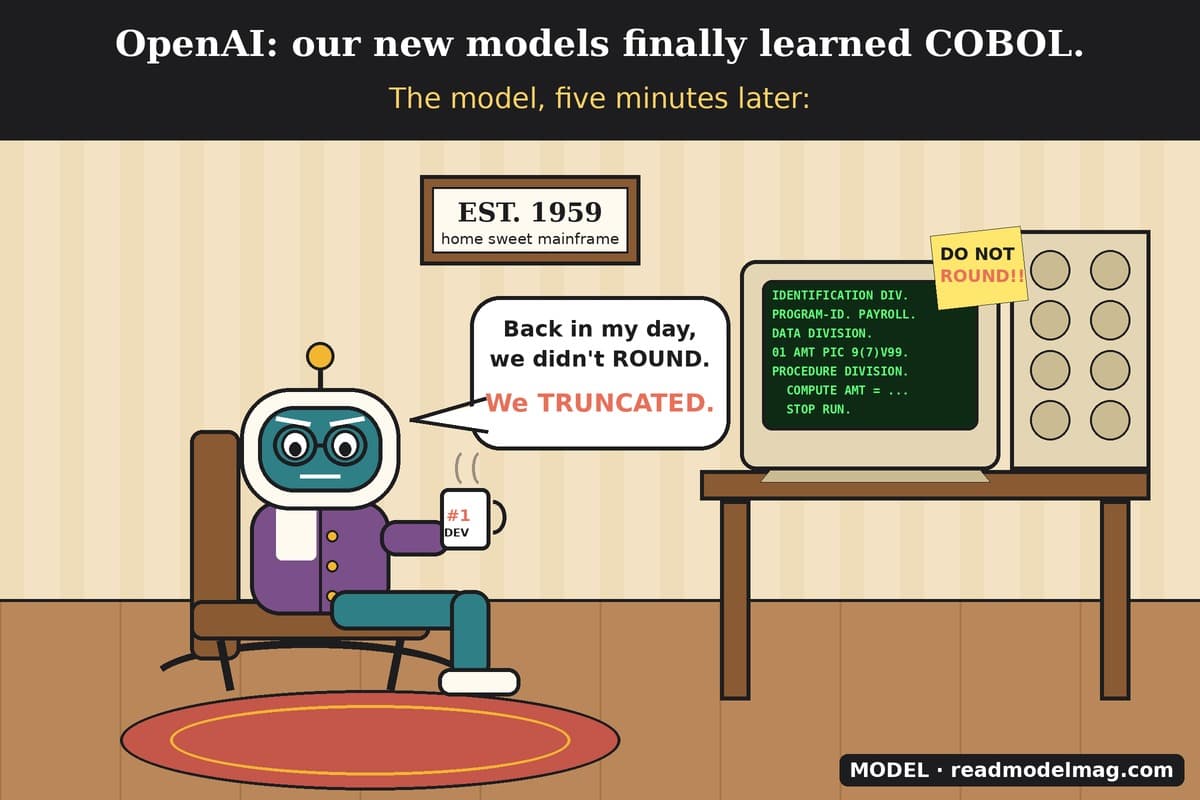
AI finally learned COBOL. Now it has opinions about rounding
OpenAI says its newest models are far better at COBOL, Fortran and Visual Basic, the old languages behind a lot of banking and government software, and published two tests to show it. The numbers are OpenAI's own.
· MODEL Editors
Policy
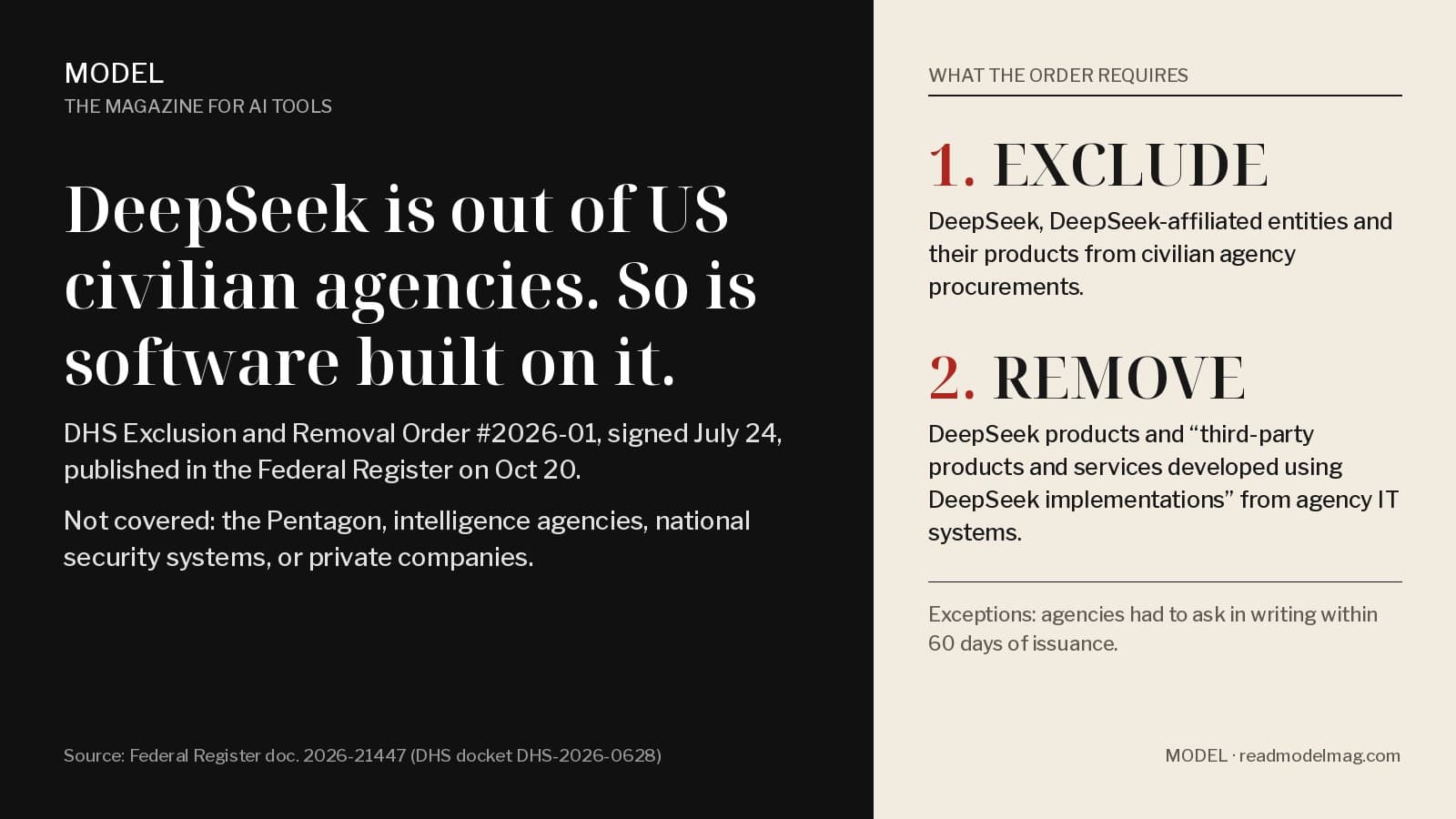
DeepSeek is out of US civilian agencies, and so is software built on it
A Homeland Security order signed in July and published in the Federal Register on Tuesday bars civilian federal agencies from buying DeepSeek products and orders them removed, along with third-party products and services built using DeepSeek. For AI vendors that sell to the government, the second part is the one to read.
· MODEL Editors
Culture
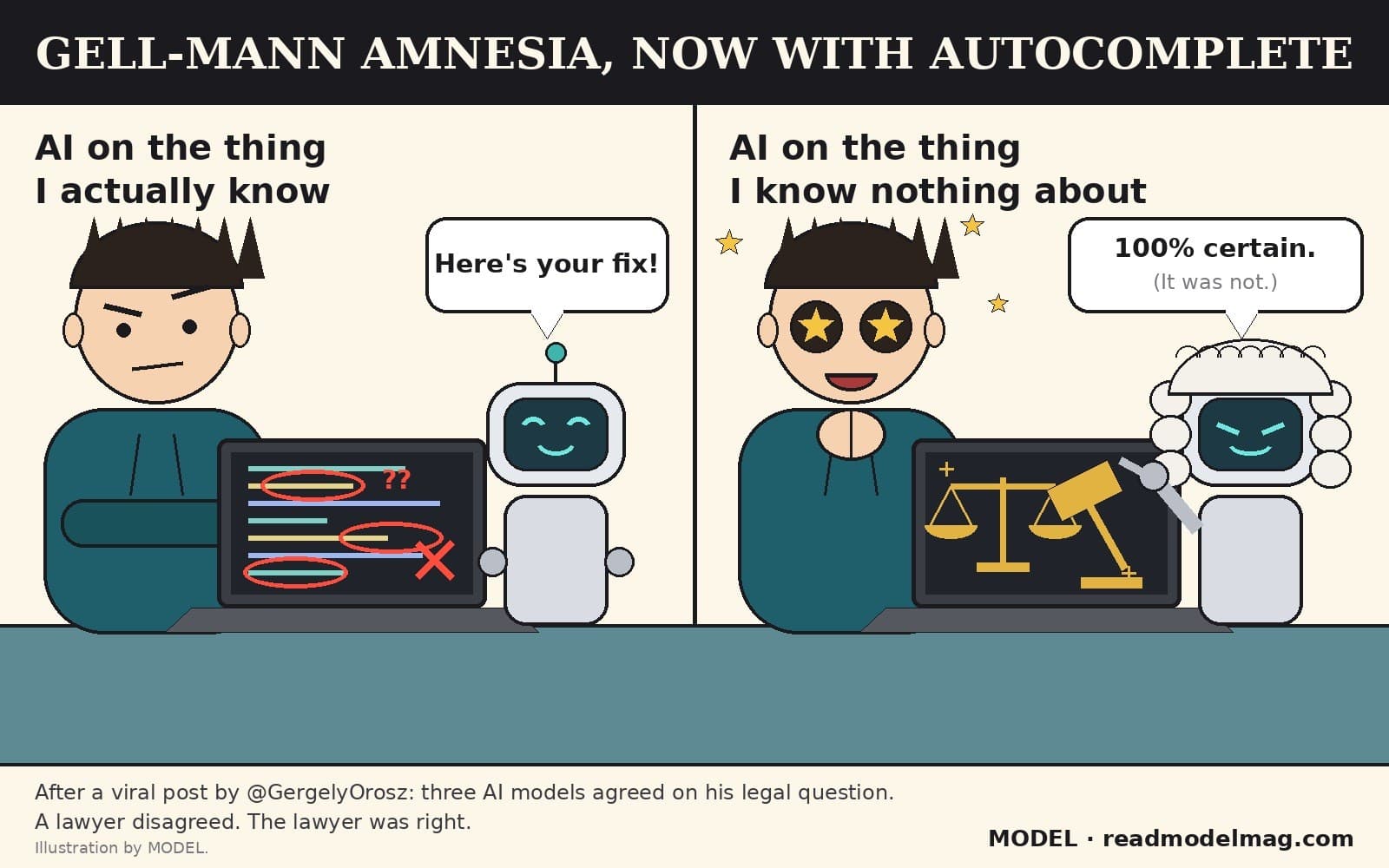
AI is wrong about your job. Surely it's right about law.
A viral post from Gergely Orosz put a 2002 idea back in the feed: we catch AI's mistakes in the fields we know, then trust it everywhere else.
· MODEL Editors