OpenAI's new off switch for research models: up to 35 seconds, thanks to a cache
SummaryOpenAI says Control Room now tracks every research inference job and can stop a job's model output within 35 seconds of a stop order. The lag comes from an authorization cache it wants to cut to zero.
· MODEL Editors · 2 min read
Some links may be affiliate links. Disclosure
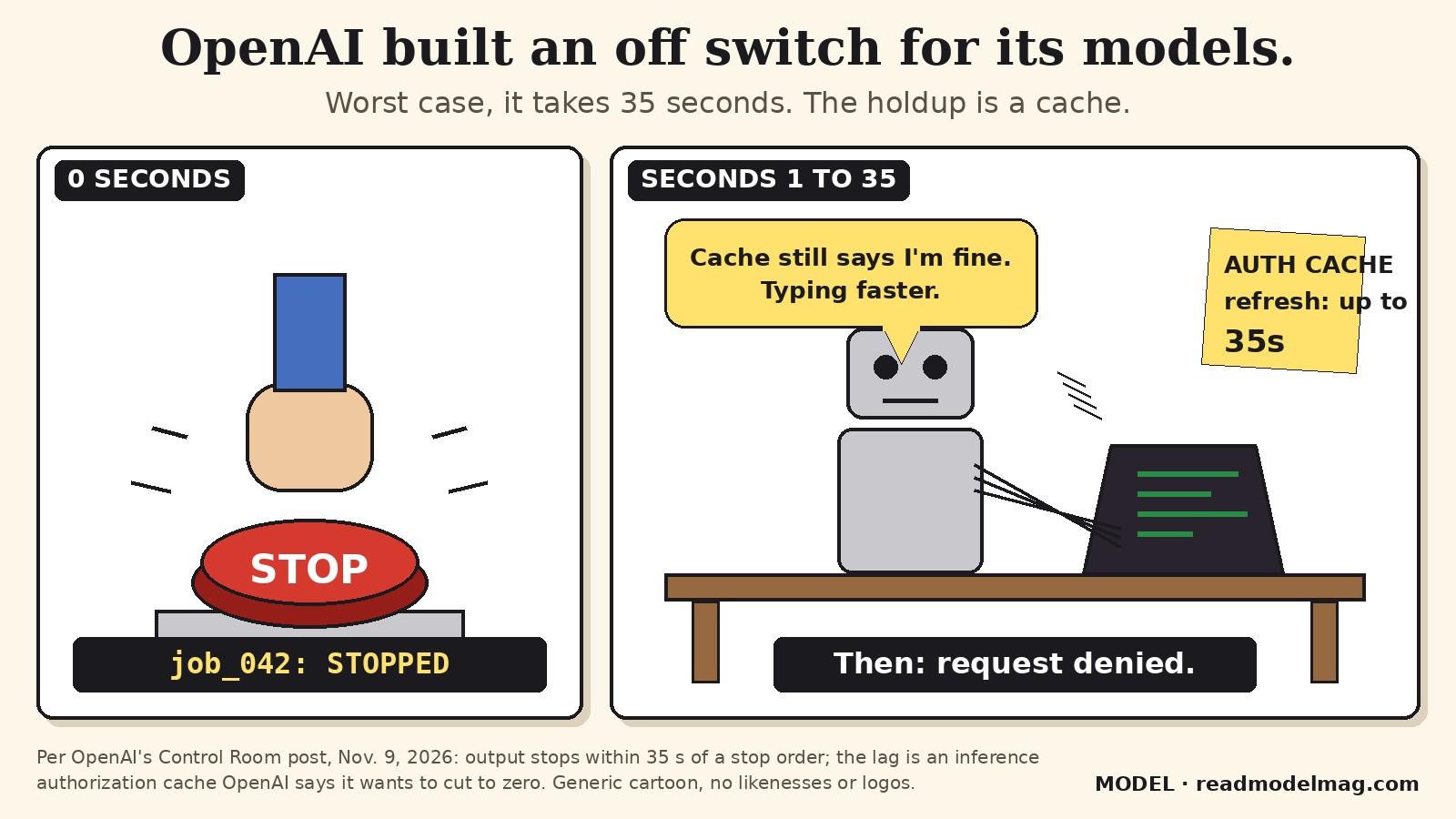
What happened. On Monday, Nov. 9, OpenAI announced Control Room (opens in a new tab), a central service that tracks model workloads across its research infrastructure and stops them when safety or security concerns come up. OpenAI says it is already deployed there and covers every research inference workload, including agentic sampling for training and evaluation and data processing. @OpenAI's post (opens in a new tab) about it passed 220,000 views within about 90 minutes.
How it works. Every research job asks Control Room for a job_id when it starts, and OpenAI says each job that does agentic inference must be tied to an approved safety case. The job passes that ID with every request for model output. Before answering, the inference engine asks Control Room whether the job is still allowed to run. Once a person or a monitoring system marks the job stopped, the next check is denied and the engine returns a refusal instead of tokens. The job's own code can keep running; it just stops getting model output. OpenAI put the check in the inference layer on purpose, because research code changes constantly and there are only a few inference code paths to guard.
The 35 seconds. OpenAI says the maximum time from a stop instruction to the point where no further progress is possible is 35 seconds. The delay comes from a caching layer for authorization checks, needed for the traffic volume, and OpenAI says it is working to bring that to zero.
Fails closed. If the Control Room service goes down, whether from an error or tampering, engines deny all inference requests until it comes back. OpenAI says fail-closed is live for all frontier model research workloads and will finish rolling out to the rest of research over the next few days. It also says it runs sweeps to catch engines launched with the check missing or disabled. The public, external model-serving stack is separate; OpenAI says it already has a centralized way to take deployments down.
Why builders should care. If you run agents in production, the pattern is worth copying: give each run an ID, check that ID at the one place every model call passes through, and make the check fail closed. Then a stop button doesn't depend on every agent's own code behaving.
Caveats. The 35-second figure and the coverage claims are OpenAI's own; MODEL could not check them. The 35 seconds starts after someone or something decides to stop a job, so detection and decision time come on top.
Disclosure: Not sponsored. No affiliate links. Not tested by MODEL.
MODEL Editors
Get three tested tools every Friday
Free, weekly. Unsubscribe anytime.
Sources
Keep reading
AI News
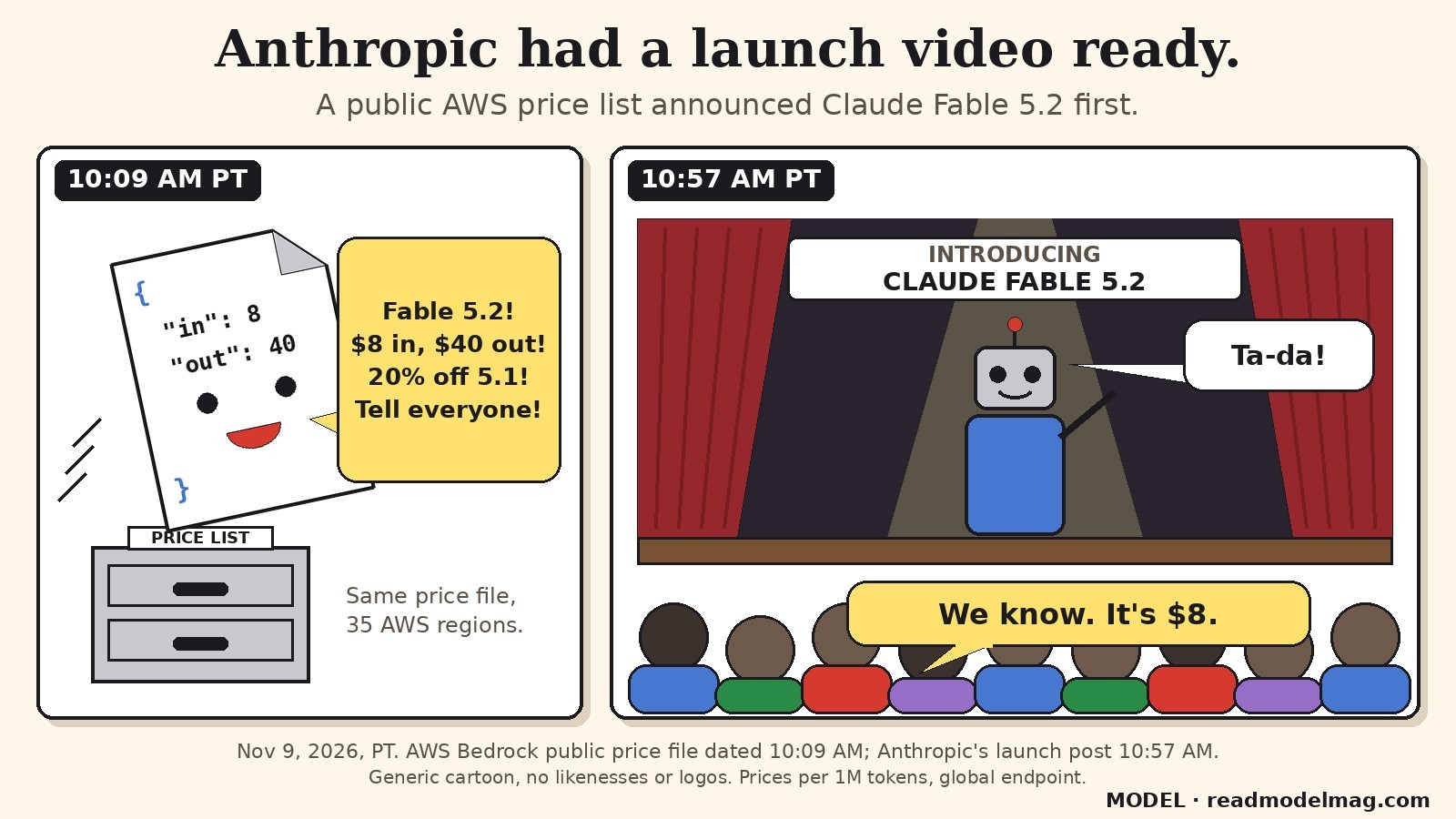
Claude Fable 5.2's first announcement came from an AWS price list
Amazon's public Bedrock price file listed Claude Fable 5.2 and Mythos 5.2, at 20% below the 5.1 models, about 48 minutes before Anthropic announced them on Nov. 9.
· MODEL Editors

AI News
Meta's Muse Ember isn't cheaper per token. It's cheaper per task
Meta's smallest Muse model launched Nov. 9 at the same list price per token as Claude Haiku 5.5 and GPT-6 Luna. The savings Meta and Artificial Analysis report come from cheaper cached input and fewer output tokens. It still trails Haiku on mergeable code. Not tested by MODEL.
· MODEL Editors
Hot take
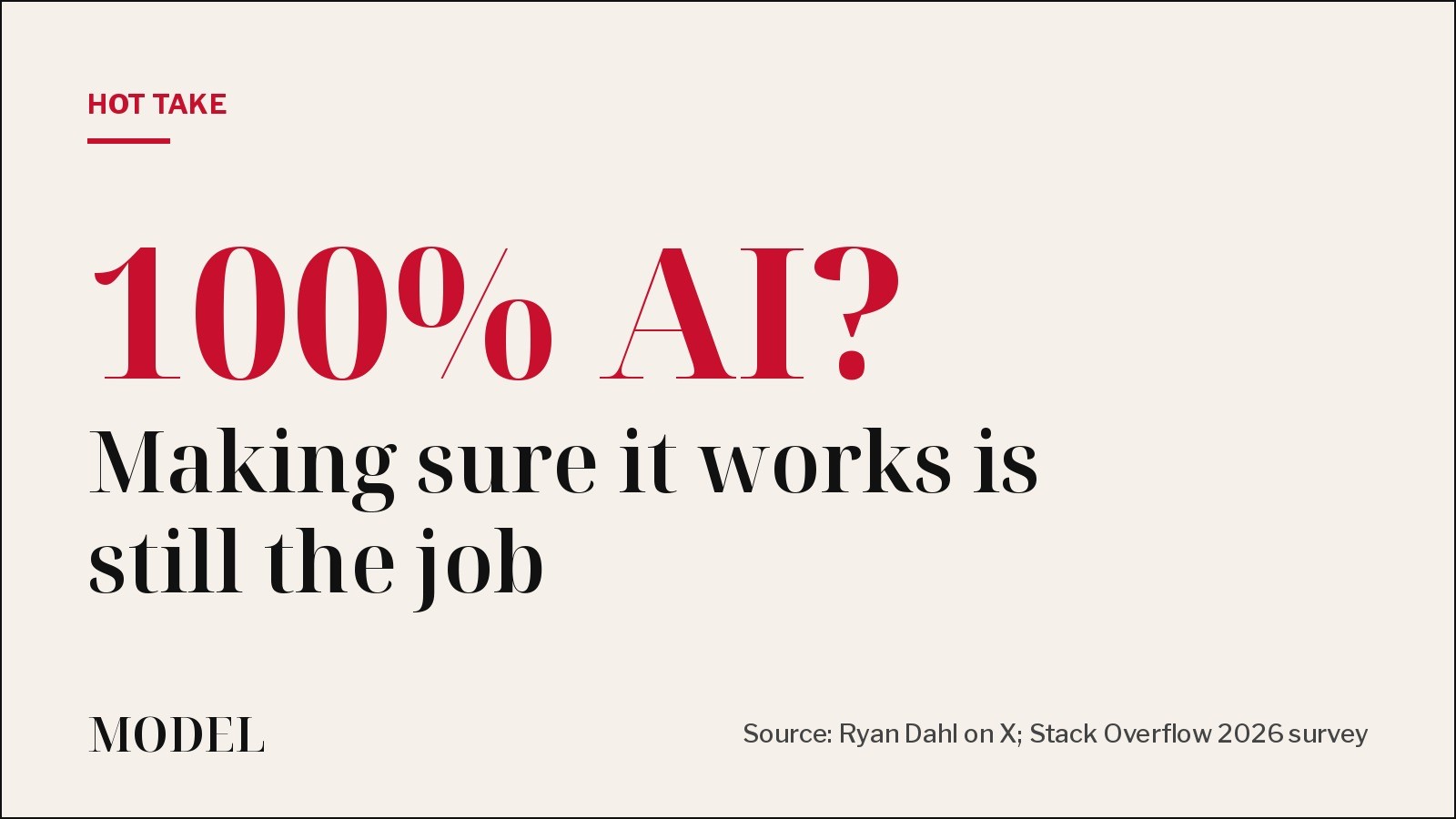
Hot take: Ryan Dahl says coding went "100% AI written." Checking it works is now the job
Node.js creator Ryan Dahl posted on Nov. 8 that software engineering has moved to AI-written code, and that the problem of making sure it works "didn't magically disappear." The post passed 650,000 views overnight. Here's why the second half matters more than the first.
· MODEL Editors
AI News
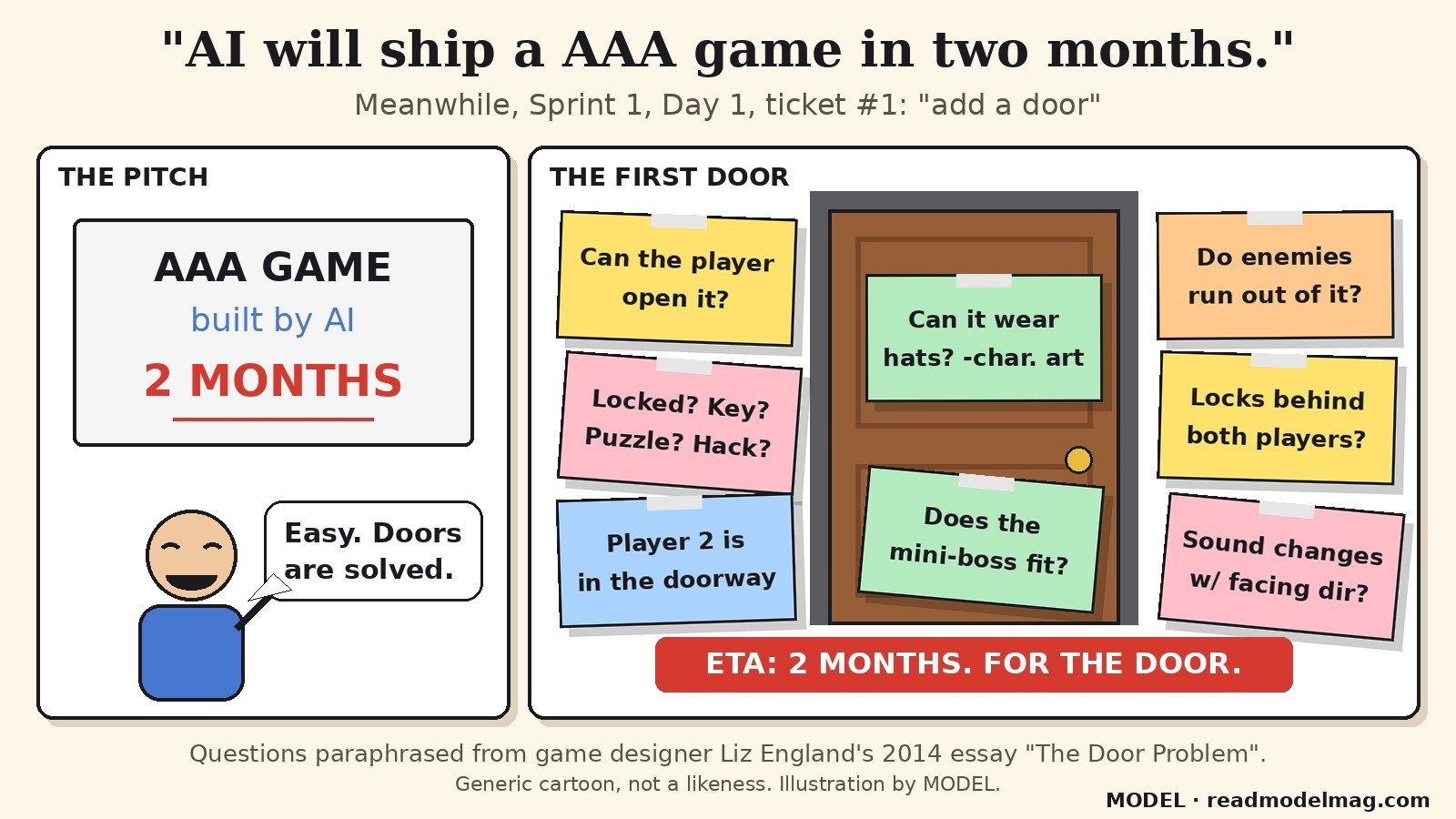
"AI will build a AAA game in two months" meets The Door Problem
A viral Nov. 8 post from AI game-studio founder Di Huang pushed back on friends who think AI can ship a AAA game in a couple of months. His evidence: game designer Liz England's 2014 essay about how many decisions hide inside a single door.
· MODEL Editors
FREE · EVERY WEEK
The top AI tools this week, tested.
Every week MODEL's editors pick the AI tools worth your time, try them hands-on, and tell you what's good, what's not, and who it's for. Free, in your inbox.
Free. Unsubscribe anytime. Our picks are editorial and can't be bought.