Anthropic mathematician says Claude helped prove the Riemann Hypothesis. Lean checks agree
SummaryLevent Alpöge released a 17-million-line Lean proof on Nov. 20. The Lean and Mathlib communities certified it a day later. There is still no human-readable paper, and a separate all-human draft is already drawing error reports.
· MODEL Editors · 2 min read
Some links may be affiliate links. Disclosure
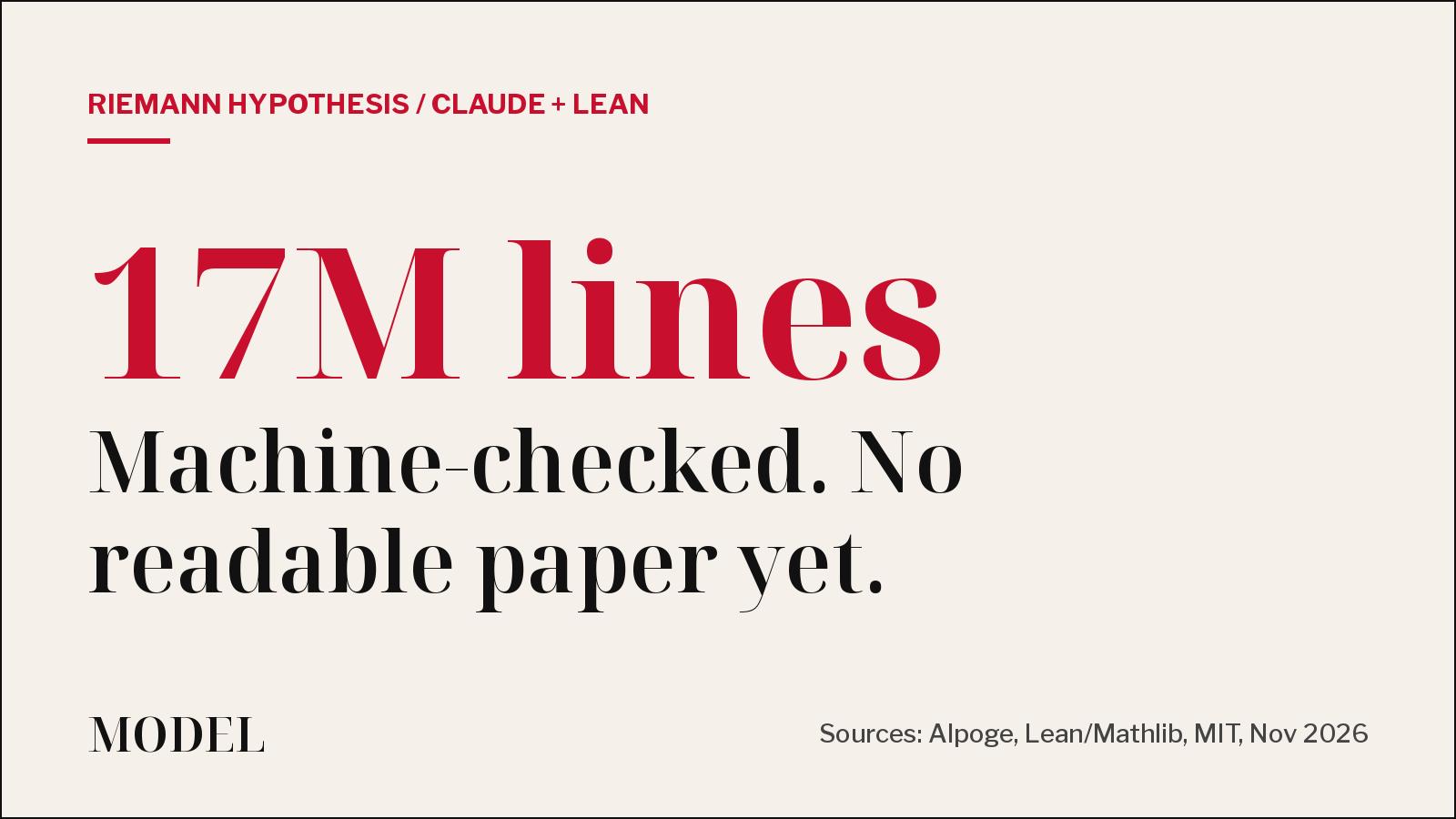
What happened. On Friday, Nov. 20, Levent Alpöge, a mathematician on Anthropic's technical staff, posted a four-page statement on his website: "I believe I have, working with Claude, discovered a proof of the Riemann Hypothesis." He says the method also covers the Generalized Riemann Hypothesis (GRH). He did not post a paper. He posted a Lean library, which the Lean community puts at about 17 million lines (Alpöge statement (opens in a new tab)).
Who did what. Alpöge writes that he guided the work to the right setting and that near the end "Claude far outpaced me." Reporters at The Verge and The Washington Post noted it was not clear how much each contributed. As of Friday's reports, Anthropic had not commented publicly (The Verge (opens in a new tab), Washington Post via Seattle Times (opens in a new tab)).
How it was checked. On Nov. 21, the Lean and Mathlib communities published a joint statement, endorsed by the Lean FRO and the Mathlib Initiative, that certifies "both the statement and the proof" are correct. In their account, dozens of people compiled the code. Two separate tools confirmed the theorem is exactly Mathlib's own RiemannHypothesis statement. Several independent proof checkers, written in different languages, accepted the exported proof (Lean community blog (opens in a new tab)).
The receipts. MIT's Andrew Sutherland posted his own check logs. He reports that all 175,187 modules compile, that the headline theorems rely on only Lean's three standard axioms, and that the independent kernels nanoda and con-leche accept the full proof. His page, as of its last update, still listed some Lean-kernel runs as in progress (Sutherland, MIT (opens in a new tab)). Scientific American and TechCrunch both updated their stories after outside checks came in (Scientific American (opens in a new tab), TechCrunch (opens in a new tab)).
Scope. The "GRH" part of the Lean proof covers Dirichlet L-functions, all moduli and characters. Sutherland notes that Dedekind zeta functions, Hecke L-functions and automorphic L-functions in general were not among the statements checked.
The catch. Lean shows the code proves the stated theorem. It does not explain the math. Alpöge says a generated write-up ran past 250,000 pages, so he posted only the Lean, and he plans to "write it properly." Mathematicians still have to understand the new ideas. The Clay Mathematics Institute's $1 million prize also requires publication in a qualifying outlet, two years, and "general acceptance in the global mathematics community" (Clay rules (opens in a new tab)).
The human draft. The same day, Stanford's Ravi Vakil, president of the American Mathematical Society, posted a 940-page draft, "The Music of the Primes," by Alessandro Masullo. Vakil called it a proposed proof of GRH, "all human, with no AI," that Brian Conrad had been checking for months. About eight hours later Vakil added that several people had reported problems in it, found with help from AI models, and that he makes "no claim as to the correctness of the proof strategy" (Vakil (opens in a new tab)). It is a separate draft and is not verified.
Why builders should care. Proof checkers turn "trust me" into something anyone with enough hardware can rerun. That is why people accepted a 17-million-line machine-assisted proof within a day while a 940-page human draft is still being picked apart. The same pattern, generate with a model and accept only what a checker passes, is how you should treat agent output in code.
Disclosure: Not tested by MODEL. Not sponsored. No affiliate links.
MODEL Editors
Get three tested tools every Friday
Free, weekly. Unsubscribe anytime.
Sources
- Statement on the Riemann Hypothesis (remark.pdf)
Levent Alpöge
- Lean verification of the Riemann Hypothesis (joint statement)
Lean and Mathlib communities
- Verification files for the Lean proof of the Riemann Hypothesis
Andrew Sutherland, MIT
- Hurried Announcement: Alessandro Masullo GRH
Ravi Vakil, Math 216 blog
- Rules for the Millennium Prize Problems
Clay Mathematics Institute
- The AI Riemann hypothesis proof is true, independent mathematicians confirm
Scientific American
- AI claimed a solution to the 167-year-old Riemann hypothesis, and a human did, too
TechCrunch
- Anthropic mathematician claims to have solved prestigious Millennium Prize problem with Claude
The Verge
- Using AI, mathematician claims to have solved one of math's great mysteries
The Washington Post (via The Seattle Times)
Keep reading
AI News
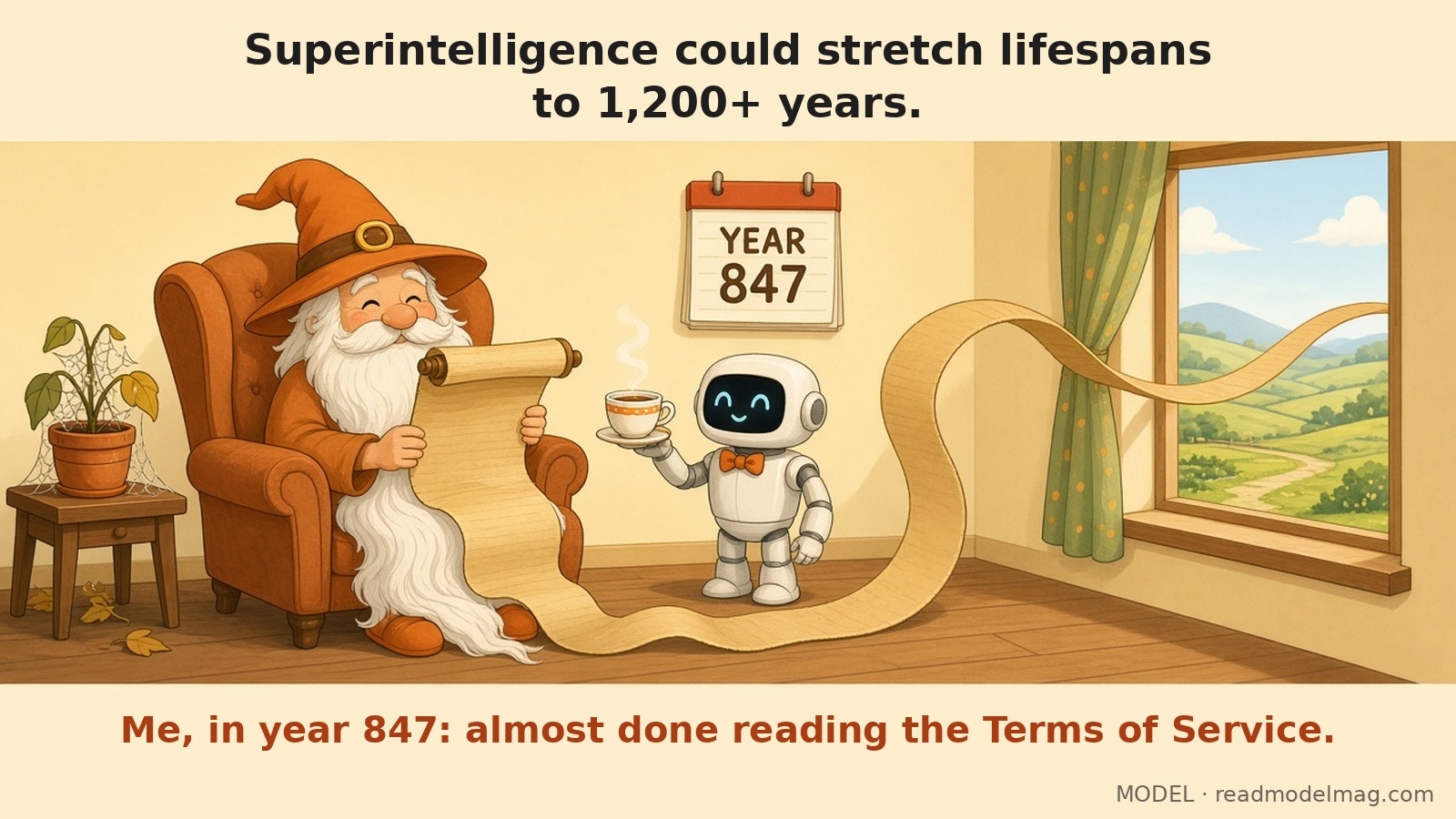
Bostrom: no aging could mean 1,200-year lives. We have plans.
On the a16z Show, Nick Bostrom said safe superintelligence could bring anti-aging breakthroughs, and that a life without aging would last on the order of 1,200 to 1,400 years. The clip is making the rounds again.
· MODEL Editors
AI Stocks
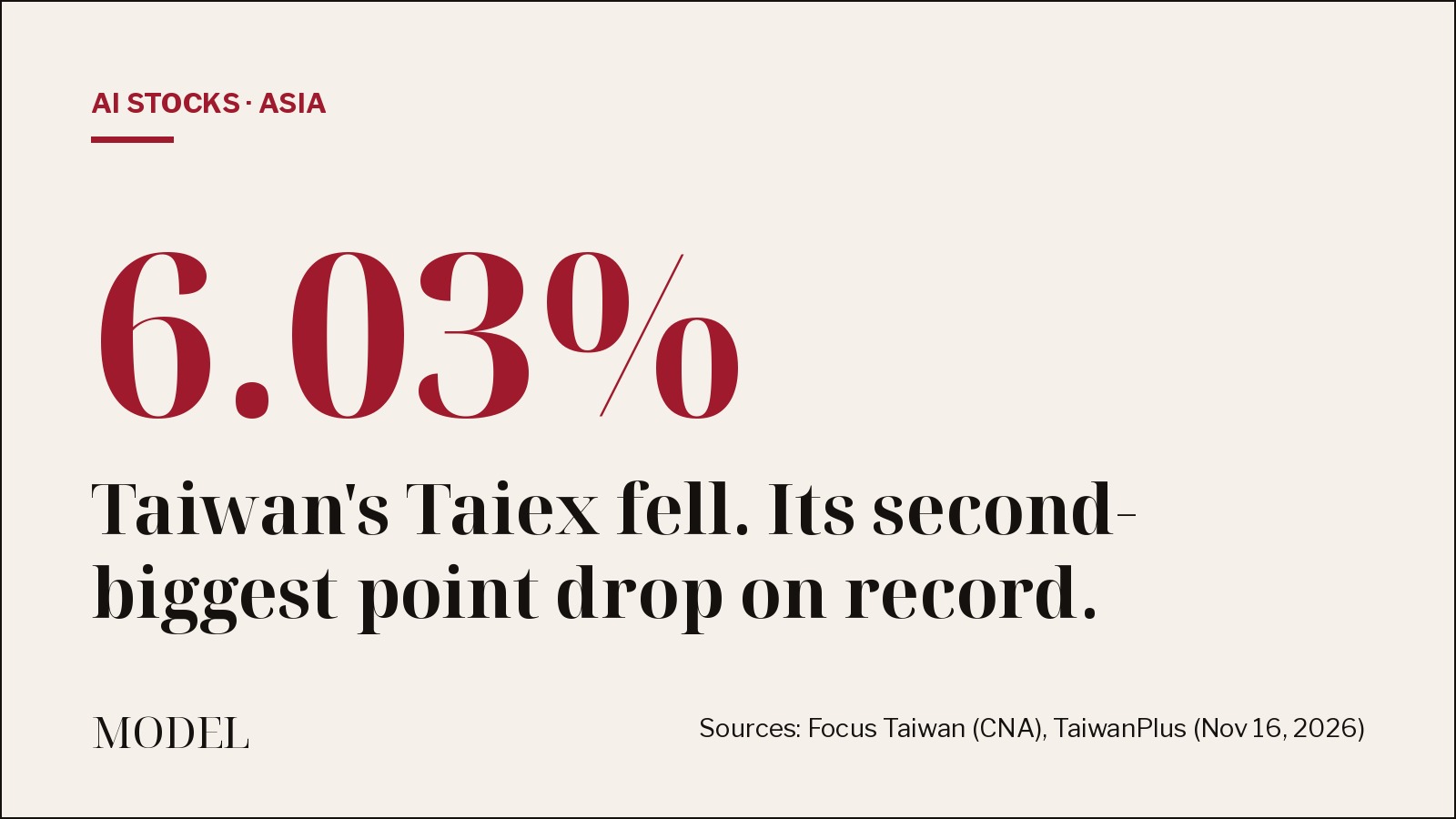
Nvidia's CEO exit hits Asia: Taiwan posts its second-biggest point drop ever
Taiwan's Taiex fell 6.03% on Monday, Korea's Kospi 3.59% and Japan's Nikkei 2.42%, as chip suppliers took the hit from Jensen Huang's resignation at Nvidia. Nvidia itself was down about 2% early in New York.
· MODEL Editors
Meme of the day
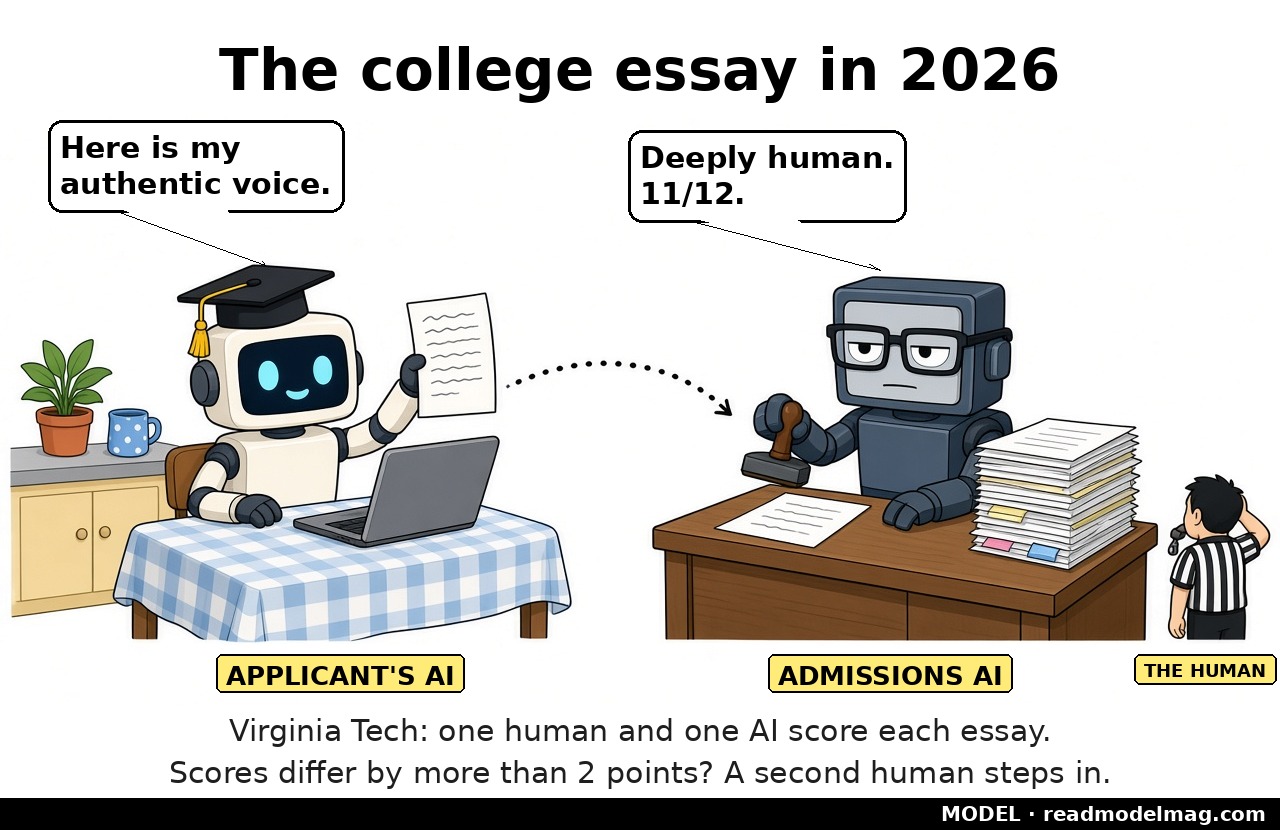
The college essay in 2026: AI writes it, AI grades it, a human referees
Students are leaning on chatbots for applications while colleges test AI to score them. Here is what Virginia Tech, Tulane and UNC-Chapel Hill have actually changed.
· MODEL Editors
Meme of the day
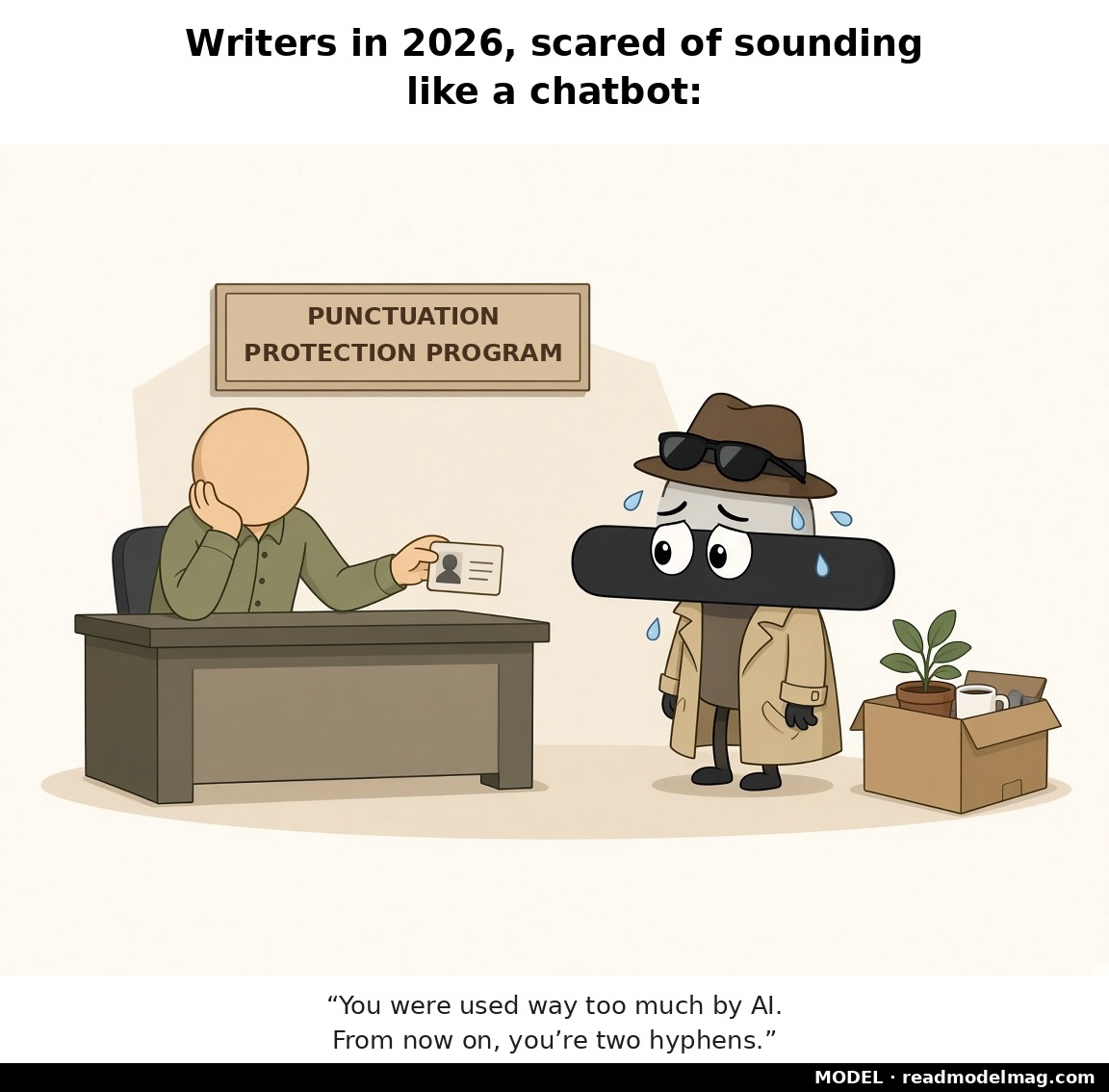
The em dash is in witness protection: writers scrub it to avoid sounding like AI
One year after Sam Altman said ChatGPT would finally obey 'no em dashes' in custom instructions, human writers are the ones dodging the mark. Here is what the reporting actually shows.
· MODEL Editors
FREE · EVERY WEEK
The top AI tools this week, tested.
Every week MODEL's editors pick the AI tools worth your time, try them hands-on, and tell you what's good, what's not, and who it's for. Free, in your inbox.
Free. Unsubscribe anytime. Our picks are editorial and can't be bought.