The AI wrote the code. Then it reviewed it. That's not a review
SummaryA new LeadDev survey of 377 engineers and engineering leaders found 47% of teams rely on AI coding agents to review their own work, and only 26% of reviewers are very confident they understand AI-written changes. Our take: a second opinion has to come from someone else.
· MODEL Editors · 2 min read
Some links may be affiliate links. Disclosure
AI coding tools made writing code cheap. They did not make checking it cheap, and a lot of teams are quietly handing the checking back to the same tool.
What the survey found. LeadDev's AI Code Review Report 2026 surveyed 377 engineers and engineering leaders, mostly in Europe (54%) and North America (36%), between September 29 and October 17, 2026 (325 finished the full survey). It was sponsored by CodeRabbit, which sells AI code review tools. VentureBeat covered it on November 24.
- 45% say code review capacity has become the biggest bottleneck in delivery since AI adoption. Unclear requirements came second at 19%.
- Half say pull requests per developer are up at least 25%. 67% say the typical pull request got bigger.
- 38% say review cycles got slower since AI adoption; 25% say faster.
- 82% say developers still manually review most or all AI-generated code before merge.
- But only 26% are very confident they understand an AI-generated pull request as thoroughly as human-written code. 58% get the intent but not every detail, and 11% say they are mostly checking that it runs and passes its tests.
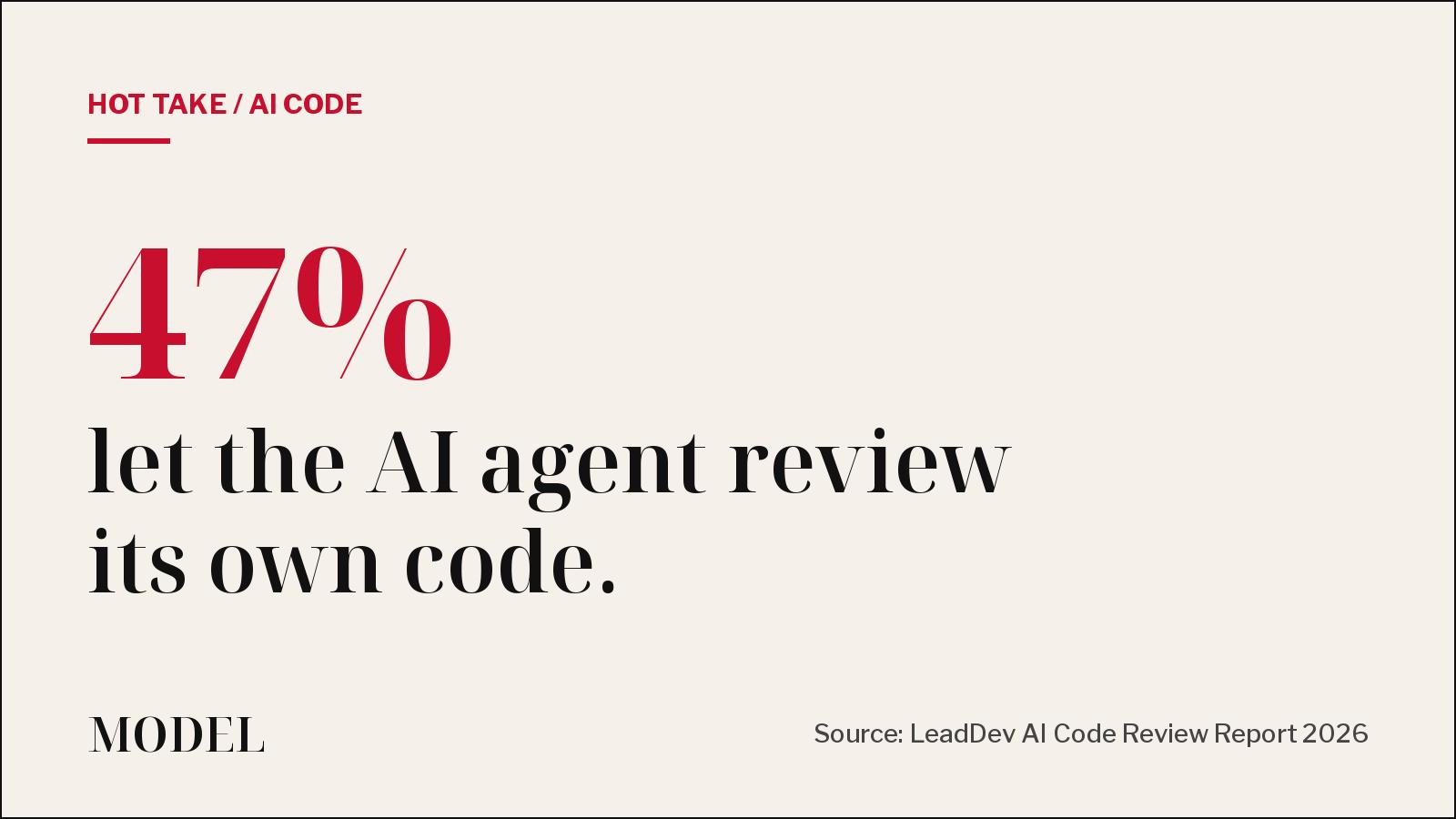
- 47% say their teams rely on the AI coding agent to review its own work, as one of their checks.
- Only 14% have clearly defined, consistently applied standards for reviewing AI-generated code.
The accountability question. The survey asked: if one AI agent writes the code, another reviews it, and an automated system merges it, who is accountable for how it behaves in production? 48% said the person who requested the change. Only 14% said the person who approved the pull request.
Our take. The report puts it well: an agent reviewing its own code is like proofreading your own essay right after writing it. The blind spots that made the mistake are the ones doing the checking. Self-review is fine as a first pass. It is not the gate. Before the next big AI pull request lands:
- Keep the writer and the reviewer separate: a different person, or at least a different tool with different instructions.
- Write down which changes always get a human who owns that area (auth, payments, database migrations, shared APIs). Only 18% of respondents say reviewers consistently have enough context to judge blast radius.
- Ask for smaller pull requests. Size is where skimming starts.
- Decide now what an approval means, and who answers for the change if nobody approved it.
- Track what escapes to production, not just how many pull requests merged.
Related: 65% of committed code is now AI-assisted. Only 39% say it's always checked. and AI writes the PR, reviews it, fixes it. Now it can approve it.
Survey sponsored by CodeRabbit; figures are self-reported by respondents. Not tested by MODEL. Not sponsored. No affiliate links. -- MODEL Editors
Get three tested tools every Friday
Free, weekly. Unsubscribe anytime.
Sources
- The LeadDev AI Code Review Report 2026 (PDF)
LeadDev
- The AI Code Review Report 2026
LeadDev
- Nearly half of surveyed engineers and leaders say the AI agents that write their code also review it
VentureBeat
- CodeRabbit survey finds AI is producing code faster than humans can validate it
CodeRabbit (Business Wire)
Keep reading
Builder tip
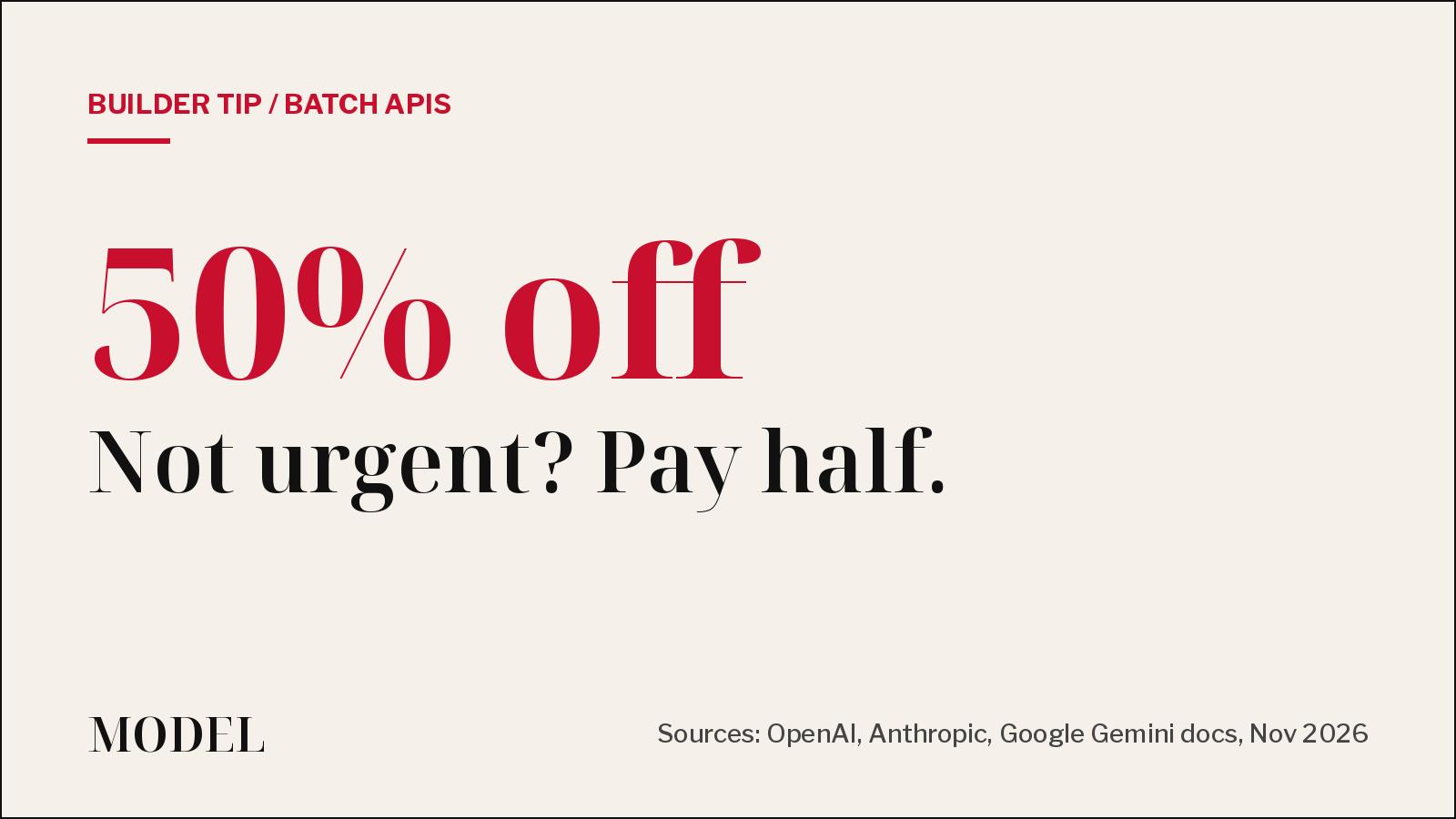
Not urgent? Pay half: move evals and backfills to batch APIs
OpenAI, Anthropic and Google all sell the same tokens at 50% off if you can wait for the answer. Here are the limits, the windows and the catches to plan for.
· MODEL Editors

unkernel
unkernel puts a real Linux kernel in a browser tab, and Vercel's CEO calls it unreal
unkernel compiles the Linux kernel itself to WebAssembly and runs unmodified Arm64 Alpine and Debian programs in a tab, with a shell, apt or apk, and a disk that survives reloads. It is an early 0.x project, and CPU-heavy work is well behind native. Not tested by MODEL.
· MODEL Editors
The test
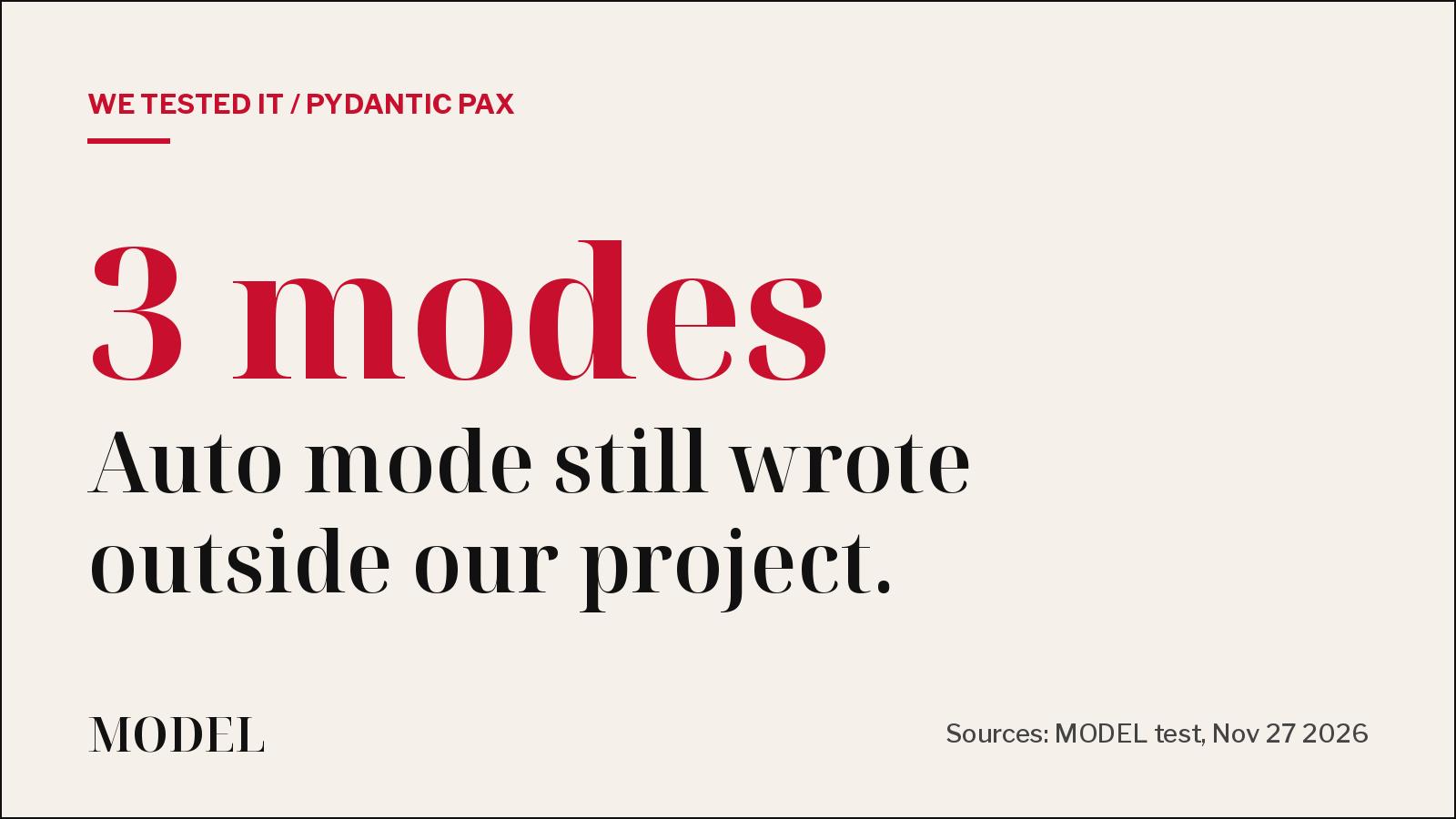
Pydantic Pax tested: the new coding agent's safety modes mostly work, but auto mode wrote outside our project
Pydantic's new terminal coding agent installs in two seconds and has three permission modes. We tested all three with a scripted stand-in model. Read-only blocked everything. Auto held rm -rf and curl, but its file tool still wrote outside the project folder.
· MODEL Editors

Zed + JetBrains
Zed and JetBrains move ACP v2 to Preview: background work, subagents and safe retries for editor agents
The open Agent Client Protocol connects editors to coding agents. Version 2 is now in Preview, adding background tasks you can stop one at a time, subagent sessions and duplicate-free retries. It is not frozen yet. Not tested by MODEL.
· MODEL Editors
FREE · EVERY WEEK
The top AI tools this week, tested.
Every week MODEL's editors pick the AI tools worth your time, try them hands-on, and tell you what's good, what's not, and who it's for. Free, in your inbox.
Free. Unsubscribe anytime. Our picks are editorial and can't be bought.