AI writes the PR, reviews it, fixes it. Now it can approve it
SummaryAnthropic's Claude Ship adds two beta agents: PR Steward pushes fixes, Claude Approvals can approve routine changes under a policy file. Anthropic's own docs explain how a PR can merge with no human but its author. Our take: that YAML file is now your most important code review.
· MODEL Editors · 3 min read
Some links may be affiliate links. Disclosure
The pitch for AI coding was that the robot writes and the human reviews. That deal just got renegotiated.
On November 23, Anthropic launched Claude Ship in beta for Claude Team and Enterprise plans, for repositories on GitHub. In Anthropic's words, it can "review PRs, fix them, and decide what's ready to merge based on policies each team sets." The Verge confirmed the launch the same day.
What's in the box.
- Code Review (generally available; The Verge notes it was announced in March and went GA in October) reviews pull requests against the codebase and posts findings, at Quick, Standard or Deep levels.
- PR Steward (beta) works on failing CI checks, merge conflicts and review feedback, and pushes commits with its fixes. After each push it comments with what it changed and how to undo it. Anthropic says it is designed not to approve or merge pull requests.
- Claude Approvals (beta) applies an approval policy the team writes as a file in the repo,
.claude/approvals.yml. Anthropic calls it "a smarter CODEOWNERS file." Claude can approve routine changes on its own if the policy allows it. - A new
/shipcommand in Claude Code pushes a change, opens the PR, reviews it and works on feedback and failing checks.
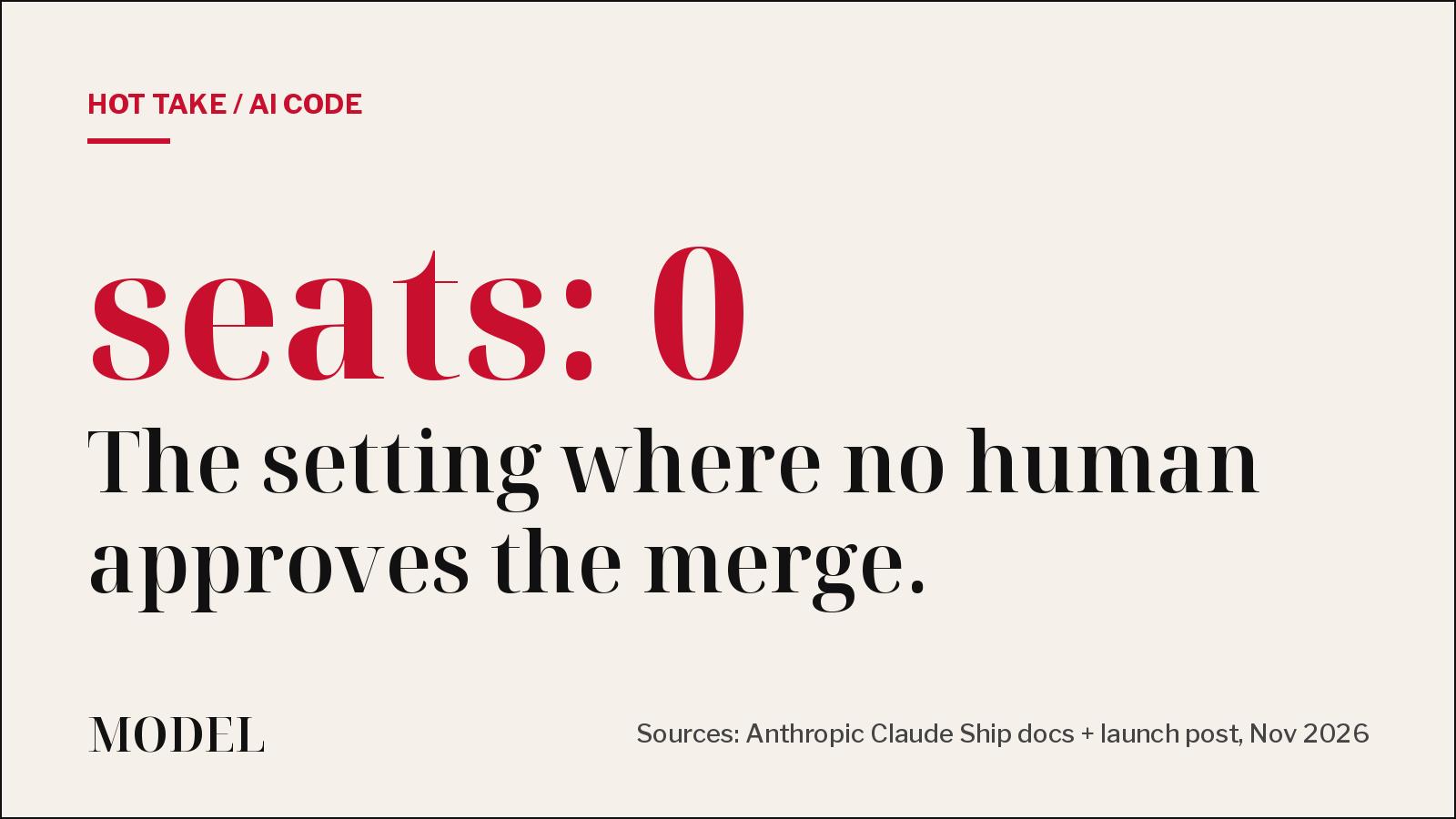
The line that matters. Anthropic's own documentation is unusually blunt: "With Approvals on, a pull request can merge with no person but its author looking at it, or with no person at all if a bot wrote it." It lists settings that can lead there, including seats: 0, seats: 1 (which the author can fill), an approver list that admits bots, a machine user that counts as a person, and files no rule covers. It also warns that with GitHub auto-merge or a merge queue and a policy that doesn't require a person, "a change can merge without anyone acting." And Claude's approving review can satisfy a GitHub branch rule that requires one approval.
One more gotcha from the docs: once a policy file is on the default branch, even in observe mode, automatic Code Reviews normally stop on paths where no rule names claude/code_review.
Anthropic's numbers. On the Claude Code team, where Claude's review is one layer of a broader process, Anthropic says merged PRs more than doubled from June to September while the share reverted fell by more than 40%. Those are Anthropic's internal figures; we could not check them.
Cost and limits. Usage is billed on tokens. A policy that uses Claude's review triggers a billed Code Review, even in observe mode. Claude Ship isn't available to organizations with Zero Data Retention, the HIPAA configuration or customer-managed encryption keys.
Credit where due. Anthropic recommends starting in observe-only mode before making Claude Approvals a required check, and its docs show how to require a person who isn't the author on every path. Boris Cherny of Anthropic's Claude Code team put it simply on X: start with one repo and run Approvals in observe mode until you trust it.
Our take. The sloppy-code problem was never only bad code. It was code nobody really read. Claude Ship moves the human decision from the diff to a YAML file, and that file decides whether anyone reads the diff at all. So:
- Run Approvals in observe mode first and compare its calls with your reviewers'.
- Require a human who isn't the author on auth, billing, payments, infra and migrations.
- Keep bots and machine users out of the approver lists unless you mean it.
- Protect the policy file itself: require a person to approve changes to it.
- Track reverts and incidents before and after, not just merged PRs.
Related: AI coding agents wrote 30% more code. Code review took 49% longer and 65% of committed code is now AI-assisted.
Not tested by MODEL. Not sponsored. No affiliate links. Figures are Anthropic's. -- MODEL Editors
Get three tested tools every Friday
Free, weekly. Unsubscribe anytime.
Sources
Keep reading

Builder tip
Vibe coding still rewards people who know how software works
An ETH Zurich study of 100 students found computer-science knowledge was the strongest predictor of vibe-coding results, clear writing helped too, and the heaviest everyday chatbot users did worse. Our tip: write the spec like you mean it, and learn the basics anyway.
· MODEL Editors
Hot take
Your coding agent can't leave working code alone
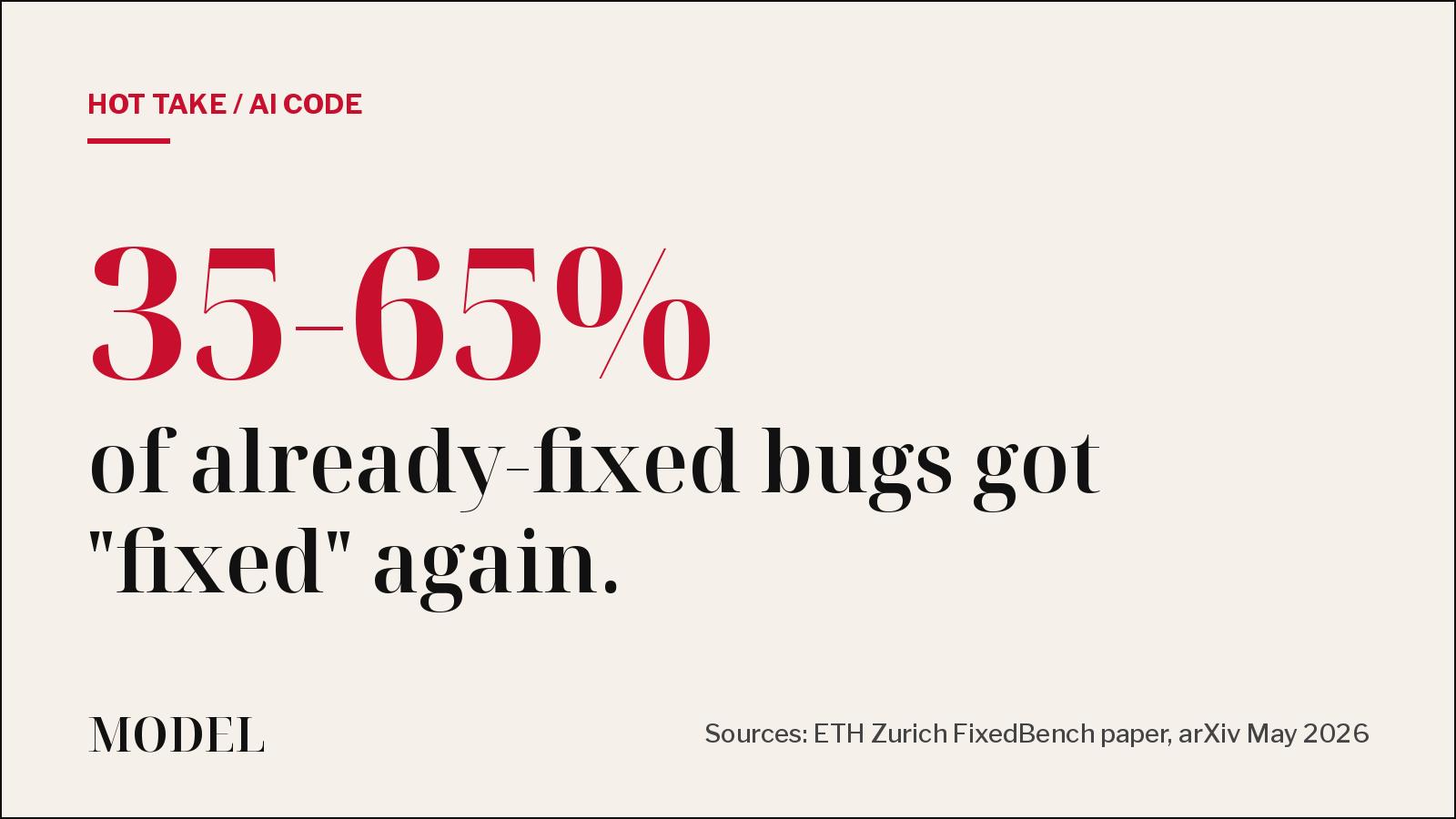
ETH Zurich's FixedBench handed coding agents 200 bug reports that were already fixed. They still edited the code in 35% to 65% of cases. A better prompt helps, with a catch. Our take: make 'nothing to fix' a valid answer, and read every diff.
· MODEL Editors
Google Antigravity
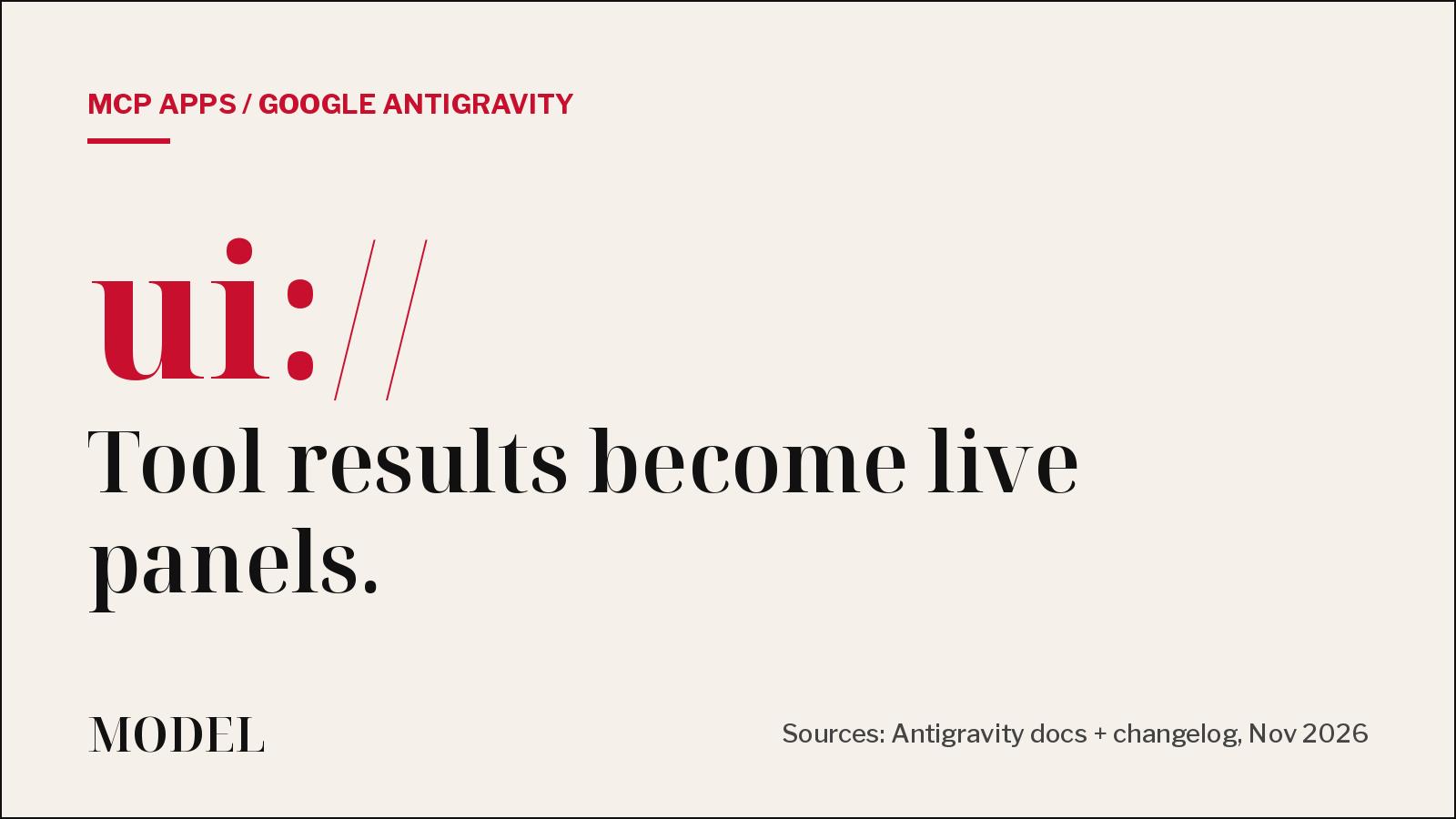
Google Antigravity now renders MCP Apps: tool results as live panels
Antigravity's desktop app can show interactive views from MCP servers inline in chat, in a side panel, full-page or as a custom file viewer. You need a plugin or server that ships the UI, and Google's changelog ties it to eligible paid plans. Not tested by MODEL.
· MODEL Editors
The test
Ternary Bonsai 2.5 27B, tested: a 27B model ran on our CPU-only box, and tool calls worked
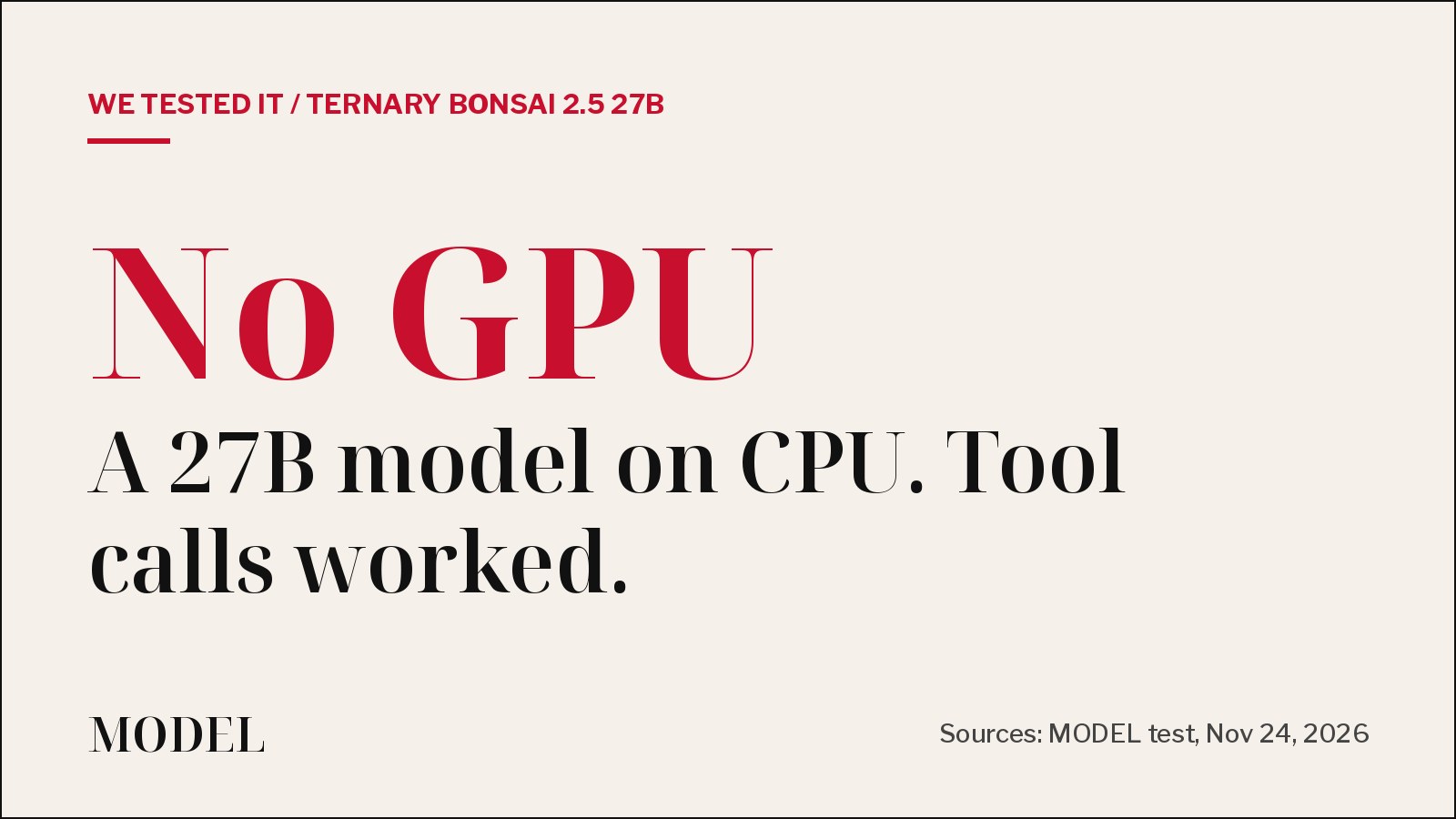
PrismML released Ternary Bonsai 2.5 27B today, a ternary-weight model built for agents. We ran it on stock llama.cpp on our Linux test box with no GPU. Here is what worked, how fast it was, and the catch in the 5.9 GB headline.
· MODEL Editors
FREE · EVERY WEEK
The top AI tools this week, tested.
Every week MODEL's editors pick the AI tools worth your time, try them hands-on, and tell you what's good, what's not, and who it's for. Free, in your inbox.
Free. Unsubscribe anytime. Our picks are editorial and can't be bought.