AI agents more than tripled commits. Releases rose 30%.
SummaryAn NBER working paper that tracked more than 500,000 GitHub developers finds AI coding tools add huge amounts of code, but much less of it ships. It is circulating again this weekend. Our take: the bottleneck is now review, not typing.
· MODEL Editors · 3 min read
Some links may be affiliate links. Disclosure

A working paper from the National Bureau of Economic Research is making the rounds on X again this weekend. It asks a simple question: when developers start using AI coding tools, do they ship more software? The short answer is yes, but far less than the code counts suggest.
The paper, "Writing Code vs. Shipping Code," is by Mert Demirer (MIT), Leon Musolff (Wharton) and Liyuan Yang (MIT). It was issued in May 2026 and revised in September (NBER (opens in a new tab)). Every number below is from the revised paper, read Nov. 21.
What they measured. More than 500,000 GitHub developers, combining public GitHub activity with Microsoft's internal data on GitHub Copilot use. They looked at three generations of tools: autocomplete (GitHub Copilot), "sync" agents that work alongside you (GitHub Copilot, Claude, Codex), and "async" agents that work on their own (GitHub Copilot and Codex). Each adopter is compared with a similarly active developer one year earlier.
The numbers.
- Weekly commits, cumulative: up about 30% with autocomplete, 180% once sync agents are added, and 240% with async agents.
- That 240% shrinks as you move toward finished software: about 80% more projects, and about 30% more releases.
- Sync agents alone raise lines of code by 958% and pull requests by 86%, but releases by only 20%.
- After adopting sync agents, developers add 7.0 times as many lines of code but delete 12.2 times as many, and create 79% more branches.
- The share of new repositories with no activity after their first month rose from 60% in 2021 to 69% in 2026.
- In a sample of their releases, the median one carries 13,420 lines of code in 2026, up from 5,210 in 2021.
- On the Apple App Store, Google Play, the Chrome Web Store and SourceForge, monthly new apps roughly doubled on average since early 2025. Total use of those new apps has not increased in any of them.
What the authors say it means. They call it a "weak link" problem: AI speeds up writing code, but review, quality control and releases still need people, and those steps cap how much reaches users. They also caution that abandoned work is not necessarily bad work. Developers may just be trying more versions and keeping the best one. And they say the gap is not explained by lower-quality commits or wordier AI code.
The catch. This is a working paper and has not been peer-reviewed. It covers open-source code and four app marketplaces, not private company software. Key data comes from Microsoft, and the paper notes that at least one co-author has disclosed relationships of potential relevance. An earlier version, summarized by the authors on VoxEU (opens in a new tab), used a smaller sample and gave lower commit figures; we used the revised paper.
Our take. A 30% rise in shipped releases is a real gain, and the authors say so. But "my agent wrote 10,000 lines today" is not a useful metric. AI made code cheap to write. It did not make it cheap to review, test or support, and that is where sloppy AI code piles up. We saw what happens when nobody checks in our look at a login screen that wasn't a lock.
What to do. Count what ships and what people use, not commits or lines. Put the time you save writing code into review and tests. And delete the experiments you are never going to finish.
From NBER Working Paper 35275 (revised September 2026). MODEL did not run this study. Not sponsored. -- MODEL Editors
Get three tested tools every Friday
Free, weekly. Unsubscribe anytime.
Sources
- Writing Code vs. Shipping Code: Productivity Effects Across Generations of AI Coding Tools (NBER Working Paper 35275)
National Bureau of Economic Research (May 2026, revised September 2026)
- Full paper (PDF)
NBER
- Writing code versus shipping code: Productivity effects across generations of AI coding tools
VoxEU (CEPR), column by the authors
Keep reading
Builder tip
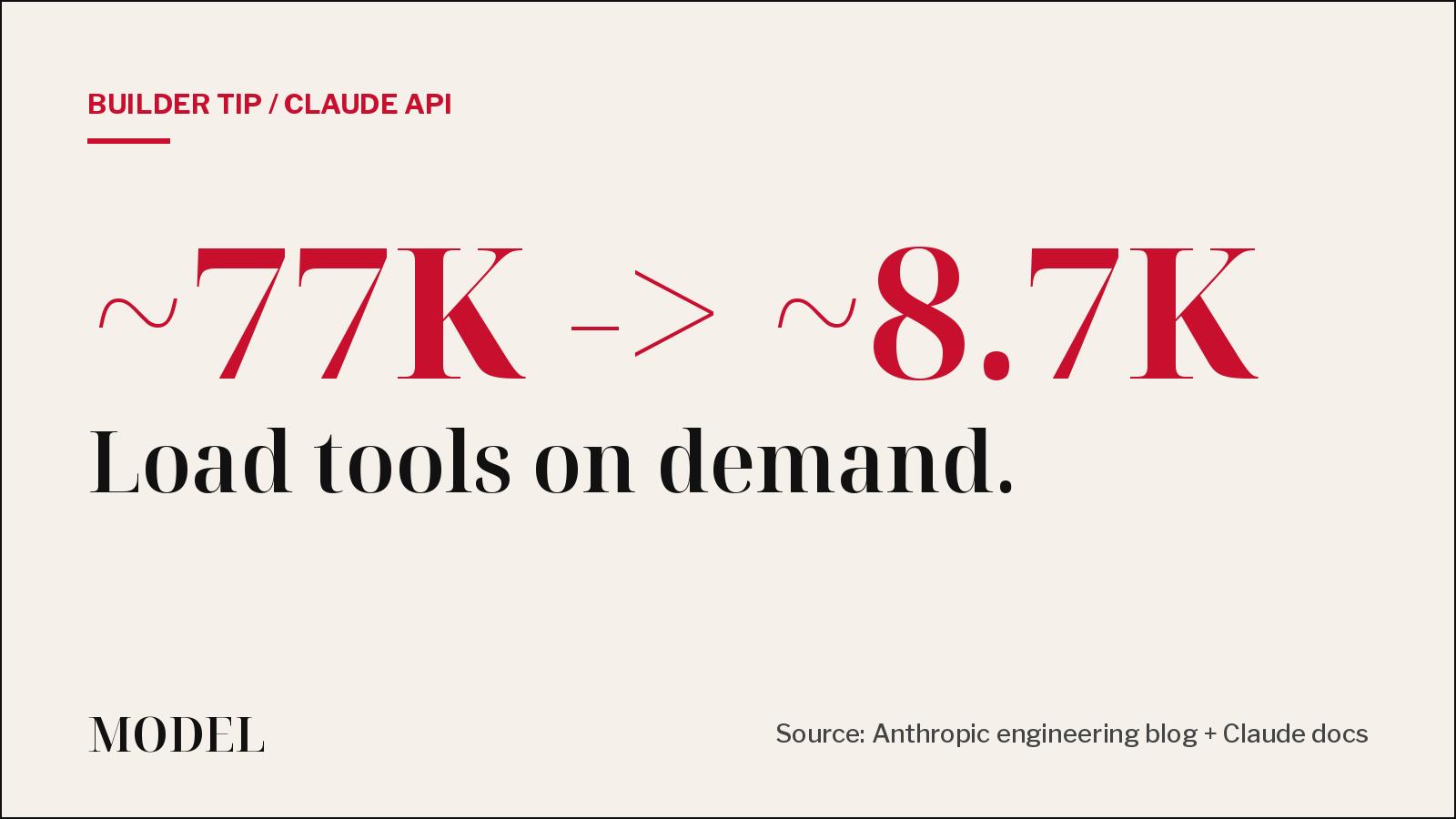
Your agent doesn't need all 58 tools in context. Defer them.
A thread calling Anthropic's tool-use write-up a new paper is going around X this weekend. It is a year old, and the advice still holds: mark most tools defer_loading and let Claude search for the few it needs.
· MODEL Editors

Tools
Claude Code's Code Mode reaches the stable channel: what it does, and the catch
Code Mode has Claude write JavaScript that runs several tool calls in one step, including background scripts for up to two hours. A week after launch, the stable channel has caught up.
· MODEL Editors

The test
AWS Emulator 1.0.523, tested: a local AWS that refused what it should, and one old-CLI call that went to the real thing
We ran AWS's free local emulator on Linux with no AWS account and no real keys. S3, SQS and DynamoDB worked, it was up in 0.23 seconds, and it enforced the three permission checks we tried. The catch: AWS CLI v1 sent one SQS call to the real AWS endpoint.
· MODEL Editors
AI News
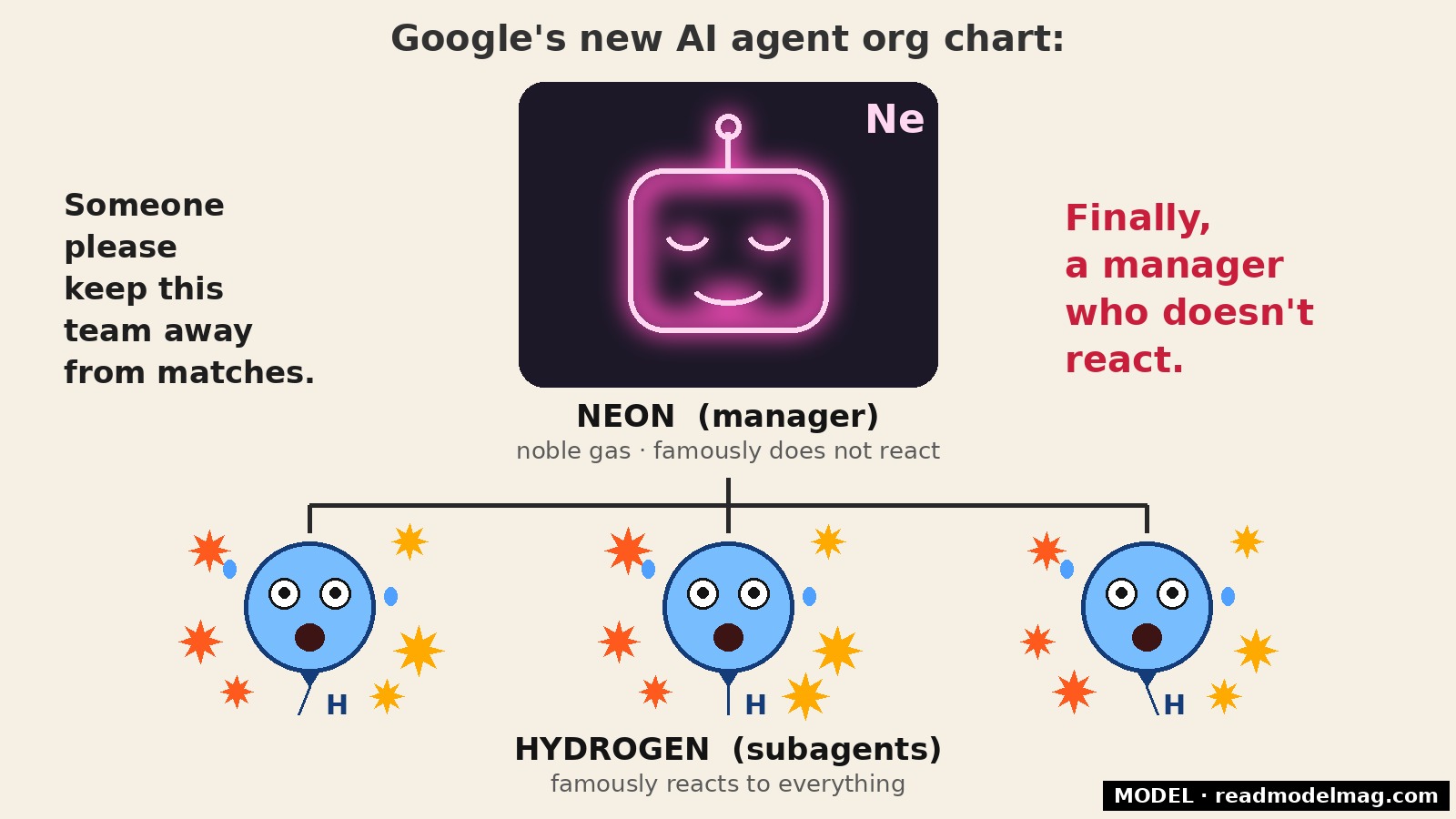
Gemini 4 Neon is out, and in Antigravity it manages Hydrogen
Google's Nov. 18 model sits between Carbon and Hydrogen at $3/$15 per million tokens. In Antigravity, Orchestrator can now pair Neon as planner with Hydrogen as executor. Not tested by MODEL.
· MODEL Editors
FREE · EVERY WEEK
The top AI tools this week, tested.
Every week MODEL's editors pick the AI tools worth your time, try them hands-on, and tell you what's good, what's not, and who it's for. Free, in your inbox.
Free. Unsubscribe anytime. Our picks are editorial and can't be bought.