Revolut self-hosts GLM 5.3 for ~2,000 engineers on 56 B200s
SummaryDavid Abitbol's AI Engineer NYC talk (Oct 13, 2026): after Claude Code bills hit $1k–$10k/month for some engineers, Revolut made self-hosted GLM 5.3 the default for coding — ~$0.30/M tokens, ~1/10 prior Anthropic+OpenAI invoice, TTFT cut ~88%. Caveat: the 60%/70% coding/lead-time chart does not isolate the model change.
· MODEL Editors · 2 min read
Some links may be affiliate links. Disclosure
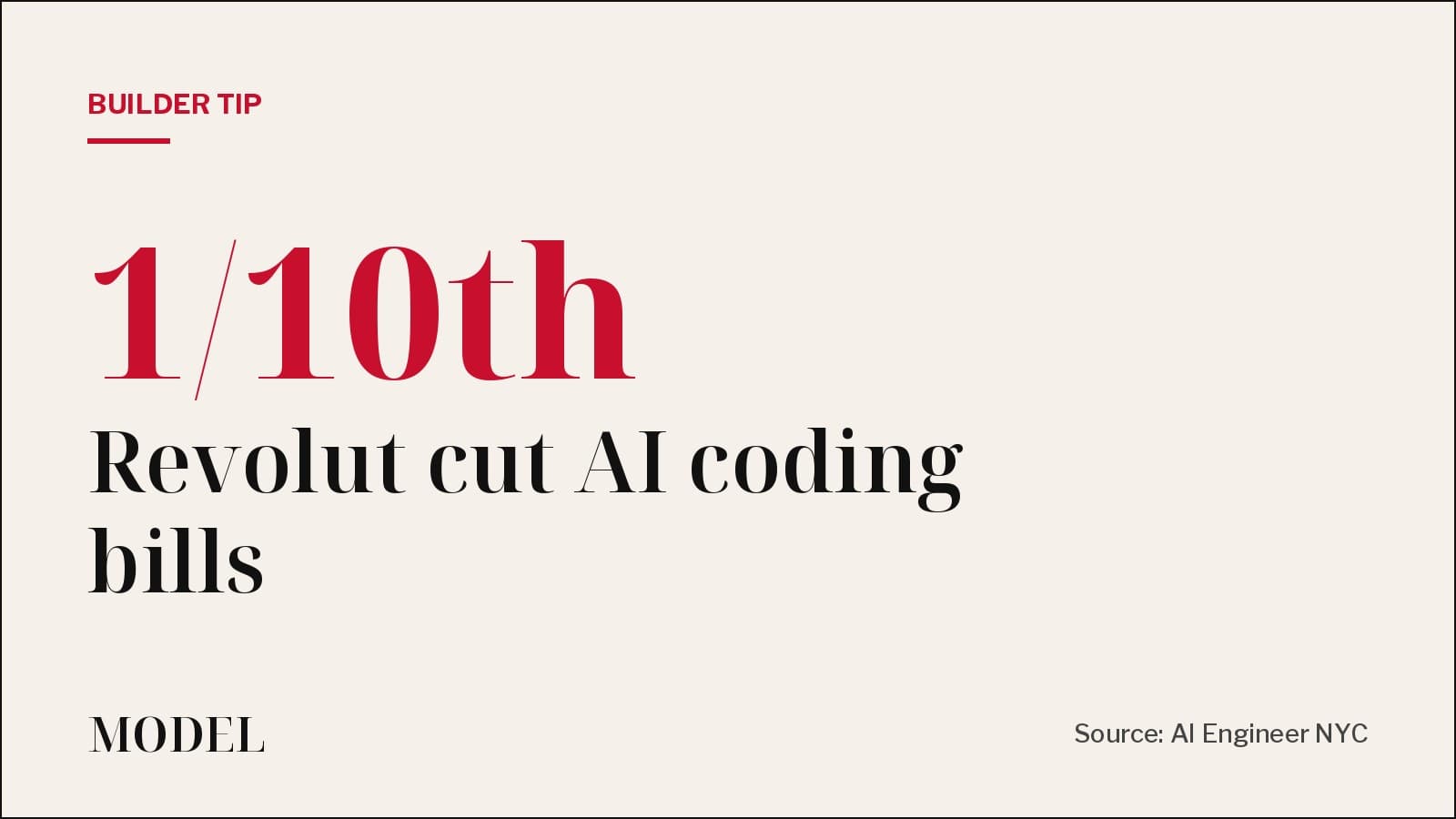
Revolut made a self-hosted open model the default for coding agents across a ~2,000-engineer sample. The talk is David Abitbol (Ops & Infrastructure / AI ops) at AI Engineer NYC, Oct 13, 2026 — "Shipping like a startup, regulated like a bank." Speaker framing: Revolut ~80M customers, 45 markets.
Why they capped Claude Code. Some engineers were spending $1k–$10k/month on Claude Code with weak ROI. Revolut put strict budget caps on frontier coding tools.
What replaced the default. Self-hosting open models started around April 2026 with GLM 5.1. The default now is GLM 5.3 on about 56 Nvidia B200 GPUs for those ~2,000 engineers. Frontier tools (Codex, Claude Code, Gemini) stay as exceptions, not the default.
Cost (their utilization, not a portable price). Blended ~$0.30 per million tokens. Invoice roughly 1/10 of prior Anthropic + OpenAI coding spend — Revolut's mix and utilization, not a list price you can copy.
The chart — and the catch. Abitbol showed ~60% better coding time and ~70% better lead time after GLM 5.1. The conference write-up is explicit: that chart does not isolate the model change from other causes. Abitbol's own explanation for lead-time gains: removing token rationing so engineers could use agents on inbox / Jira / Confluence work, not "open models beat Claude."
Same 56 GPUs, better infra (April → August). RPS +76%. TTFT from ~14.26s at migration / over 10s in the talk down to ~1.68s / ~1.6s — about an 88% TTFT cut. Target TTFT under 3s (Slack blows up over 5s). Interactive ~200 tok/s (up to 800 after 5pm).
Tuning notes from the talk. "Long context is a scam" for their coding path — 256K enough. FP4 on Blackwell. TP8 often better than TP4 for KV cache. Cache hit >90% for coding. Speculative decoding / PD disaggregation. Text-only GLM; route images elsewhere. OpenAI-compatible API so Codex / OpenCode-style harnesses keep working.
EU bank constraints. Human-in-the-loop sandbox (e.g. allow grep, deny gradle). Weights on a US-based service — not China-hosted inference. OpenTelemetry for observability.
For builders. Cap spend early. Prefer a cheap default + frontier exceptions. Measure TTFT and cache hit rate, not just model brand. And do not treat a before/after chart as a clean A/B on the model alone.
Not tested by MODEL. Not investment advice.
MODEL Editors
Sources
FREE · EVERY WEEK
The top AI tools this week, tested.
Every week MODEL's editors pick the AI tools worth your time, try them hands-on, and tell you what's good, what's not, and who it's for. Free, in your inbox.
Free. Unsubscribe anytime. Our picks are editorial and can't be bought.
Continue
Tool Update
OpenAI built Pando, a Git backend for agent-scale monorepos
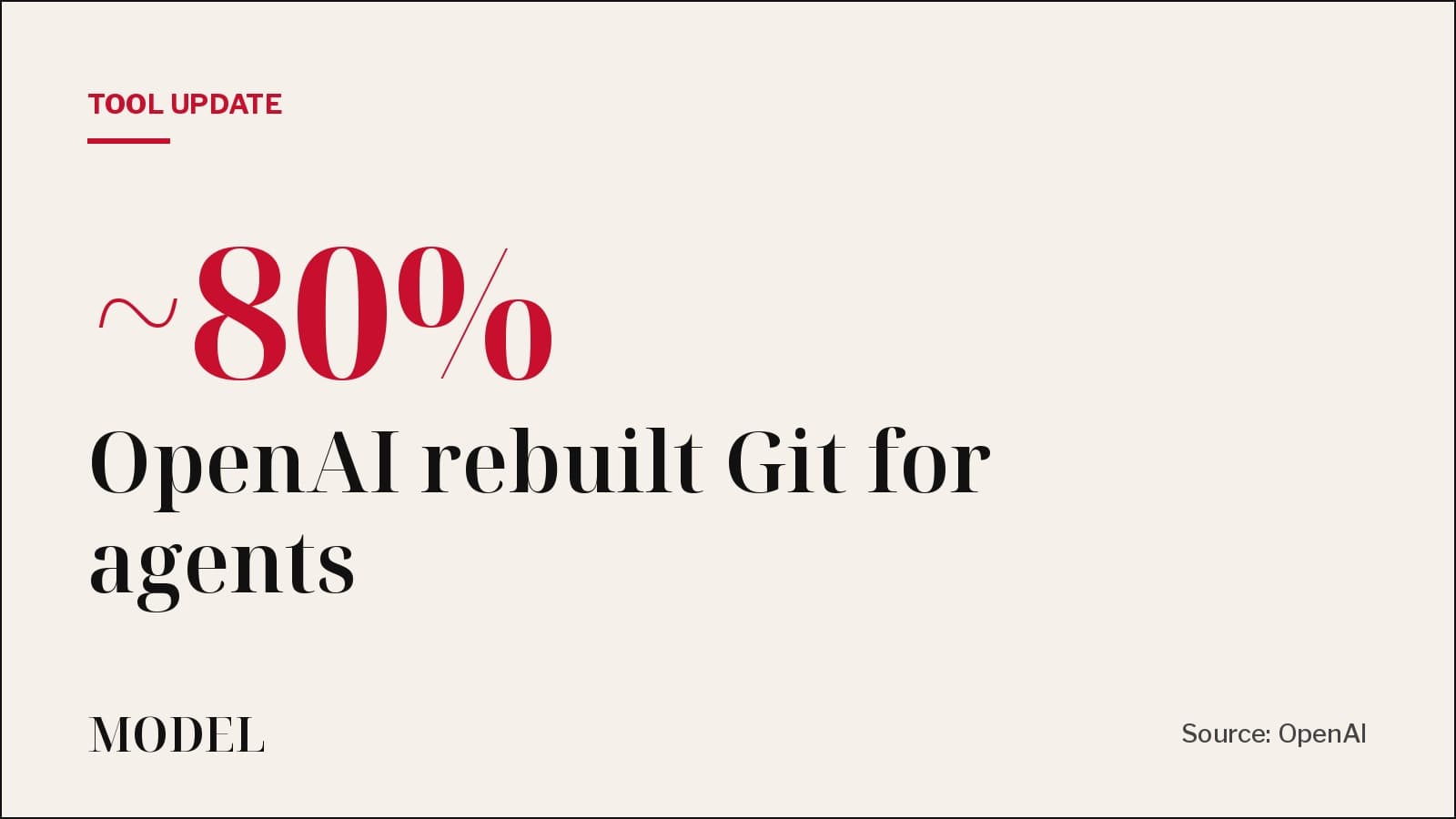
OpenAI's engineering post: Pando is a new Git-compatible backend for its monorepo. Codex multiplied parallel branches and pushes; Pando cut median push latency by nearly 80% and now serves nearly a petabyte of Git data a day. Internal only — exploring ways to share, not a product you can install.
· MODEL Editors
AI News
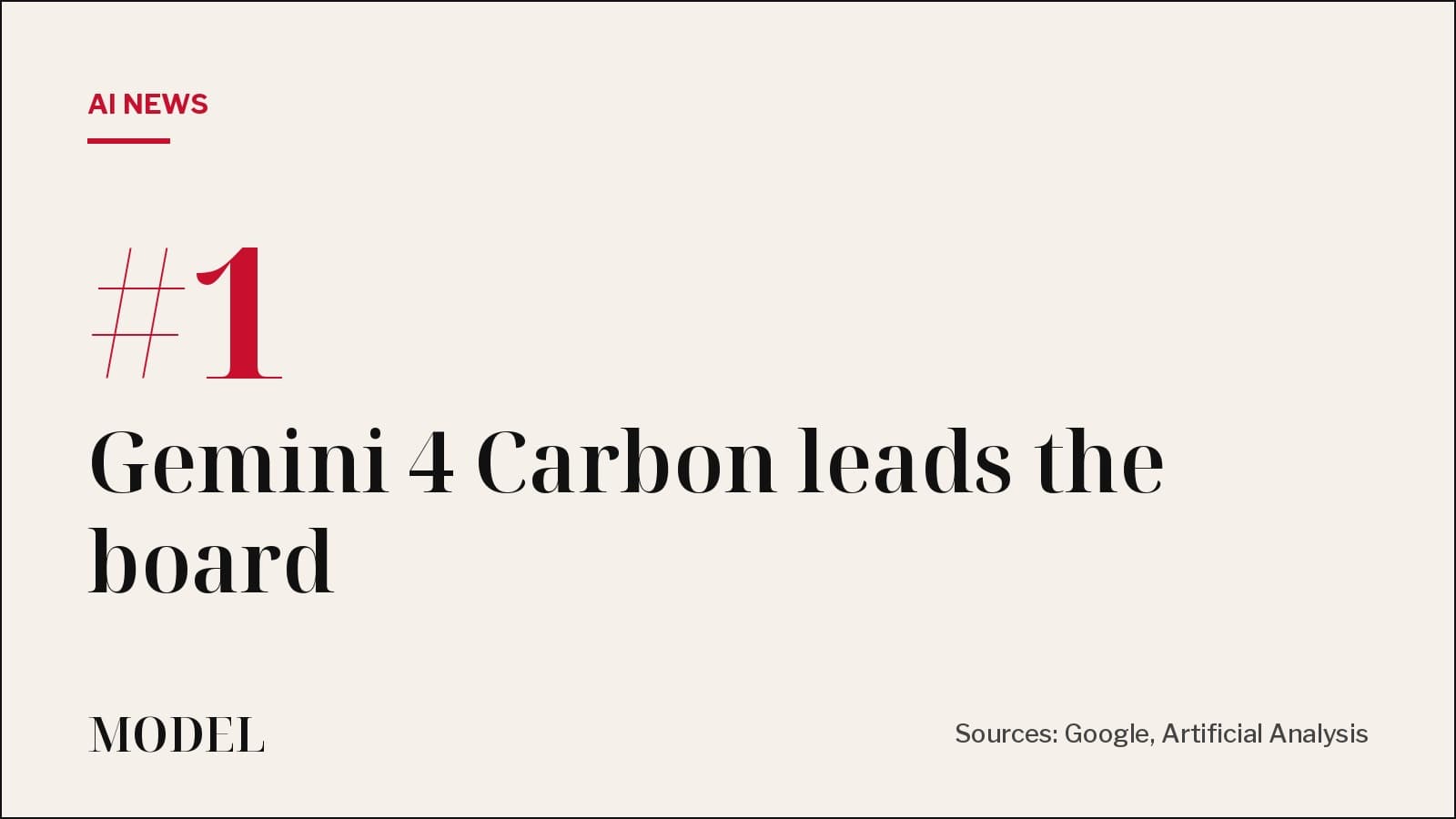
Google's Gemini 4 Carbon is #1 on the big intelligence board. You still can't use it.
Carbon (high) scores 59 on Artificial Analysis Intelligence Index v5 — ahead of Opus 5.5 max and GPT-6 Astra max. Access is Fairwind / cyber-defender only for now. Not tested by MODEL.
· MODEL Editors
AI News
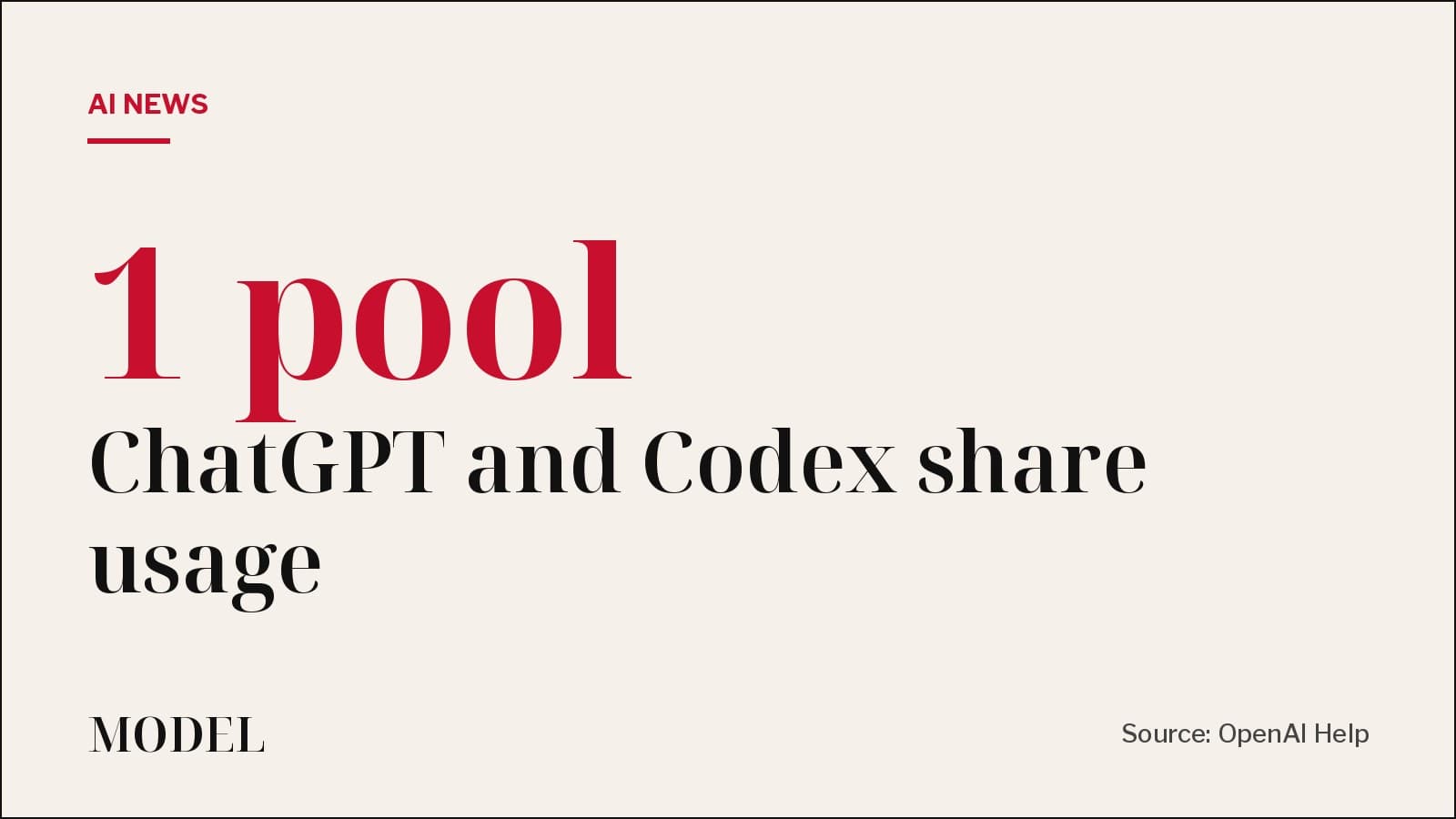
OpenAI is putting ChatGPT and Codex on one shared usage pool in December
Starting in December, Plus, Pro, and Business plans share one token allowance across ChatGPT and Codex. Instant chat is exempt. Separately, card and device limits are closing multi-subscription workarounds. Not tested by MODEL.
· MODEL Editors