Vercel's AI Gateway wants outside auditors to check 'zero data retention'
SummaryVercel is adding an Audited ZDR tier to AI Gateway: an inference provider gets the label only after an independent security firm tests its no-retention claims and publishes the report. The first reports are expected by Dec. 8. Not tested by MODEL.
· MODEL Editors · 2 min read
Some links may be affiliate links. Disclosure
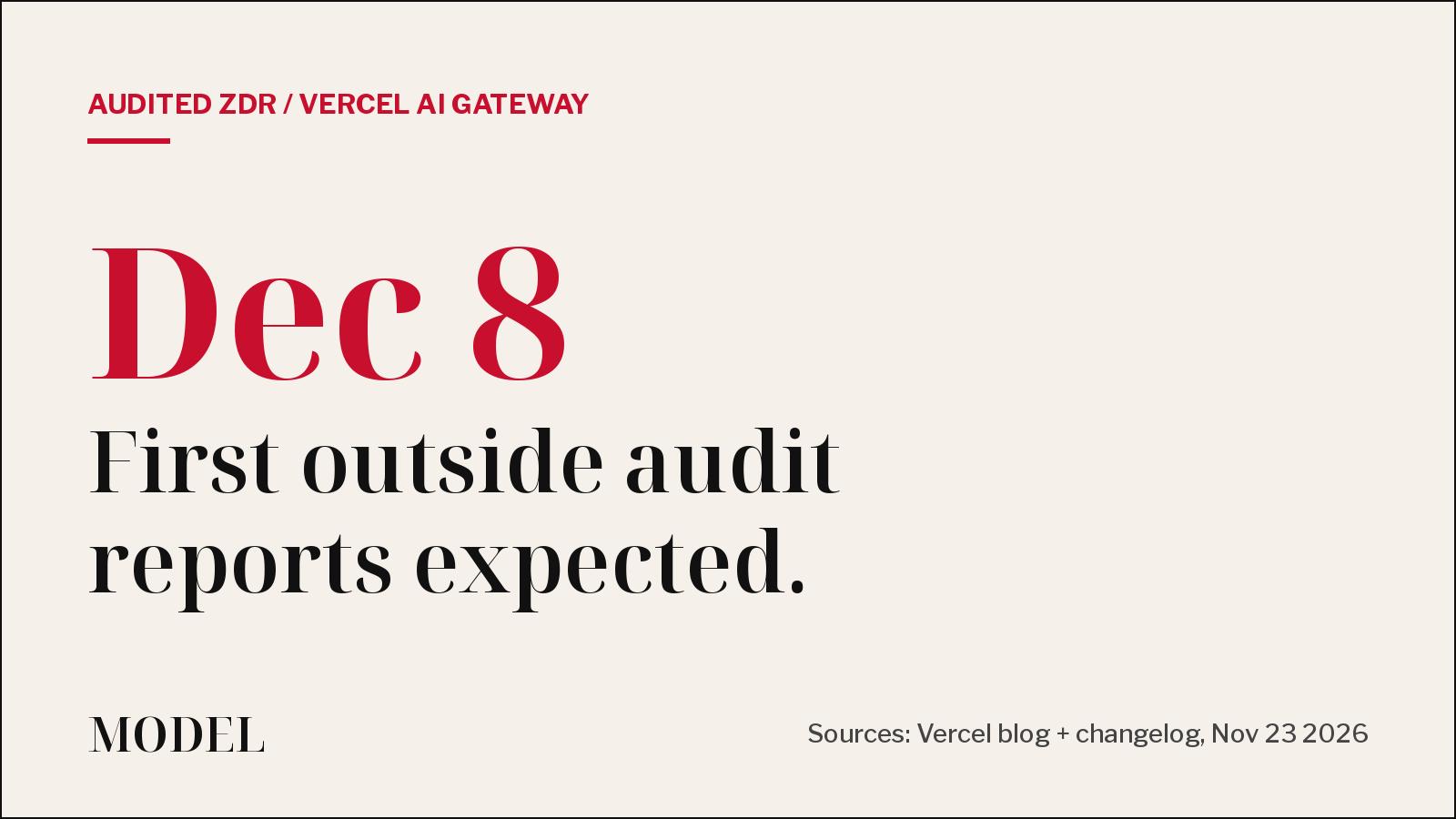
What it is. "Zero data retention" (ZDR) means an AI provider promises not to keep your prompts or the model's answers after it handles a request. Until now, that has mostly been a promise in a contract. On Nov. 23, Vercel said its AI Gateway is adding an Audited ZDR tier: a provider gets the label only after an independent security firm tests its ZDR claims against its code, infrastructure and live traffic, then publishes the report (Vercel blog (opens in a new tab)).
What the audit checks. Per Vercel, auditors review the provider's serving-path source code and infrastructure setup, then send marked prompts through AI Gateway and search the provider's logs, caches and storage for any trace of them. The audit has to confirm that:
- prompts, completions, system prompts, files, images, audio and tool-call payloads are never written to durable storage, including logs, traces, crash dumps, backups, support tools and training or eval datasets;
- content is deleted once the response goes back to AI Gateway, and any KV cache stays in memory only for that request;
- a request marked ZDR never fails over to a non-ZDR endpoint, tool or feature;
- nobody, human or automated, touches the data outside the request, sub-processors follow the same rules, and there is no training on customer data.
Each passing provider publishes its report under the auditor's name, covering scope, methods, dates, findings and fix status, and AI Gateway links to it.
How you use it. Vercel says it is adding the audited provider tier plus a team-wide toggle in AI Gateway policy settings. With it on, AI Gateway routes and fails over your team's requests only across providers with published audits that meet the bar.
Canary checks in between. A separate changelog post says AI Gateway now also runs "canary" audits: it sends prompts containing unique URLs that exist nowhere else and watches for any request to them, since a ZDR provider should never read or crawl prompt content (Vercel changelog (opens in a new tab)). Vercel itself notes canaries can't catch prompts that are written to disk and never read, which is why they add to audits rather than replace them.
The catch. Right now, the audited tier is a plan, not a list. Launch partners Baseten, Modal and Wafer have started their audits, and Vercel expects their reports by Dec. 8, 2026; each provider joins the tier only when its report is out. Vercel's ZDR docs page, when we read it on Nov. 23, still described its provider checkmarks as "self-reported ZDR" and did not yet mention the audited tier (Vercel Docs (opens in a new tab)). Vercel also hasn't said whether the audited toggle costs extra; today's team-wide ZDR is listed at $0.10 per 1,000 requests, while per-request ZDR has no added cost. And existing ZDR rules still apply: tools a provider runs itself, like provider web search, sit outside ZDR, per the docs.
Who it's for. Teams sending source code, customer records or regulated data through AI models, who currently have to take each provider's no-retention promise on trust or run their own security review.
The MODEL take. Asking inference providers to prove ZDR, not just sign for it, is the right direction. Until the first reports are public, treat the tier as a promise with a date on it, and read the report before you route sensitive data.
Not tested by MODEL. Not sponsored. No affiliate links.
Get three tested tools every Friday
Free, weekly. Unsubscribe anytime.
Sources
- Introducing Audited ZDR on AI Gateway
Vercel Blog (Nov. 23, 2026)
- AI Gateway now runs canary ZDR audits
Vercel Changelog (Nov. 23, 2026)
- AI Gateway Zero Data Retention (ZDR)
Vercel Docs
- Vercel: Introducing Audited ZDR on AI Gateway
X
Keep reading
Hot take
AI keeps inventing the same fake packages. That's the risk
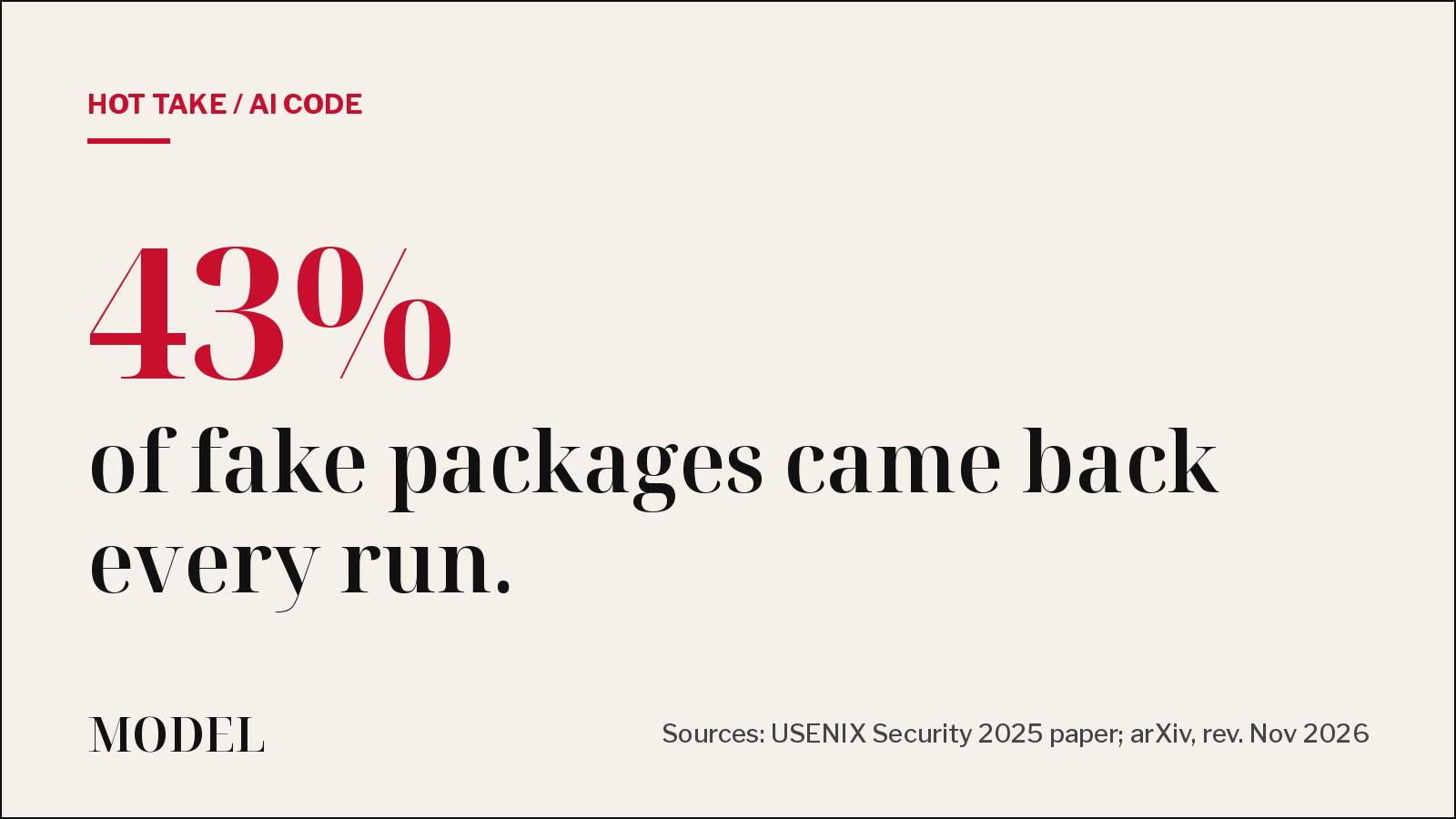
A USENIX Security 2025 paper found 19.7% of packages recommended by 16 code models didn't exist, and 43% of the fake names came back on every rerun. A 2026 replication says rates fell but didn't vanish. Our take: check the install line before you run it.
· MODEL Editors
GitHub Copilot
GitHub Copilot Fusion picks your models for you. Here's the catch
Copilot Fusion is a router in the Copilot model picker: it decides whether one model handles a prompt or several draft and review it. GitHub is promoting it again this weekend; here is what the docs actually say. Not tested by MODEL.
· MODEL Editors
The test
agent-browser 0.43.0, tested: the docs' deny-eval policy still lets eval run
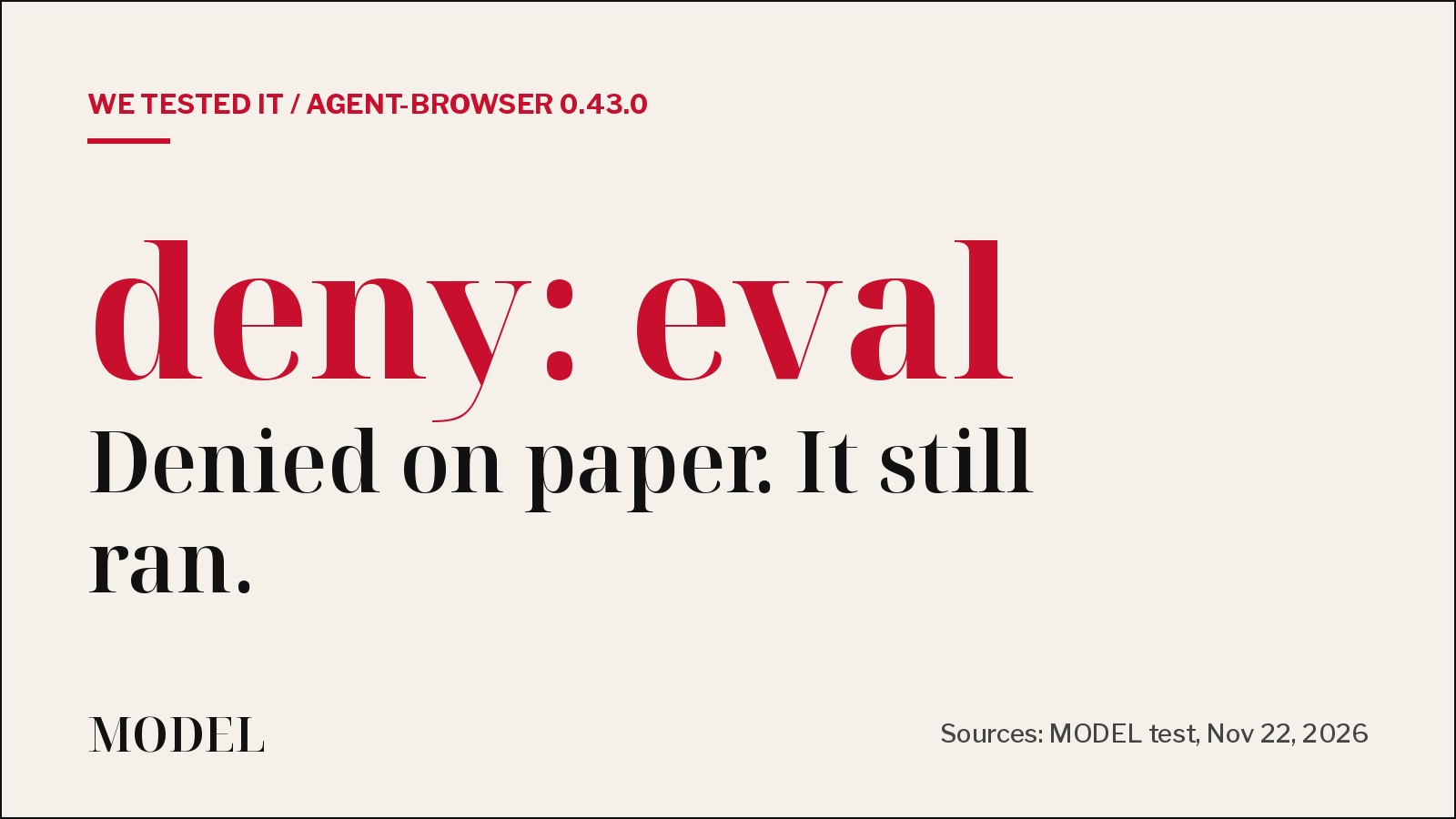
We re-ran our action-policy checks on Vercel Labs' browser tool for AI agents, version 0.43.0, on local test pages with no AI model and no API key. One thing improved. The docs' own example that denies eval still let an eval command change the page.
· MODEL Editors
Open weights
Sarvam's new 105B checkpoint targets cheap chat agents
Sarvam AI released Sarvam-105B-1711, an open-weight update built for customer support, voice agents and tool calls in Indian languages. Its own benchmarks put it level with Gemini 3.5 Flash-Lite at a lower price.
· MODEL Editors
FREE · EVERY WEEK
The top AI tools this week, tested.
Every week MODEL's editors pick the AI tools worth your time, try them hands-on, and tell you what's good, what's not, and who it's for. Free, in your inbox.
Free. Unsubscribe anytime. Our picks are editorial and can't be bought.