OpenAI and Cisco open-source Shirudo, a 'shield' for Linux servers
SummaryShirudo lets AI agents and security teams write small, signed eBPF shields that block a vulnerable code path on a running Linux system while the real patch is tested. It is open source, and its own docs say it is not production-ready yet. Not tested by MODEL.
· MODEL Editors · 2 min read
Some links may be affiliate links. Disclosure
What it is. On Nov. 23, OpenAI and Cisco released Shirudo (Japanese for "shield"), an open-source runtime for protecting running Linux systems in the gap between finding a bug and patching it (OpenAI (opens in a new tab)). Testing and rolling out a patch can take days or weeks, OpenAI notes, and simply blocking the risky operation can knock a service offline, because an attack and a normal request may use the same Linux feature.
How it works. Shirudo uses eBPF, a Linux technology that runs small programs at set points inside the operating system. A team (or an AI agent working for it) writes a temporary "shield" that blocks the behavior a vulnerability depends on while letting legitimate requests through. Per OpenAI:
- teams can watch how a proposed shield would affect their apps before turning it on, and an operator approves it before it is deployed, with no restart;
- shields are cryptographically signed and checked before they load, and Linux's own eBPF verifier checks them against its safety rules;
- a TPM chip keeps a verifiable record of every shield loaded or removed, which operators can use as evidence.
OpenAI's example: in a controlled test, a shield generated with its Codex agent added an input check to Java's Base64 decoder inside a running Elasticsearch service and rejected an exploit attempt for a vulnerability OpenAI calls "Java4Shell," without restarting the service.
Where AI fits. OpenAI says the long-term goal is for defenders and AI agents to find affected systems, test shields and deploy them quickly, with security teams deciding what actually ships. Shirudo's docs add that its rules can also confine containers and LLM agents, limiting which programs they run, which files they write and which hosts they reach (Shirudo docs (opens in a new tab)).
The catch. This is an early release. The project's own FAQ answers "Is shirudo ready for production?" with "Not yet": it is pre-release, with no stable releases (FAQ (opens in a new tab)). It also has steep requirements: every target machine needs a TPM 2.0, and a kernel built from the bpf-next development tree with extra patches; the docs say there is "no compatibility mode and no fallback for an older kernel" (System requirements (opens in a new tab)). Existing eBPF tools such as Cilium, Falco or bpftrace don't run on a protected machine as they are, since only signed loaders are allowed. And a shield is a stopgap, not a fix: the docs say it covers the time until the machine runs a patched kernel.
Who it's for. Platform, infrastructure and security teams running Linux fleets, and kernel or eBPF engineers who want to try it. Most teams will want to start with the VM quickstart or Isovalent's self-guided lab, not production servers.
Details. The code is on GitHub under the BSD 2-Clause license, with its BPF programs dual-licensed BSD and GPL (GitHub (opens in a new tab)). OpenAI lists a technical deep-dive webinar on Dec. 15.
The MODEL take. Buying time between "bug found" and "patch deployed" is a real problem, and signed, recorded, operator-approved shields are a sensible design for letting agents help. For now, it is a project to watch and test in a lab, not something to install on your servers this week.
Not tested by MODEL. Not sponsored. No affiliate links.
Get three tested tools every Friday
Free, weekly. Unsubscribe anytime.
Sources
- OpenAI and Cisco introduce Shirudo
OpenAI (Nov. 23, 2026)
- shirudo documentation
Shirudo docs
- Shirudo FAQ
Shirudo docs
- System requirements
Shirudo docs
- shirudo-dev/shirudo
GitHub
- OpenAI: Introducing Shirudo
X
Keep reading
Hot take
Your coding agent can't leave working code alone
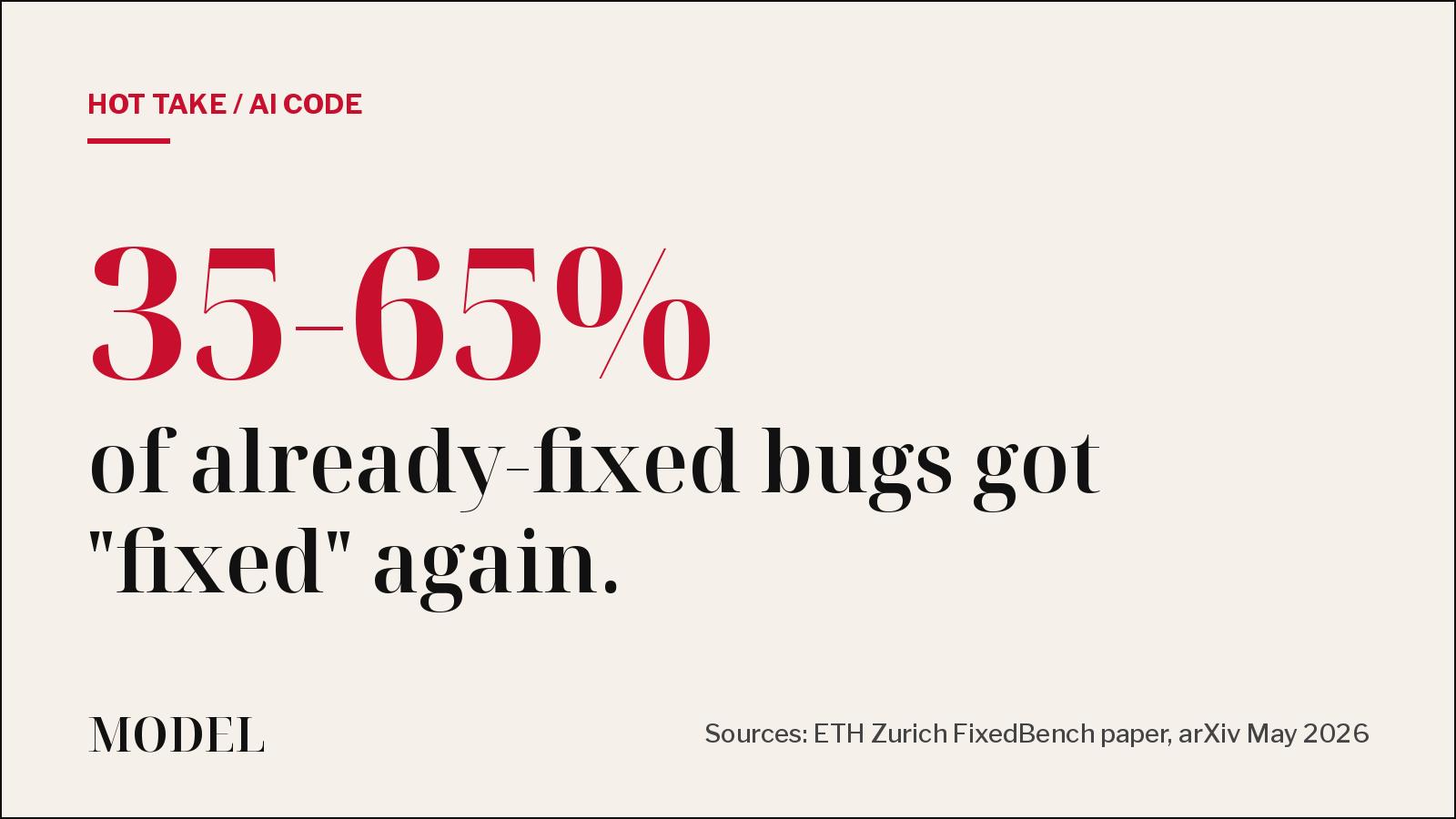
ETH Zurich's FixedBench handed coding agents 200 bug reports that were already fixed. They still edited the code in 35% to 65% of cases. A better prompt helps, with a catch. Our take: make 'nothing to fix' a valid answer, and read every diff.
· MODEL Editors
Google Antigravity
Google Antigravity now renders MCP Apps: tool results as live panels
Antigravity's desktop app can show interactive views from MCP servers inline in chat, in a side panel, full-page or as a custom file viewer. You need a plugin or server that ships the UI, and Google's changelog ties it to eligible paid plans. Not tested by MODEL.
· MODEL Editors
The test
Ternary Bonsai 2.5 27B, tested: a 27B model ran on our CPU-only box, and tool calls worked
PrismML released Ternary Bonsai 2.5 27B today, a ternary-weight model built for agents. We ran it on stock llama.cpp on our Linux test box with no GPU. Here is what worked, how fast it was, and the catch in the 5.9 GB headline.
· MODEL Editors

Supabase
Supabase opens a Knowledge Base built for developers and their coding agents
Supabase's new /kb gathers migration guides, troubleshooting articles, FAQs, tutorials and community guides in one place, with a Markdown version of every page for AI agents. Some of it is Supabase comparing itself to rivals. Not tested by MODEL.
· MODEL Editors
FREE · EVERY WEEK
The top AI tools this week, tested.
Every week MODEL's editors pick the AI tools worth your time, try them hands-on, and tell you what's good, what's not, and who it's for. Free, in your inbox.
Free. Unsubscribe anytime. Our picks are editorial and can't be bought.