OpenAI says it will pay its own data-center power bill
SummaryOn Nov 5, 2026 OpenAI published a National Community Compact for campuses it owns and operates, plus a Compute Campus Policy Blueprint. CNBC, citing Ballotpedia: of 41 local data-center measures across 10 states on Nov 3, voters backed restrictions or rejected pro-development measures in all but one.
· MODEL Editors · 2 min read
Some links may be affiliate links. Disclosure
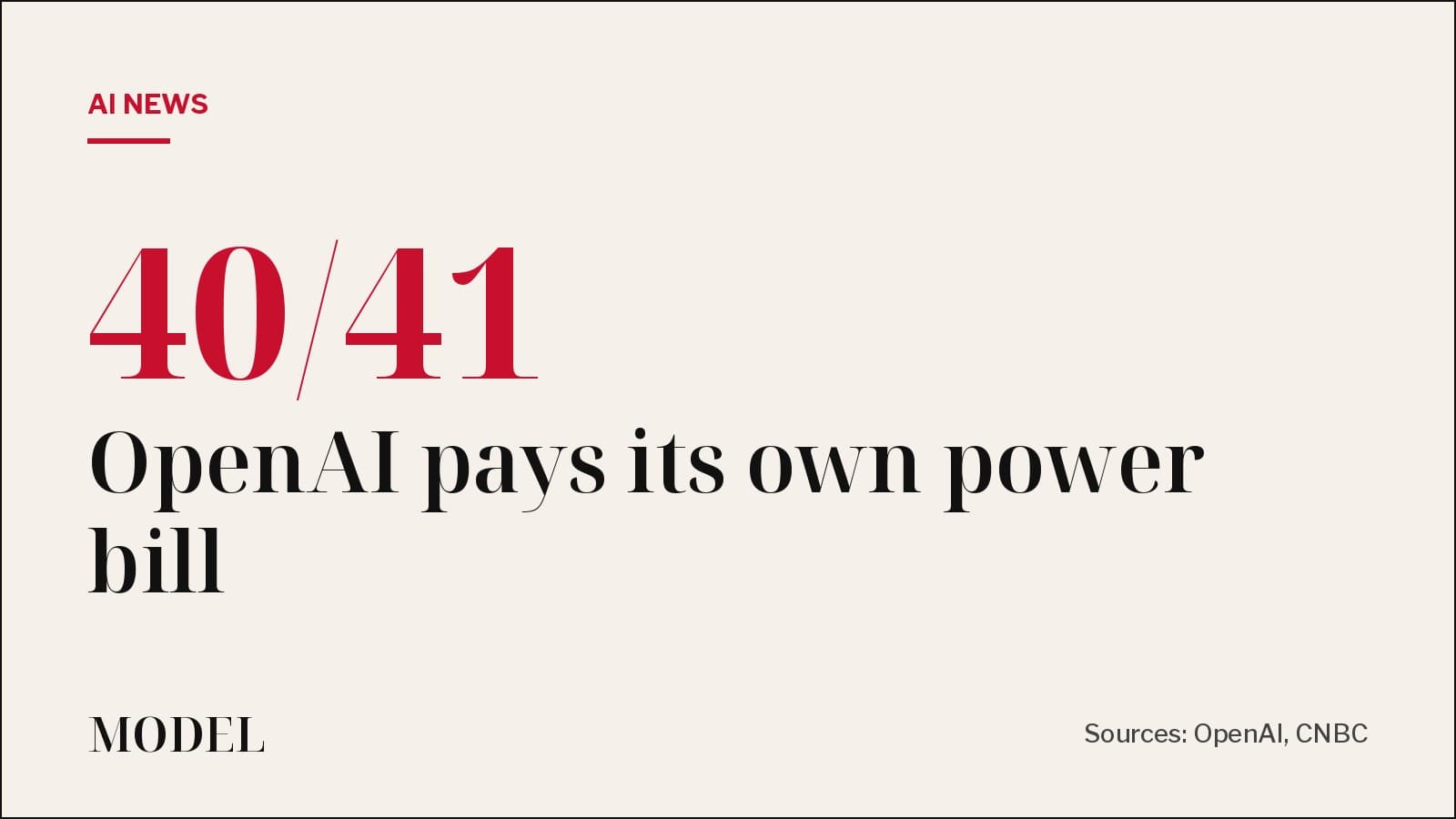
OpenAI just published a National Community Compact and a Compute Campus Policy Blueprint — its answer to growing local pushback on AI data centers.
Why now. Midterms put data-center politics on the ballot. Per CNBC (citing Ballotpedia + CNBC's own tally): of 41 local data-center measures across 10 states on Nov 3, voters backed restrictions or rejected pro-development measures in all but one (Harwood, N.D.). That is not a national ban on data centers — it is a local-vote pattern CNBC is reporting. Chris Lehane (OpenAI Chief Global Affairs Officer) briefed reporters Wednesday; CNBC says the blueprint has been in works since August and that Lehane met dozens of lawmakers and candidates.
What the Compact covers. Scope is campuses OpenAI owns and operates — not every partner Stargate site. Each future campus gets its own local compact. Common commitments:
- Pay its own way on energy. Full cost of electricity used + infrastructure needed; financial assurances before major spending so other customers are protected if a project is delayed, reduced, or canceled.
- Local resources + transparency. Water plan per campus; prioritize closed-loop or low-water cooling; publish site-level water + electricity use; publish construction plans + independent noise studies before ops and annually; will not use NDAs with public officials except narrow security / trade-secret / proprietary cases.
- Jobs + local investment. Publish expected jobs; work with unions and training providers; report hiring and apprenticeships annually; sustained investments in resident-selected priorities.
Already on the ground. Effingham County, Georgia: $4.8M grant for free school meals for all 14,000 students. Pike County, Ohio: joint $6M childcare commitment from OpenAI + SB Energy. Builds on January Stargate Community commitments (pay own way on energy + plans shaped by local priorities) plus Georgia/Ohio specifics. At Effingham, OpenAI's agreement with Georgia Power lets the utility reduce power delivered by up to 1,000 megawatts during high demand.
The Blueprint. OpenAI says voluntary company commitments are a start, but asks federal / state / local policymakers to set rules — cost allocation for large power users, public reporting, narrow NDA limits, public tax-incentive terms, local hiring and supplier paths. CNBC notes Meta, Microsoft, Google, and Anthropic have outlined several similar commitments. OpenAI told investors in February it is targeting $600 billion total compute spend by 2030 and has announced massive DC projects in Georgia and Ohio.
The catch. These are voluntary company commitments plus a policy ask — not yet law. Scope is OpenAI-owned-and-operated campuses, not every Stargate partner site. Ballot numbers above are CNBC's Nov 3 local-measure tally (citing Ballotpedia), not a certified national referendum. Not tested by MODEL. Not sponsored. Not investment advice.
Sources: OpenAI announcement (opens in a new tab); CNBC Nov 5 (opens in a new tab); CNBC Nov 4 midterm ballot measures (opens in a new tab); Ballotpedia data-center ballot measures 2026 (opens in a new tab).
MODEL Editors
Sources
- Setting a new standard for responsible AI infrastructure (Nov 5, 2026)
OpenAI
- OpenAI to pay for data center power after election shows AI concern (Ashley Capoot, Nov 5, 2026)
CNBC
- Voters reject data centers in nearly every local midterm ballot measure (CNBC, Nov 4, 2026)
CNBC
- Data center-related ballot measures, 2026
Ballotpedia
FREE · EVERY WEEK
The top AI tools this week, tested.
Every week MODEL's editors pick the AI tools worth your time, try them hands-on, and tell you what's good, what's not, and who it's for. Free, in your inbox.
Free. Unsubscribe anytime. Our picks are editorial and can't be bought.
Keep reading
AI News
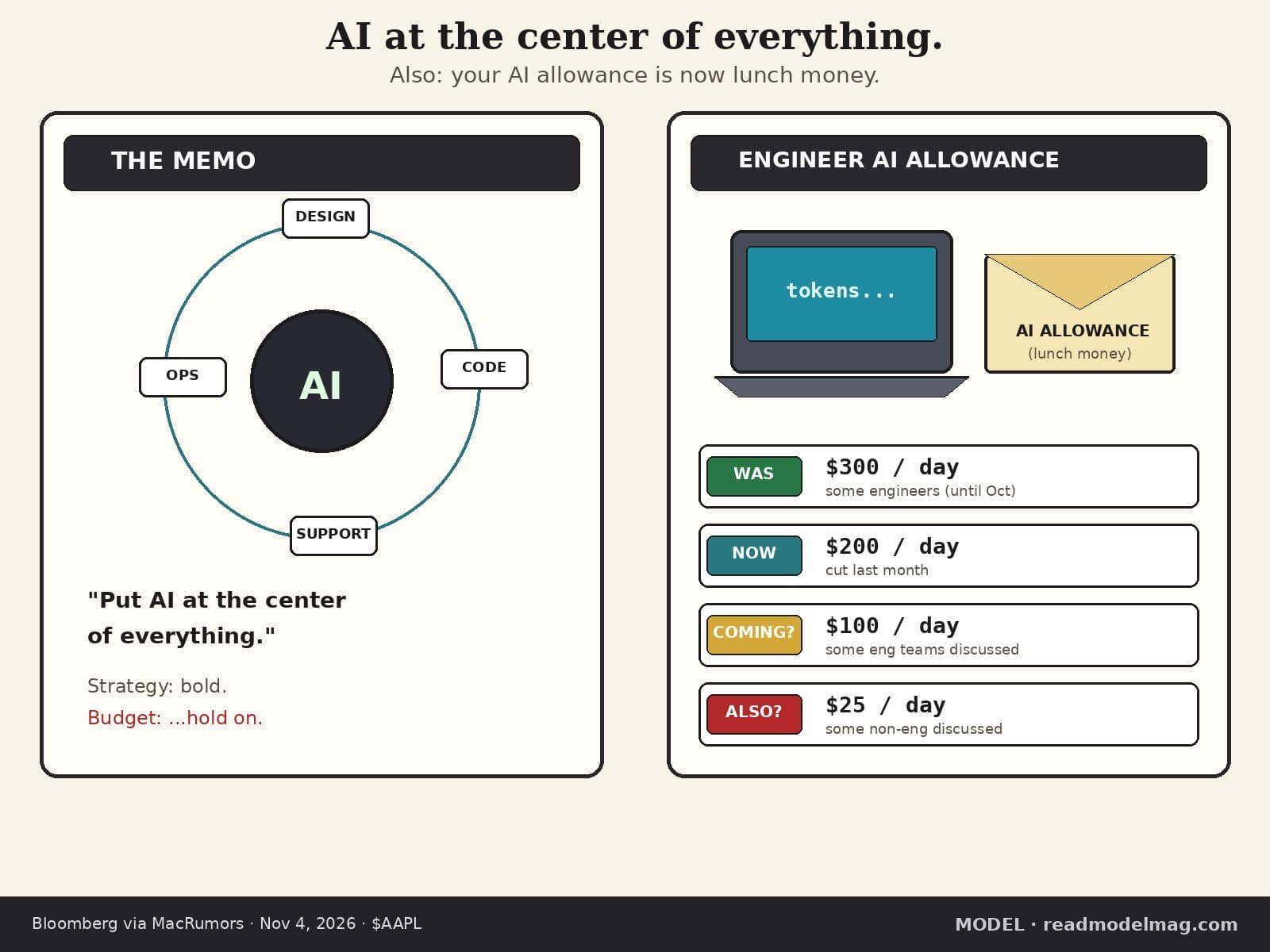
Apple put AI at the center of everything. Then it put engineers on a $200/day AI allowance.
Bloomberg via MacRumors (Nov 4): some Apple engineers cut from $300/day AI spend to $200 in October; further cuts toward $100 for some eng and $25 for some non-eng discussed. Claude, ChatGPT, Gemini allowed. Employees can seek executive exemptions. $AAPL. Not investment advice.
· MODEL Editors
SCIENCE
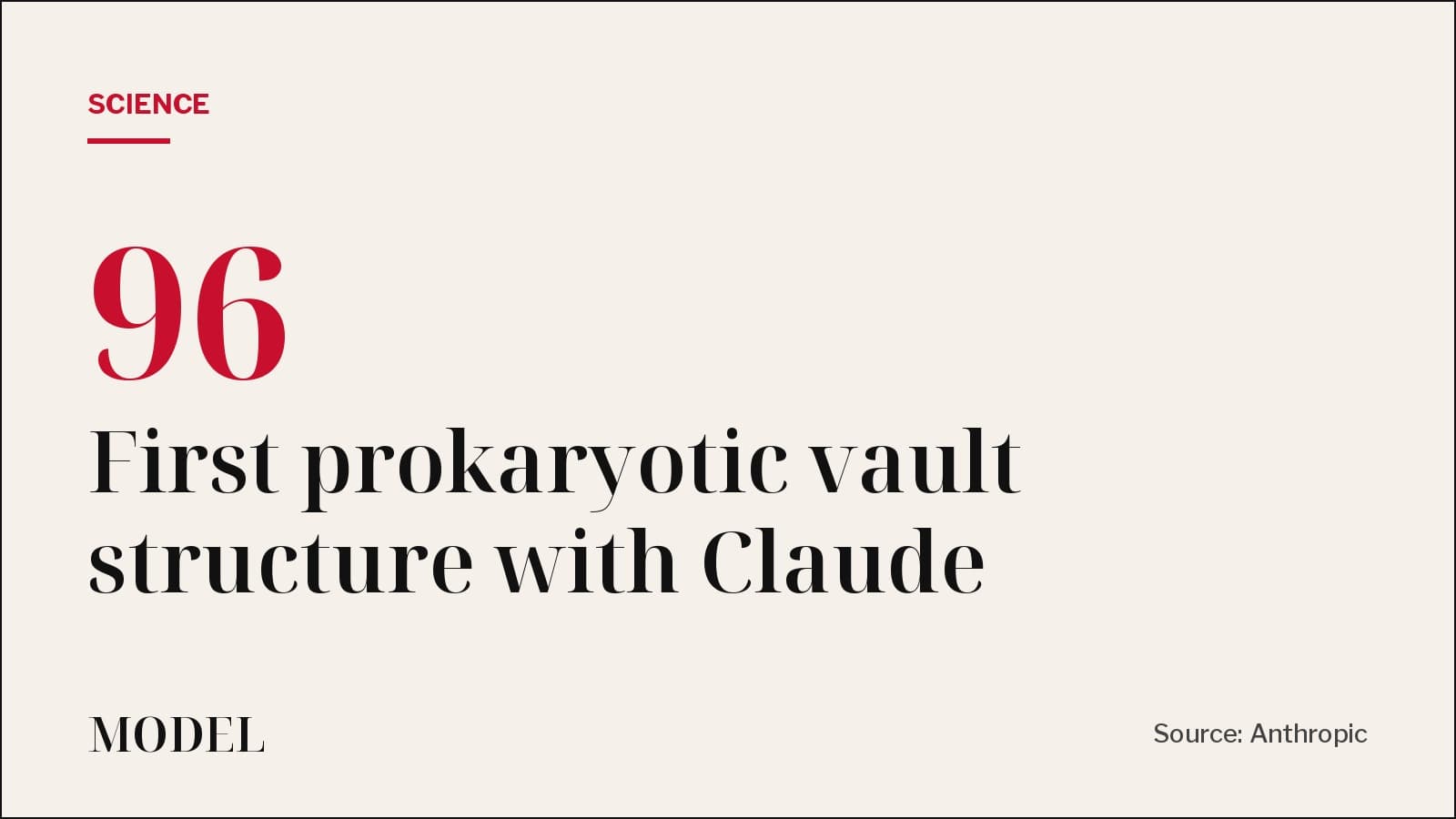
Claude helped map the first prokaryotic vault particle
Anthropic's biology lab used Claude to find, isolate, and solve the first 3D structure of a vault particle from a bacteriophage protein (L05) made in E. coli — 96 copies, ~9.5 megadaltons, first model in ~34 hours. Function still unknown. Preprint submitted to bioRxiv.
· MODEL Editors
AI News
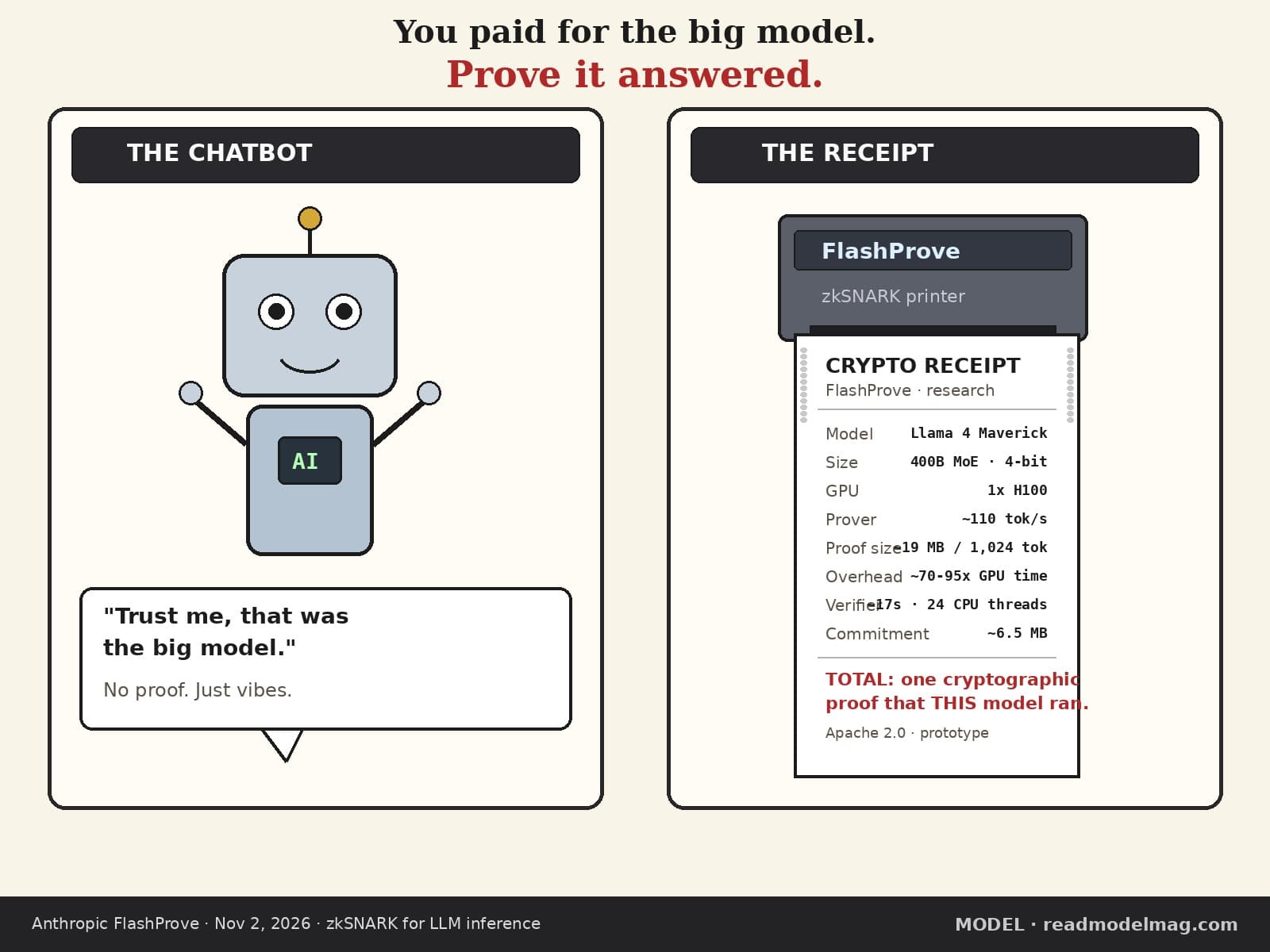
You paid for the big model. Prove it answered.
Anthropic's Nov 2 FlashProve research prototype attaches a zkSNARK receipt to LLM replies. Demo: Llama 4 Maverick 400B MoE on one H100 at ~110 tok/s proving, ~19 MB proofs, ~70-95x the GPU time of the answer. Not Claude production yet.
· MODEL Editors