Vibe coding still rewards people who know how software works
SummaryAn ETH Zurich study of 100 students found computer-science knowledge was the strongest predictor of vibe-coding results, clear writing helped too, and the heaviest everyday chatbot users did worse. Our tip: write the spec like you mean it, and learn the basics anyway.
· MODEL Editors · 2 min read
Some links may be affiliate links. Disclosure

The engineers-versus-vibe-coders memes are back on X this week. There is actual data on the question, and it points to a boring answer: the prompt is the program, so the people who write good programs still win.
The study. "Computer Science Achievement and Writing Skills Predict Vibe Coding Proficiency" by Sverrir Thorgeirsson, Theo B. Weidmann and Zhendong Su (ETH Zurich) was posted to arXiv on March 14, 2026 and presented at CHI 2026 in Barcelona. It is a preregistered study of 100 students from ETH and the University of Zurich. Everyone had finished at least an intro computer-science course and had used LLMs for programming before.
In a lab session of 1 hour 45 minutes, each student used an AI agent, without editing code directly, to recreate a meal-planning app, add features to a course-planning app and replicate an abstract app with no obvious purpose. They also wrote a short essay and took a computer-science test and a general cognitive test.
What they found.
- Computer-science knowledge had the biggest link to vibe-coding results (Pearson r = 0.386). It stayed significant after controlling for general cognitive ability (r = 0.281).
- Writing skill was also linked to results (r = 0.290). After controlling for cognitive ability, that link was no longer significant (r = 0.186, p = 0.066).
- Students who said they use LLMs most often in daily life did worse at vibe coding (r = -0.258) and wrote worse essays (r = -0.282). LLM use frequency had no link to CS knowledge.
- Prompt wording mattered: the lexical diversity of students' prompts correlated with vibe-coding performance (MTLD r = 0.343).
ETH's news release quotes Weidmann: "People who formulate clear and structured prompts achieve better results, while unclear or imprecise wording is more likely to lead to defective software." He adds that good computer scientists "can plan an app's structure more precisely and debug potential errors faster."
Limits. This is a correlation study, so it cannot say why heavy chatbot users did worse. The authors say heavy use may weaken people's writing, or weaker writers may simply use AI more. The participants were students with some CS training, and the tasks were small apps.
Builder tip. Treat the prompt like the spec it is:
- Before you prompt, write down the screens, the data and what "done" looks like.
- Use the right technical words: name the state, the route, the table, the error.
- When something breaks, describe what you expected and what happened, not "it doesn't work."
- Learn enough about how apps are built to read the plan your agent gives you. That knowledge was the strongest predictor in this study.
Related: Your coding agent can't leave working code alone and Your coding agent copies your worst code.
Not tested by MODEL. Not sponsored. No affiliate links. Figures are from the paper. -- MODEL Editors
Get three tested tools every Friday
Free, weekly. Unsubscribe anytime.
Sources
Keep reading
Hot take
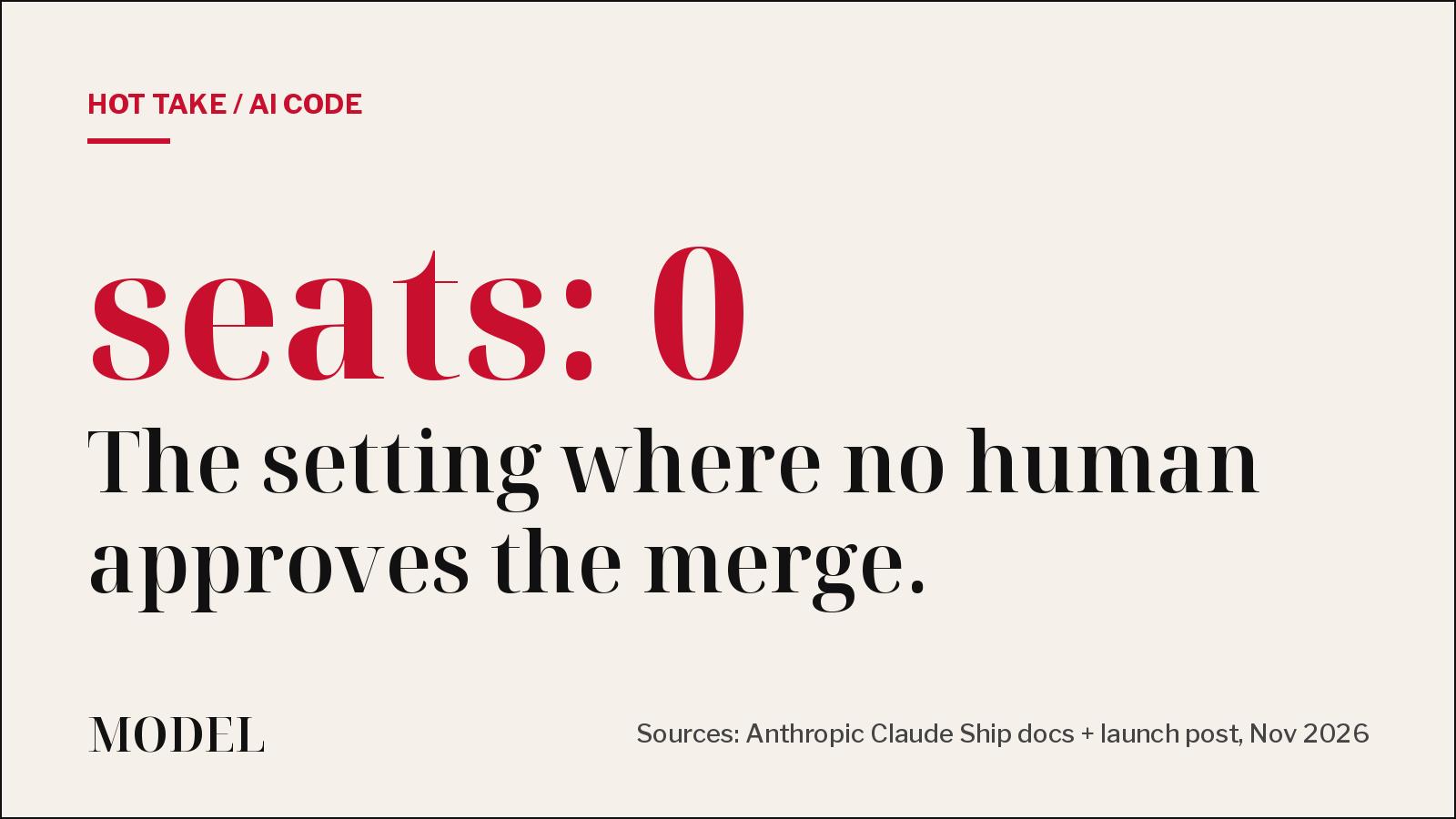
AI writes the PR, reviews it, fixes it. Now it can approve it
Anthropic's Claude Ship adds two beta agents: PR Steward pushes fixes, Claude Approvals can approve routine changes under a policy file. Anthropic's own docs explain how a PR can merge with no human but its author. Our take: that YAML file is now your most important code review.
· MODEL Editors
Hot take
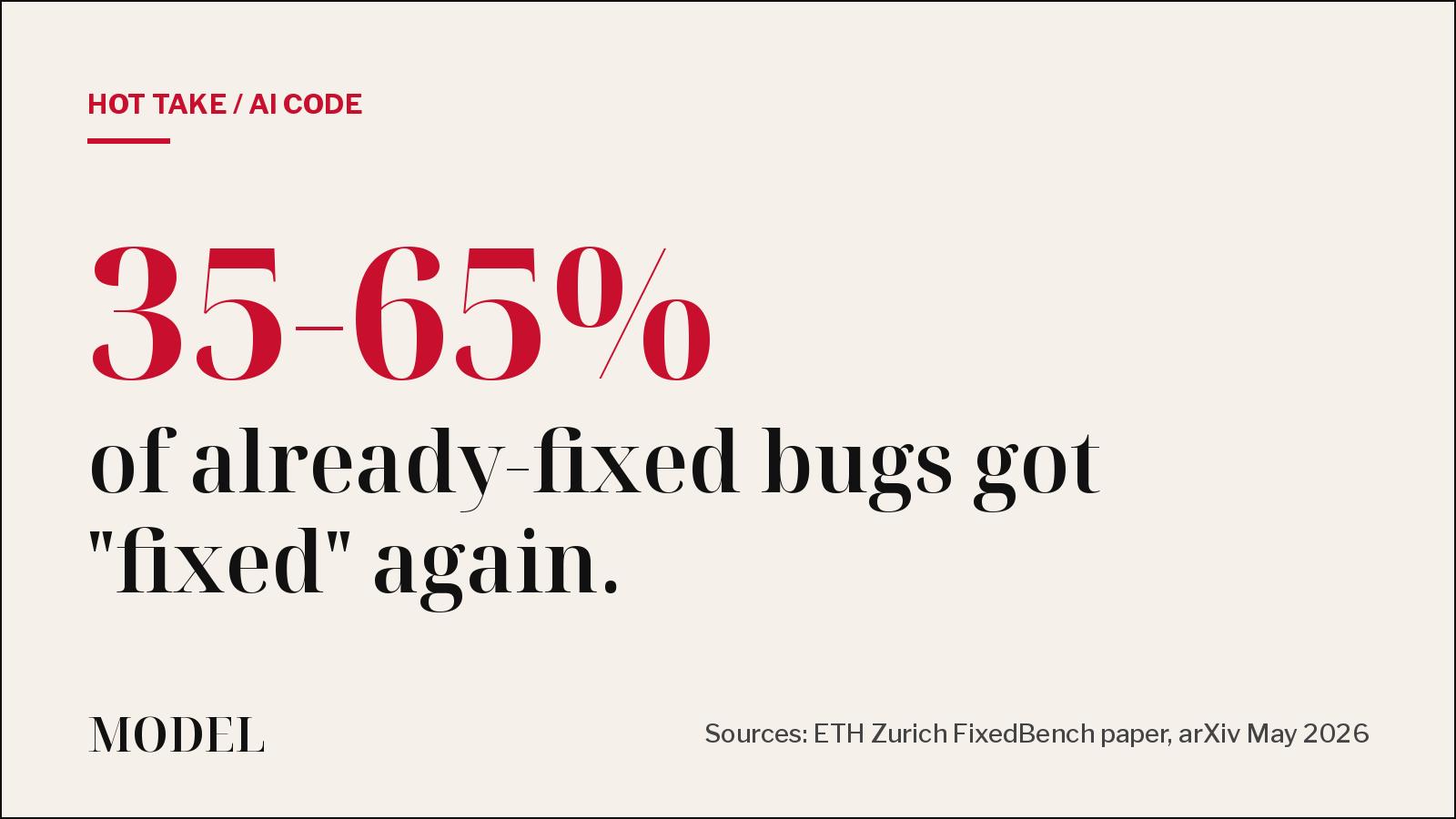
Your coding agent can't leave working code alone
ETH Zurich's FixedBench handed coding agents 200 bug reports that were already fixed. They still edited the code in 35% to 65% of cases. A better prompt helps, with a catch. Our take: make 'nothing to fix' a valid answer, and read every diff.
· MODEL Editors
Google Antigravity
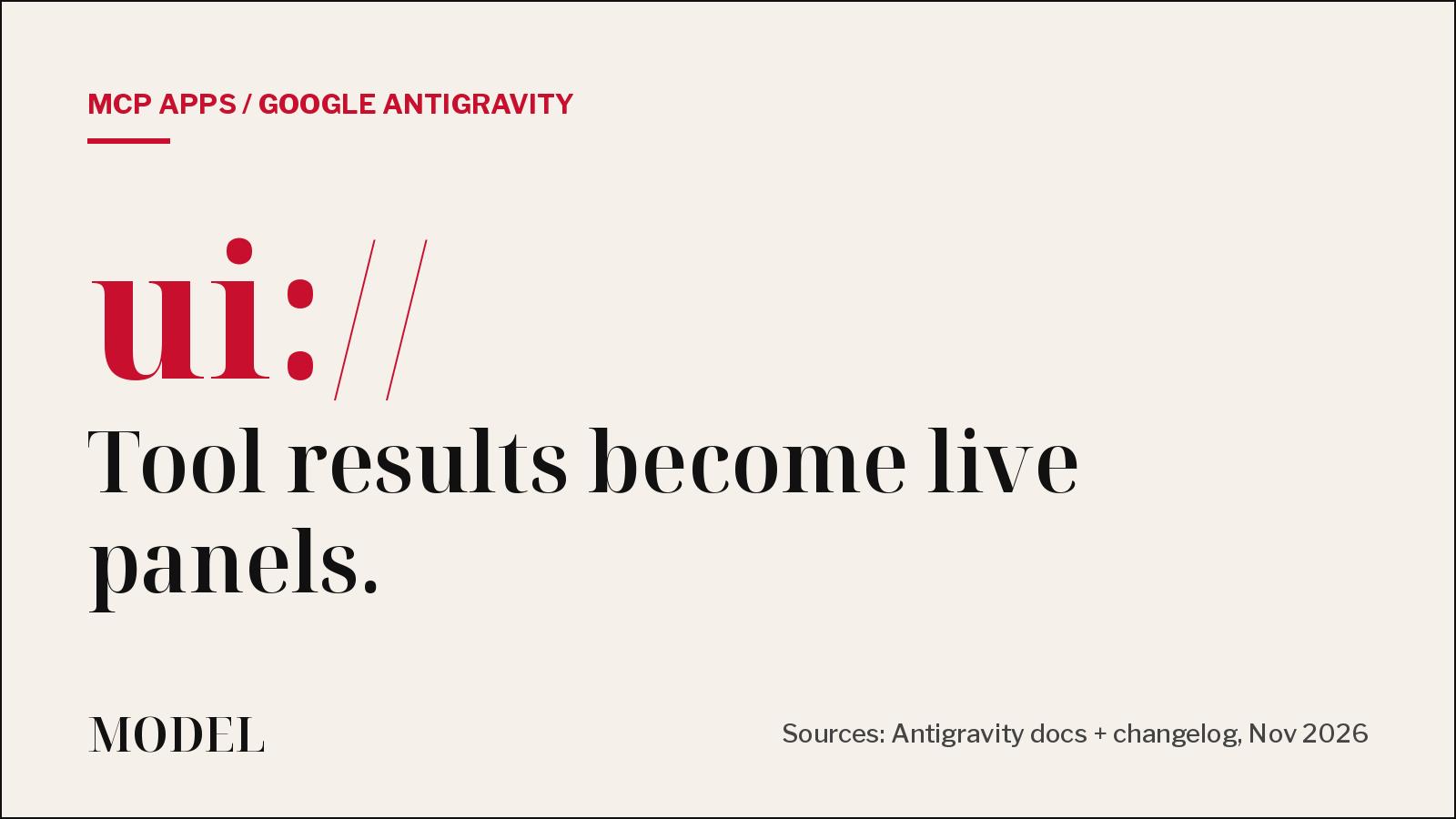
Google Antigravity now renders MCP Apps: tool results as live panels
Antigravity's desktop app can show interactive views from MCP servers inline in chat, in a side panel, full-page or as a custom file viewer. You need a plugin or server that ships the UI, and Google's changelog ties it to eligible paid plans. Not tested by MODEL.
· MODEL Editors
The test
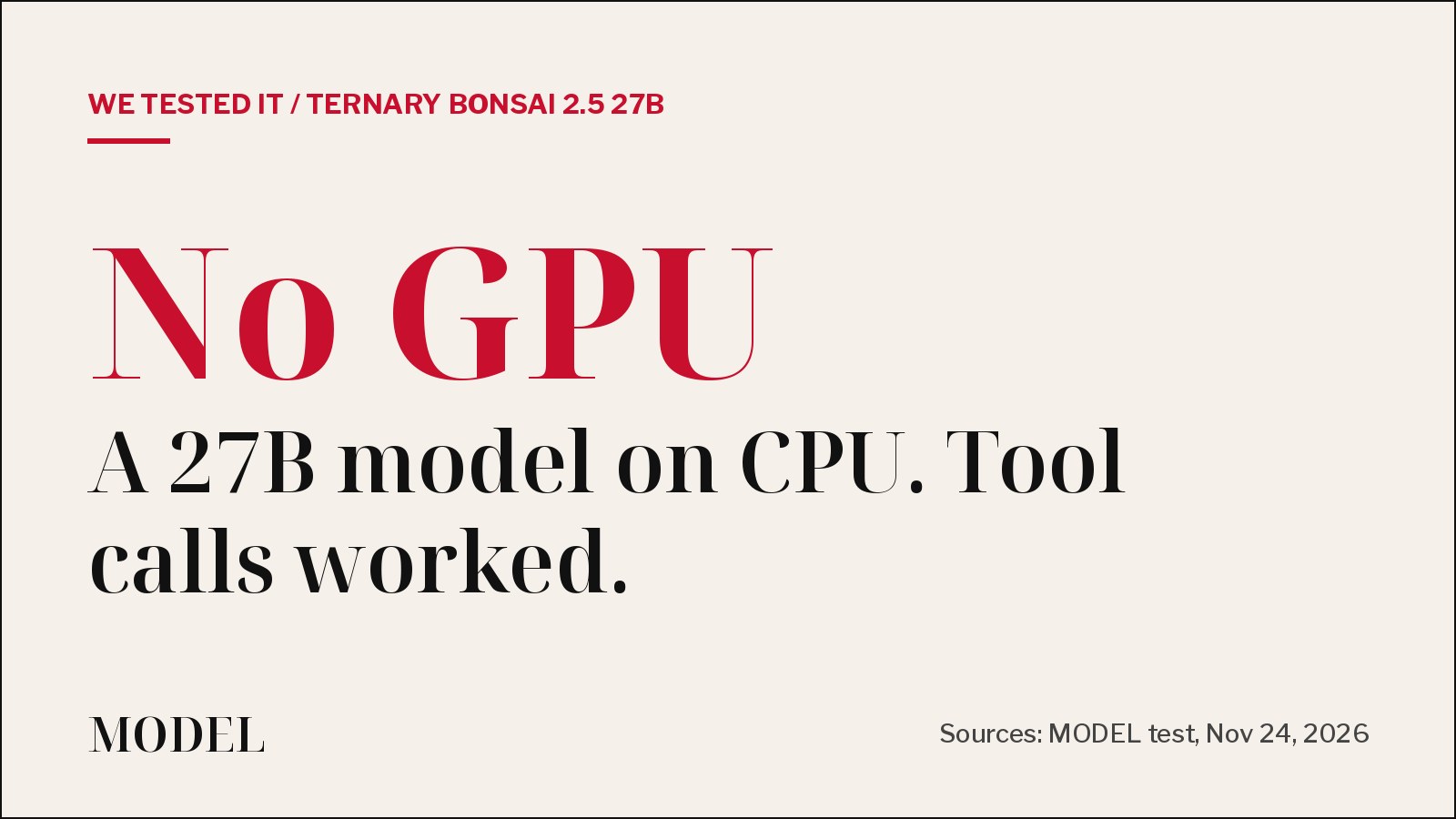
Ternary Bonsai 2.5 27B, tested: a 27B model ran on our CPU-only box, and tool calls worked
PrismML released Ternary Bonsai 2.5 27B today, a ternary-weight model built for agents. We ran it on stock llama.cpp on our Linux test box with no GPU. Here is what worked, how fast it was, and the catch in the 5.9 GB headline.
· MODEL Editors
FREE · EVERY WEEK
The top AI tools this week, tested.
Every week MODEL's editors pick the AI tools worth your time, try them hands-on, and tell you what's good, what's not, and who it's for. Free, in your inbox.
Free. Unsubscribe anytime. Our picks are editorial and can't be bought.